Engineering the Next Generation of Fibre-Based Packaging
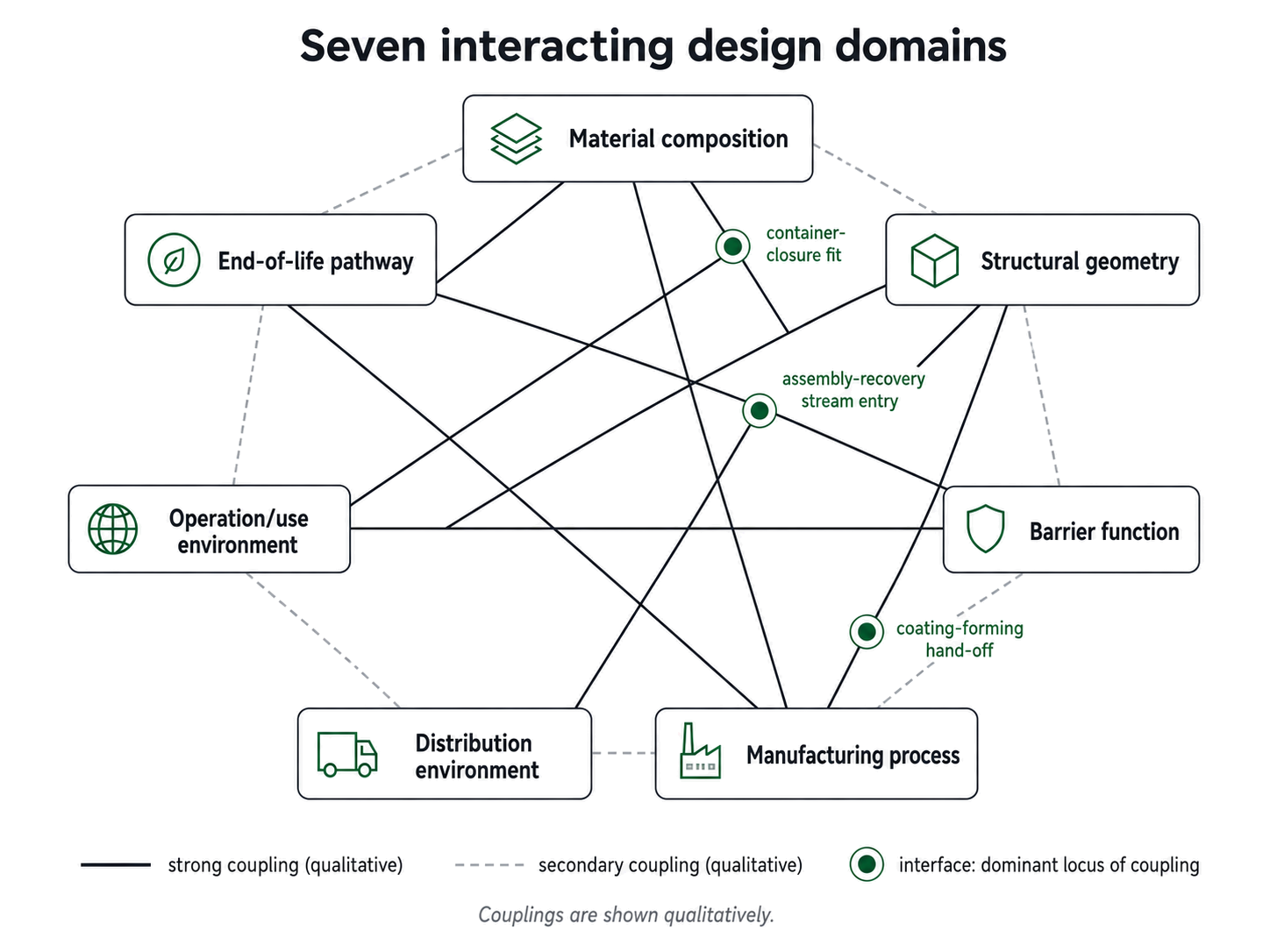
Ekoroll evaluates fibre-based packaging through seven interacting design domains: material composition, structural geometry, barrier function, manufacturing process, distribution environment, operation and use environment, and end-of-life pathway.
A paper cup looks simple. As an engineering object, it is not. Its behaviour is shaped by decisions in seven interacting areas: fibre material, structural geometry, barrier function, manufacturing process, distribution environment, real-world use and end-of-life pathway. A change in any one of them can affect the others.
That is why Ekoroll approaches packaging as a system rather than as a collection of separate components. This page explains our public R&D direction, our focus areas and the first demonstrator family: integrated paper cup systems for hot and cold beverage service.
For current product information, explore the Ekoroll Hot Cup and Ekoroll Cold Cup.
Why Packaging Needs System-Level R&D
Most packaging development still treats materials, coatings, structures, manufacturing and disposal routes as separate decisions. A material may be improved in one place, a coating may be changed in another, and a lid may be redesigned somewhere else. The result can perform well in one dimension while creating new problems in another: extra components, more complex waste streams or limited recovery options.
Modern packaging requirements are different. Foodservice packaging must work across service reliability, safety, logistics, regulation, sustainability reporting and end-of-life. For Ekoroll, R&D begins with the full system: how the package is designed, produced, used, handled and recovered.
Seven Interacting Design Domains
Ekoroll evaluates fibre-based packaging through seven interacting design domains: material composition, structural geometry, barrier function, manufacturing process, distribution environment, operation and use environment, and end-of-life pathway.
This system view helps avoid isolated improvements that look attractive in one area but create problems elsewhere. For example, a barrier system must protect the product, but it must also remain compatible with forming, filling, service conditions and realistic recovery routes. A structural change may improve handling, but it also affects manufacturing feasibility, stacking, logistics and user experience.
By treating these domains together, Ekoroll aims to develop packaging architectures that are practical for operators, scalable for industry and aligned with the transition toward fibre-based recovery systems.
Our Research Direction: Integrated Fibre-Based Packaging Systems
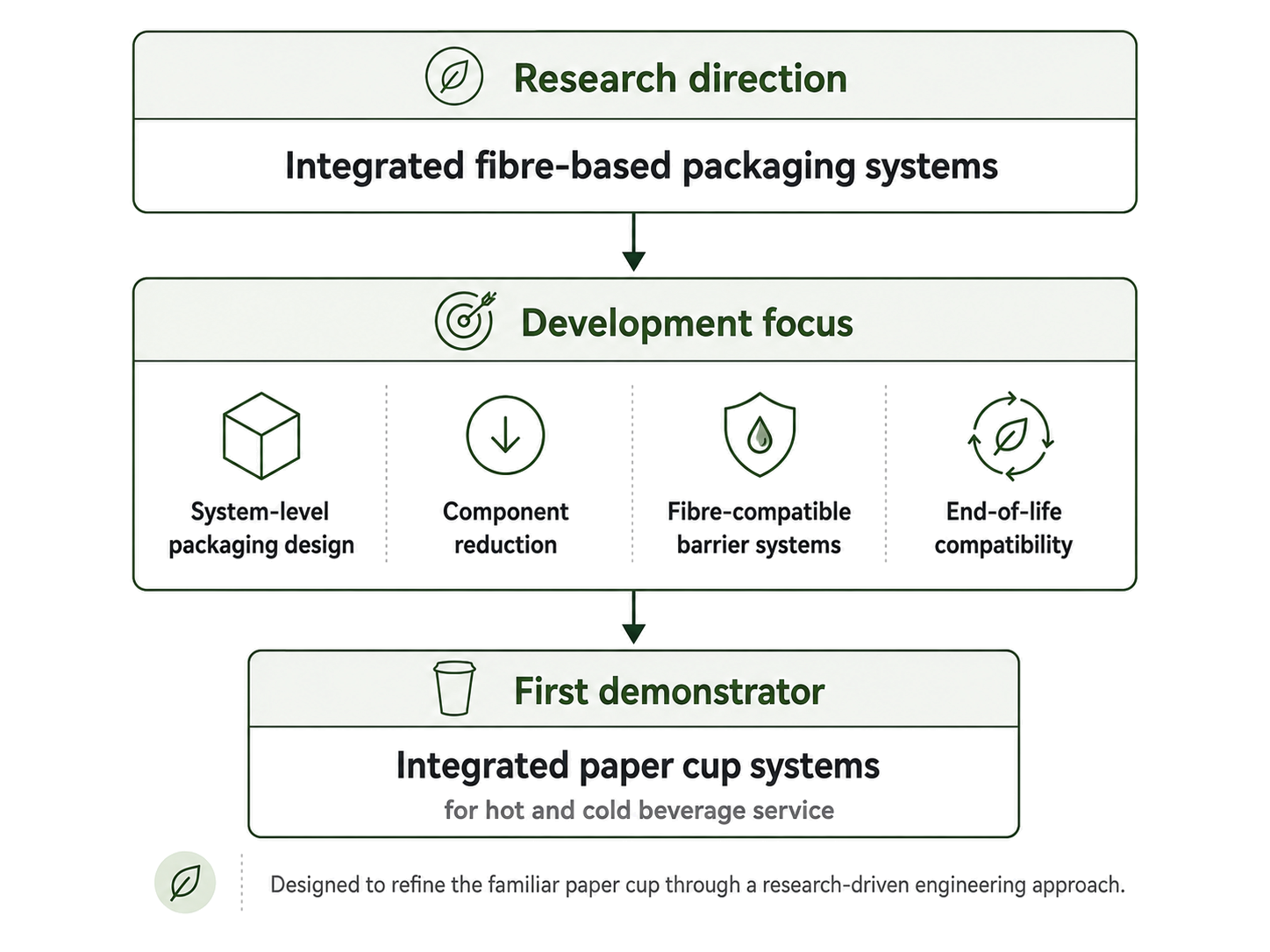
Ekoroll’s research direction is based on Integrated Fibre Systems: fibre-based packaging architectures designed as one system rather than assembled from separate parts.
Every additional component in a package adds an interface. Interfaces are where leaks can start, where costs accumulate and where recovery streams can become harder to manage. Reducing components and deliberately engineering the remaining interfaces can support performance and end-of-life compatibility at the same time.
This direction is supported by a longer-term research effort, the Future Packaging Systems Initiative, through which Ekoroll aims to develop and test system-level design methods with academic and industrial partners.
R&D Focus Areas
Ekoroll’s R&D work is organised around practical engineering questions that affect real foodservice packaging performance. Instead of treating material, coating, forming, service use and end-of-life as separate topics, we evaluate how these decisions interact inside one packaging system.
Component Reduction
Ekoroll designs packaging architectures that aim to deliver the required function with fewer separate parts. Reducing unnecessary components can simplify storage, handling, service workflows and end-of-life sorting, especially in high-volume foodservice and beverage-service operations.
Fibre-Compatible Barrier Systems
Barrier performance is essential for paper-based food and beverage packaging, but it should not be treated as an isolated coating decision. We work with water-based barrier technologies that are PFAS-free and PE-free, designed to protect the product while supporting compatibility with fibre recovery routes.
System-Level Packaging Design
Packaging performance depends on connected requirements: mechanical strength, thermal behaviour, barrier function, forming feasibility, logistics, service reliability and end-of-life compatibility. Ekoroll evaluates these factors together so that improving one area does not create avoidable problems in another.
Foodservice and Beverage-Service Packaging
Our development focus includes hot and cold beverage service, catering and horeca formats where reliability, hygiene, operational efficiency and volume economics matter at the same time. These environments require packaging that works not only in material testing, but also in real handling, stocking, serving and disposal conditions.
End-of-Life Compatibility
End-of-life behaviour is considered from the beginning of the design process. Recyclability and compostability are treated as engineering inputs, not as marketing claims added after the product has already been designed.
First Demonstrator: Integrated Paper Cup Systems
Our first demonstrator family applies this system-level approach to one of the highest-volume packaging formats in the world: the beverage cup. Paper cups are familiar, but their real performance depends on the interaction between fibre material, barrier system, rim geometry, closure behaviour, service conditions and recovery pathway.
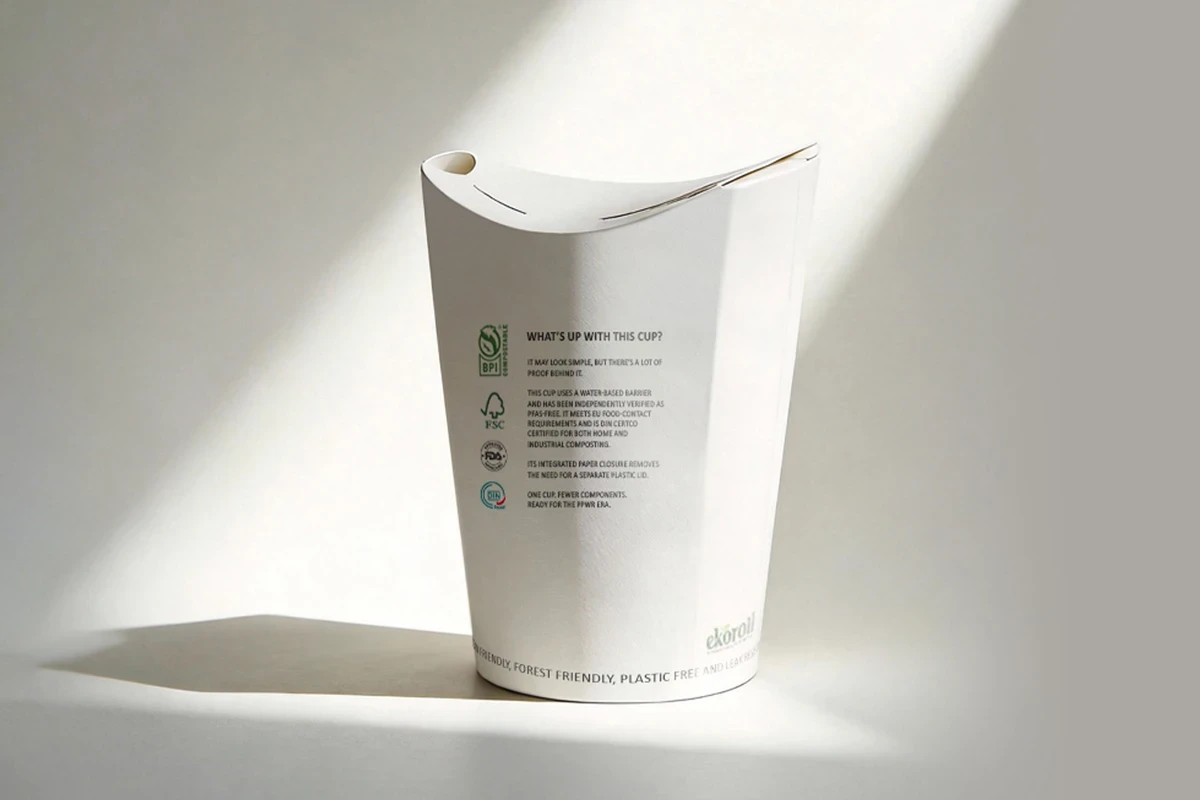
Ekoroll’s integrated paper cup systems are designed to refine the familiar paper cup by reducing separate components, such as lids, while maintaining drinking function, service reliability and compatibility with fibre recovery at end of life. The cups use water-based, PFAS-free and PE-free barrier systems and are engineered for hot and cold beverage service.
For airlines, catering operators and horeca distributors, the aim is practical: fewer parts to stock and handle, simpler waste streams and packaging that supports sustainability reporting without compromising service quality.
Explore the current range: Ekoroll Hot Cup and Ekoroll Cold Cup.
Collaboration with Research and Industrial Partners
System-level packaging R&D is not a one-company task. Fibre-based packaging systems involve material science, structural design, barrier technologies, forming processes, food-contact requirements, logistics and end-of-life infrastructure. Progress depends on collaboration across the value chain.
Ekoroll works with universities, material developers and industrial partners, and we are actively expanding this network. With universities and research institutions, we welcome collaboration on system-level design methods, testing approaches and end-of-life assessment for fibre-based packaging.
With material and coating developers, we evaluate fibre-compatible barrier systems under realistic converting and service conditions. With airlines, foodservice operators and distributors, we run structured discussions and trials that connect design decisions to real service environments and real recovery streams.
Research Outputs & Technical Reports
Explore Ekoroll’s public technical reports, research frameworks and non-confidential development outputs covering integrated fibre systems, component reduction, material compatibility and next-generation packaging architectures.
Technical Report
EKR-TR-2026-01
A public technical report introducing Ekoroll’s Integrated Fiber Systems framework and its first product-level application: an integrated lid-free hot-cup architecture.
Version
1.0
Monday, July 27, 2026
Technical Report
EKR-TR-2026-02
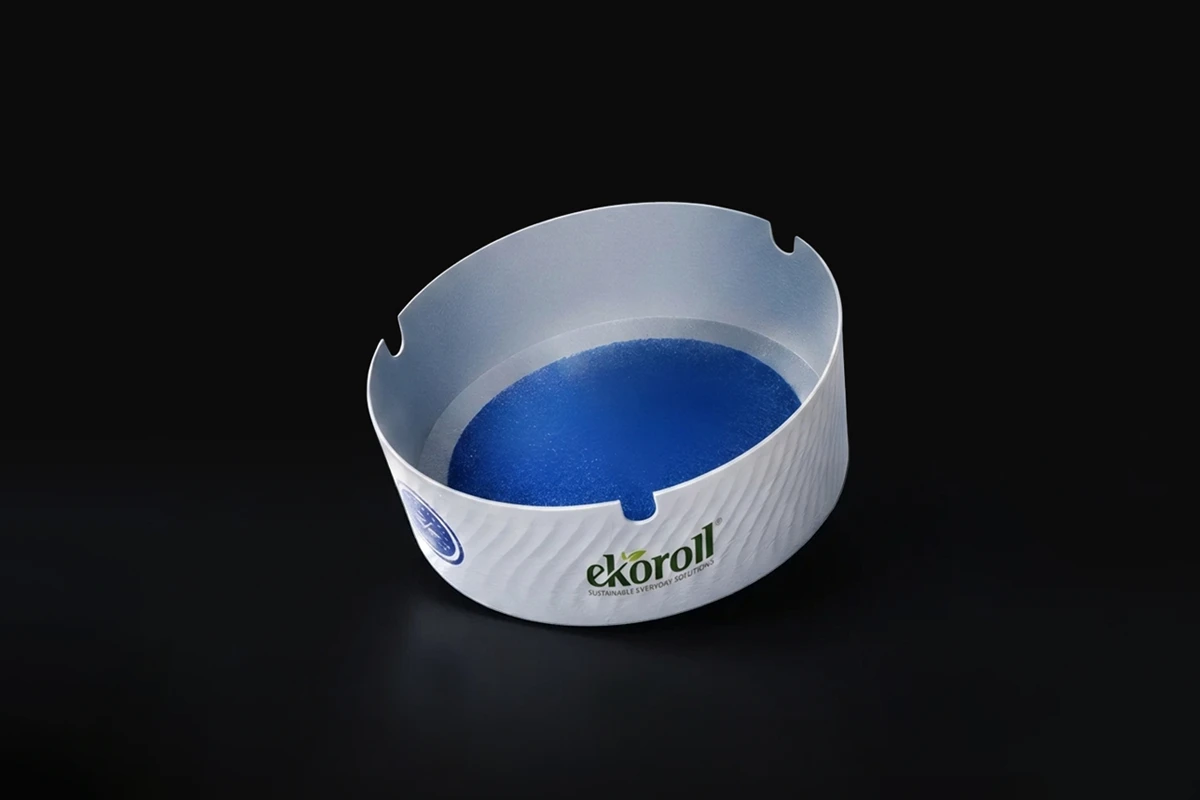
This technical report documents Ekoroll’s water-activated, fibre-dominant ash-containment system, developed through the functional evaluation of more than 250 product units. Internal development trials established approximately 50 ml of water as the principal activation reference and demonstrated use with up to 15 cigarette butts in the final product configuration.
Version
1.0
Tuesday, July 28, 2026
Partner with Ekoroll R&D
Ekoroll welcomes discussions with universities, material developers, airlines, foodservice operators, distributors and industrial packaging partners interested in system-level fibre-based packaging design. Contact our team to discuss research collaboration, technical evaluation or pilot opportunities for integrated paper cup systems.
Contact our R&D team or visit the Ekoroll Media Center.
Frequently Asked Questions
Ekoroll’s R&D focuses on integrated fibre-based packaging systems. This includes component reduction, fibre-compatible barrier systems, system-level packaging design and end-of-life compatibility, with a current focus on foodservice and beverage-service packaging. The aim is to design packaging as one connected system rather than as separate material, coating, structure and disposal decisions.
Integrated fibre-based packaging means designing the package as one connected system. Material composition, structural geometry, barrier performance, manufacturing, service conditions and end-of-life behaviour are considered together. This helps avoid isolated improvements that perform well in one area but create problems in another, such as harder recovery, extra components or reduced service reliability.
Every additional component adds cost, handling steps, inventory complexity and interface points. In foodservice and beverage-service packaging, these interfaces can affect leakage risk, service speed, stock management and end-of-life sorting. Reducing unnecessary components can support simpler workflows, cleaner waste streams and more efficient packaging architecture, especially in high-volume operations such as airlines, catering and horeca distribution.
Ekoroll’s integrated paper cup systems use water-based barrier technologies that are PFAS-free and PE-free. These systems are designed to protect the product while supporting compatibility with fibre-based recovery routes. The focus is not only on replacing a material, but on designing the cup, barrier and service function together as part of a system-level packaging approach.
Yes. Ekoroll welcomes collaboration with universities and research institutions working on fibre-based packaging systems, system-level design methods, testing approaches and end-of-life assessment. Our research direction is designed to connect academic capability with practical industrial challenges in foodservice and beverage-service packaging.
Yes. Ekoroll is open to structured pilot discussions with airlines, catering operators, horeca distributors and foodservice partners. Pilot discussions can focus on service environment, operating volumes, handling requirements, beverage formats, waste management and sustainability objectives. The goal is to evaluate packaging performance under realistic operating conditions, not only in laboratory or presentation settings.
No. Ekoroll shares selected research directions and public-safe information through its website and media channels. Detailed technical work, validation plans, experimental methods and partner-specific information are shared only under appropriate agreements. This page presents Ekoroll’s general R&D direction without disclosing confidential programme structure or patent-sensitive details.