Kraft paper bowls with lids have become one of the most widely adopted paper-based food container formats in European food service. For restaurants, food delivery operations and horeca distributors, they sit at a practical intersection: strong enough for hot and wet food, visually aligned with modern sustainability positioning, designed for paper-stream recycling when specified with a water-based coating, and available at wholesale volumes that make them operationally viable for high-throughput takeaway operations.
But not all kraft paper bowls perform equally, and the comparison with plastic containers requires more nuance than unit price alone. This guide covers everything food service operators and packaging buyers need to know about kraft paper bowls vs plastic containers — material properties, performance under real service conditions, available formats, EU regulatory status, cost comparison and wholesale sourcing guidance.
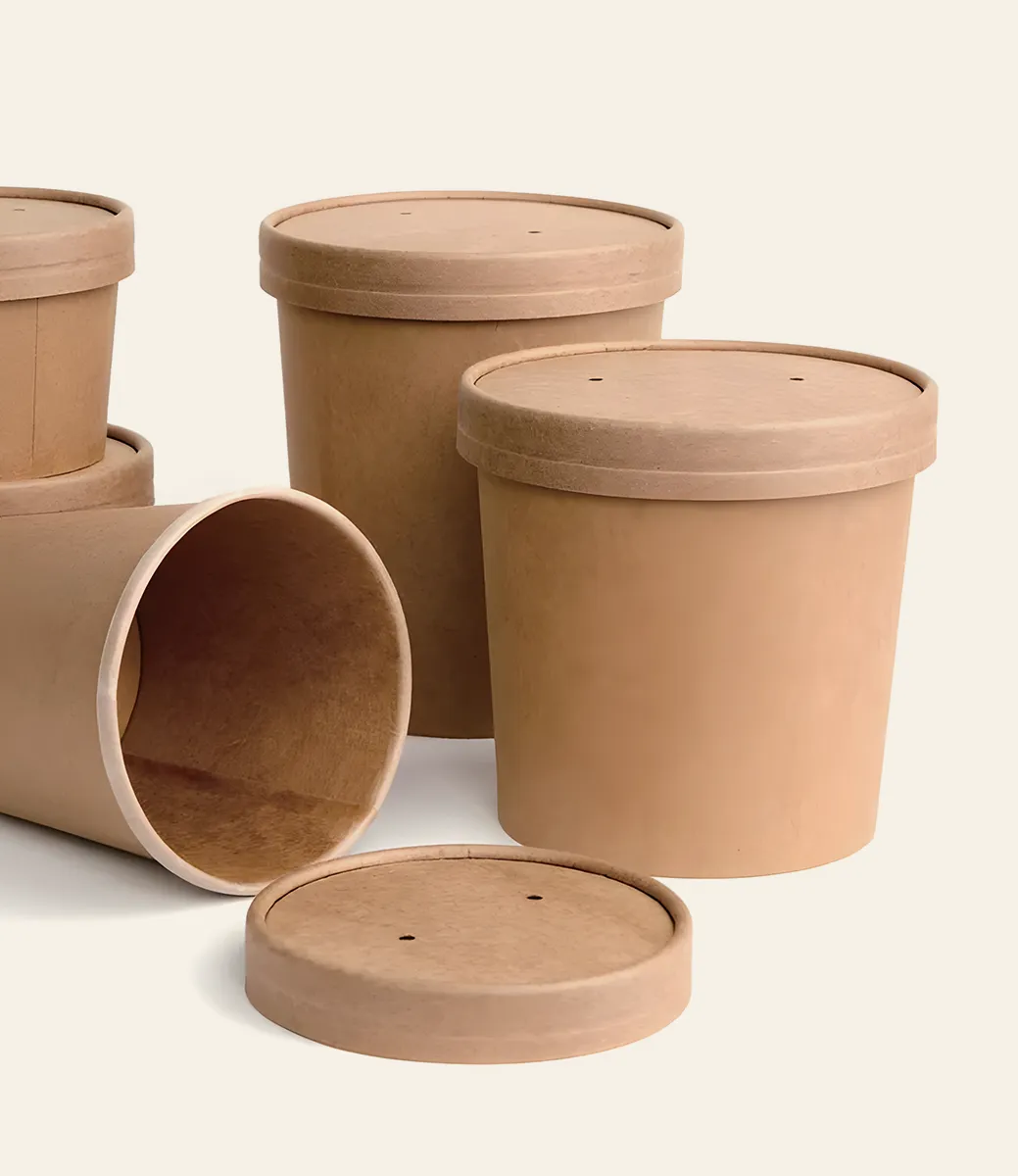
For wholesale supply, explore Ekoroll kraft paper bowls with lids for restaurants and horeca distributors.
What Are Kraft Paper Bowls?
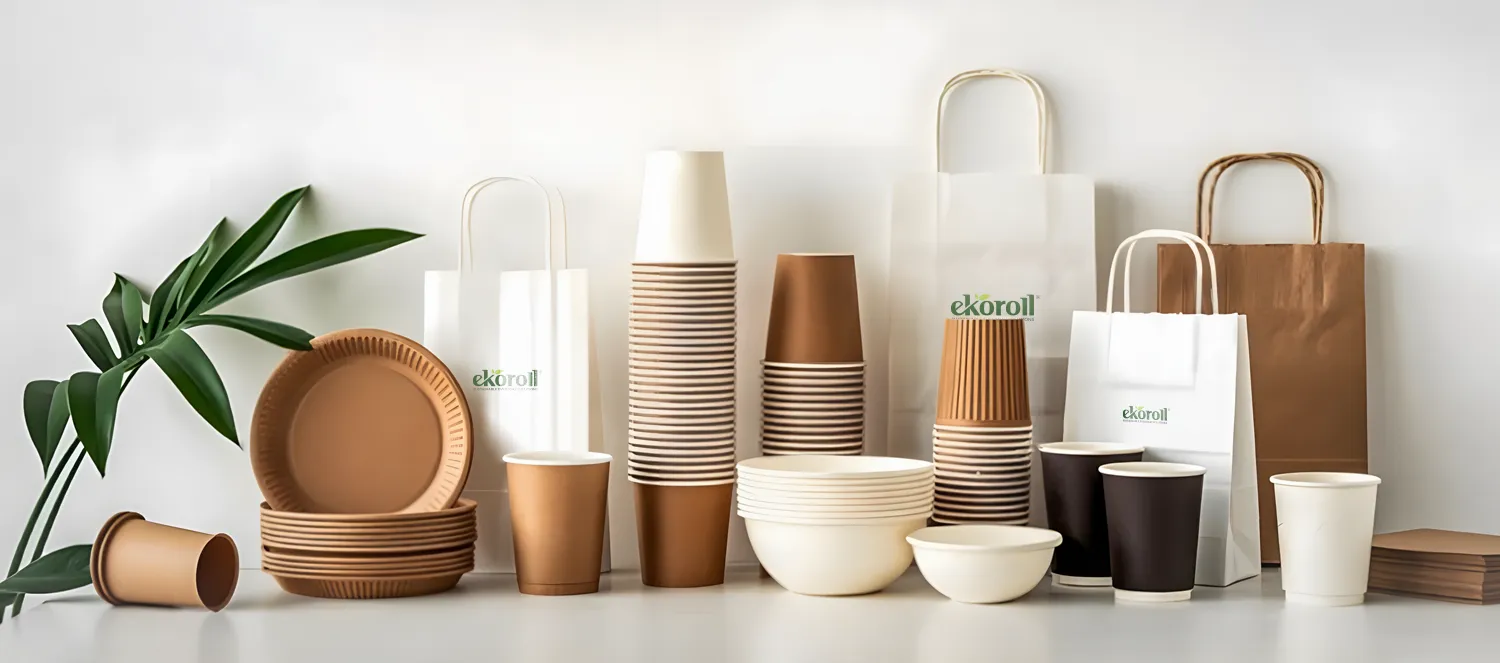
Kraft paper bowls are food containers manufactured from kraft paper — a paper grade produced from wood pulp using the kraft pulping process, which produces a stronger, more tear-resistant paper than standard grades. The distinctive brown color of unbleached kraft paper comes from the natural lignin content retained in the pulp. Bleached kraft paper produces the white variant used in some food service bowl formats.
For food service use, kraft paper bowls require an interior barrier treatment to prevent liquids and oils from penetrating the paper and compromising structural integrity. The type of barrier used is one of the most important specification decisions when sourcing kraft paper bowls.
Interior Barrier Options
- PE (polyethylene) coating: a thin layer of plastic applied to the food-contact interior surface. Provides reliable liquid resistance but introduces plastic content into the bowl, preventing recycling in standard paper streams and bringing the bowl under the EU Single-Use Plastics Directive as a food container made partly of plastic
- PLA (polylactic acid) coating: a bio-based plastic alternative to PE, derived from plant starch. It can be certified for industrial composting (EN 13432), but it counts as plastic under the Single-Use Plastics Directive (Commission guidelines 2021) and is not recyclable in standard paper streams
- Water-based coating: a water-based polymer dispersion with no PE film. Designed for paper recycling where local collection accepts it; compostable only where certified for the specific product. Suitable for standard food service bowl applications including hot food
- Double-wall construction: some kraft bowl formats use a double-wall paper construction rather than a coating to provide liquid resistance — effective for dry and lightly moist food but less reliable for soups and high-liquid content dishes
For operations targeting paper-stream recyclability with no PE lining, water-based coated kraft bowls (water-based, PFAS-free, PE-free) are the specification to request. For compostable-only claims with industrial composting infrastructure available, PLA-coated formats are an option. For operations where barrier performance is the primary consideration and sustainability claims are secondary, PE-coated formats provide the most robust liquid resistance.
Kraft Paper Bowls vs Plastic Containers: Full Comparison
| Feature | Kraft Paper Bowls | PP Plastic Containers | EPS (Polystyrene) Containers |
|---|---|---|---|
| Material | Renewable wood fiber | Petroleum-derived PP plastic | Petroleum-derived expanded polystyrene |
| EU SUP Directive status | No PE lining; classification of the coating depends on its composition | Food containers covered by consumption-reduction measures and EPR (Art. 4, 8) | Banned since 3 July 2021 |
| Plastic-specific levies | Usually none for water-based coated; check national rules | Where they apply, e.g. UK Plastic Packaging Tax, Spain €0.45/kg, Germany’s Single-Use Plastics Fund | Banned — not applicable |
| Paper recycling | Designed for paper recycling where local collection accepts it (water-based coated) | Rarely — food contamination prevents recycling | No |
| Compostable (EN13432) | Only if certified | No | No |
| Heat resistance | Good — suitable for hot food up to 80 to 95°C | Excellent — stable up to 120°C | Poor — banned; unsuitable for high heat |
| Microwave use | Short reheating generally possible (no metal); confirm per specification | Depends on PP grade | No — banned; releases styrene under heat |
| Freezer safe | Yes | Yes | Yes — but banned |
| Liquid resistance | Good with barrier coating | Excellent | Good — but banned |
| Stacking stability | Good — stable under standard delivery stacking | Excellent | Good — but banned |
| Visual presentation | Natural kraft look | Functional, transparent options available | Functional — but negative brand signal |
| Custom printing | Yes — paper surface accepts food-safe print | Limited — requires specialist printing | Limited |
| Unit cost at wholesale | Moderate | Lower | Very low — but banned |
| Total cost (including taxes) | Competitive — little or no plastic tax exposure | Higher when plastic taxes included | Banned |
Performance Under Real Food Service Conditions
The most common concern when switching from plastic containers to kraft paper bowls is performance — specifically whether paper bowls can handle the food types and service conditions in a real food service operation. For standard takeaway and delivery applications, the answer is yes with some practical context.
Hot Food Performance
Kraft paper bowls with barrier coating perform well for standard hot food service including soups, curries, noodle dishes, rice bowls and similar. The paper construction does not absorb heat rapidly, which means the bowl does not become uncomfortably hot to hold. Barrier coating prevents liquid from penetrating the paper under normal single-use contact time — typically the duration from packing to consumption including delivery transit.
The heat resistance of the barrier coating is a relevant specification for soup and broth dishes: water-based coated bowls typically perform well for hot food up to approximately 80 to 95°C under normal use conditions. For very hot or long-held dishes, test samples with your own food before ordering.
Wet and Saucy Food Performance
Dishes with significant liquid content — soups, stews, curries, saucy noodles — are the most demanding application for paper bowl performance. The barrier coating must prevent liquid penetration for the full duration of packing, transit and delivery. High-quality barrier-coated kraft bowls handle these applications reliably. Double-wall construction without barrier coating is not suitable for high-liquid dishes.
Delivery Performance
For food delivery operations, the kraft paper bowl must maintain structural integrity during stacking in delivery bags and during transit. Quality kraft paper bowls maintain their shape under standard delivery stacking conditions across typical delivery times of 20 to 45 minutes. The paper construction is also lighter than equivalent plastic formats, which benefits delivery bag weight management.
Cold Food and Salad Applications
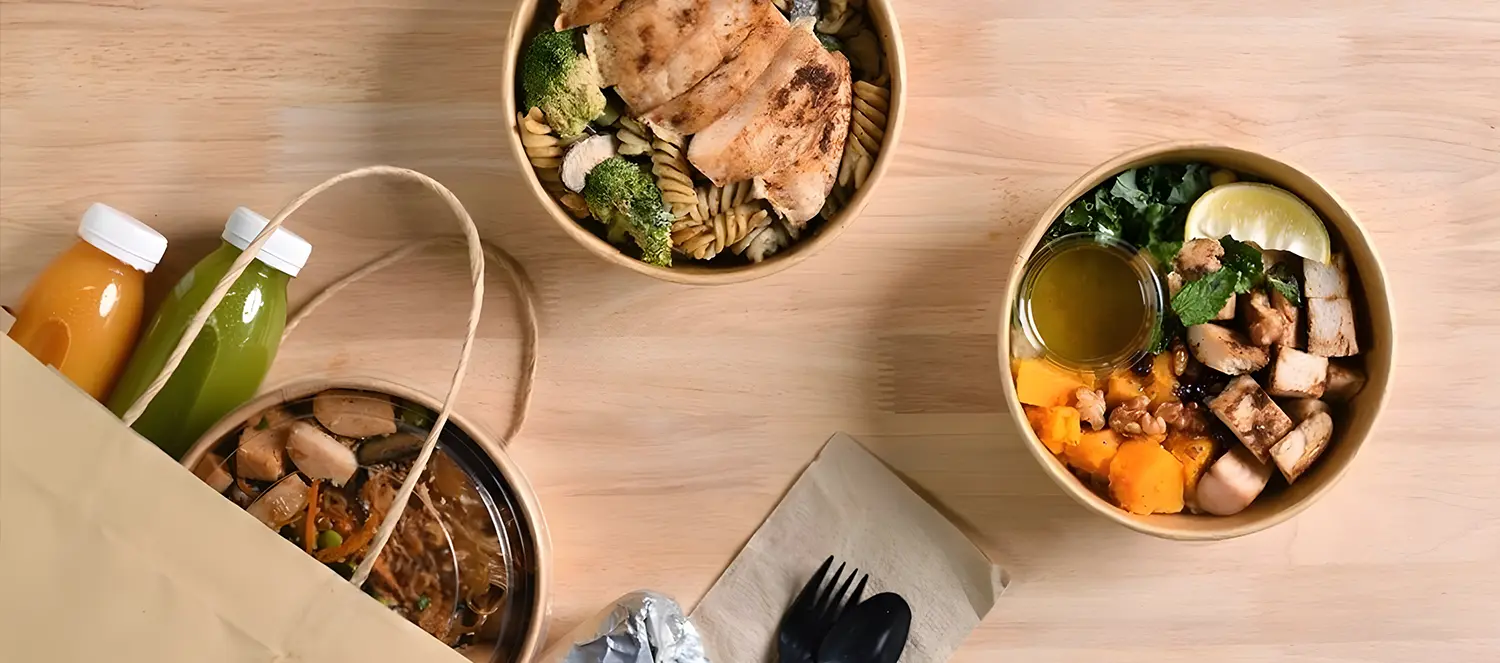
Kraft paper bowls are excellent for cold food applications including salads, poke bowls, grain bowls and similar. The natural kraft aesthetic is particularly well-suited to these menu categories, which typically attract customers who actively value sustainability credentials.
Microwave Safety
Paper kraft bowls without metallic elements are generally suitable for short microwave reheating — confirm per product specification — which provides a customer convenience advantage over some plastic container formats. This is particularly relevant for office and corporate catering delivery where customers typically reheat meals at their desk or in a staff kitchen.
Available Sizes and Formats
Kraft paper bowls are available in a range of sizes and lid configurations to cover all standard food service bowl applications.
Standard Size Range
- 350ml to 500ml: suitable for side dishes, starter portions, desserts and individual salad servings
- 500ml to 750ml: the most common size range for main course rice bowls, noodle dishes, poke bowls and grain bowls
- 750ml to 1,000ml: suitable for large main course portions, sharing applications and salad bar service
- 1,000ml and above: catering and bulk food service applications
Lid Options
Kraft paper bowls are typically used with one of two lid types:
- Matching kraft paper lids: a flat or domed kraft paper lid that creates a fully paper-based bowl and lid system. Combined with water-based coated bowls, it creates a fully paper-based unit designed for paper-stream recycling
- PET (clear plastic) lids: transparent domed lids that allow customers to see the food contents. Provides visual presentation advantage but introduces plastic content into the packaging unit
For operations removing plastic lids or targeting packaging designed for paper recycling, kraft paper lids are the consistent choice. For operations where food visibility is commercially important — particularly salad bars and poke bowl restaurants — clear PET lids provide the visual merchandising advantage, though this introduces plastic content into the unit.
Shapes and Configurations
- Round bowls: standard round bowl form — most commonly used for Asian cuisine, rice bowls, noodles and similar
- Rectangular bowls: rectangular form more suited to salad and grain bowl presentations
- Deep bowls: higher-sided construction for soups and high-volume dishes
Kraft Paper Bowls vs Bagasse Containers: When to Choose Which
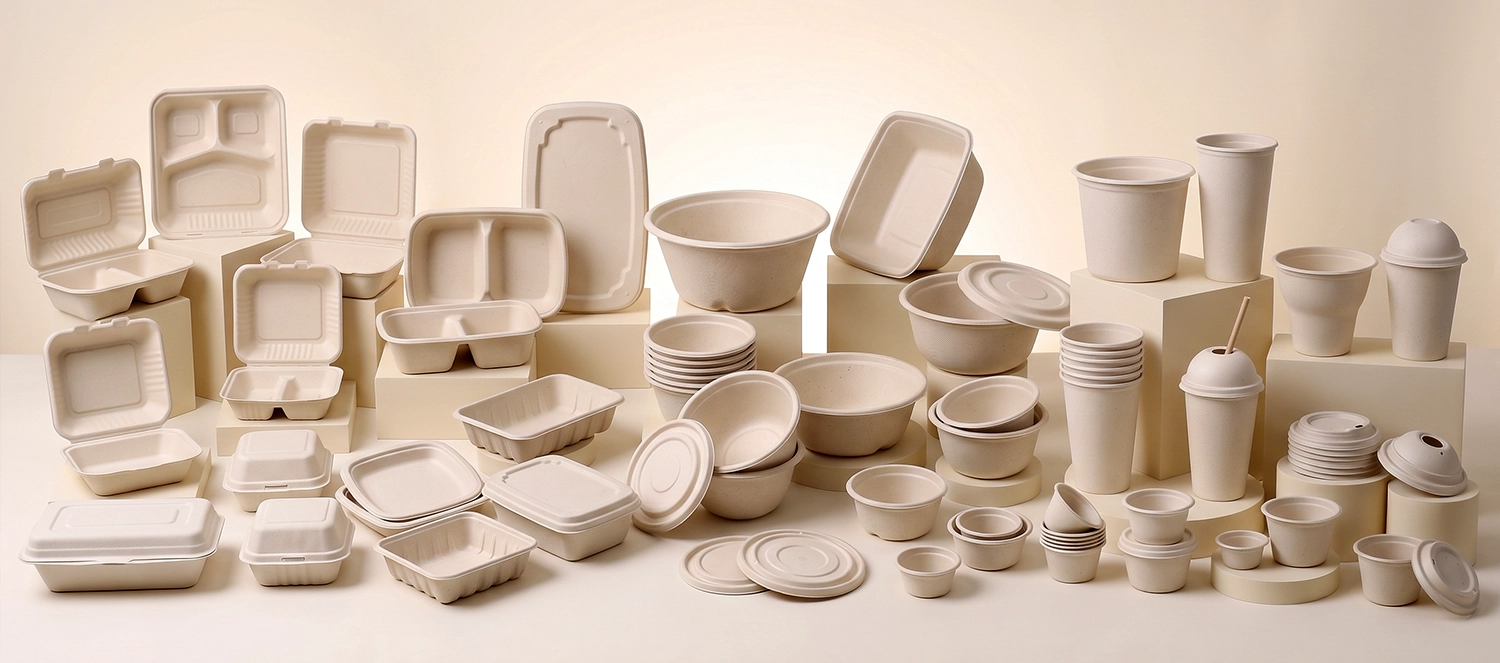
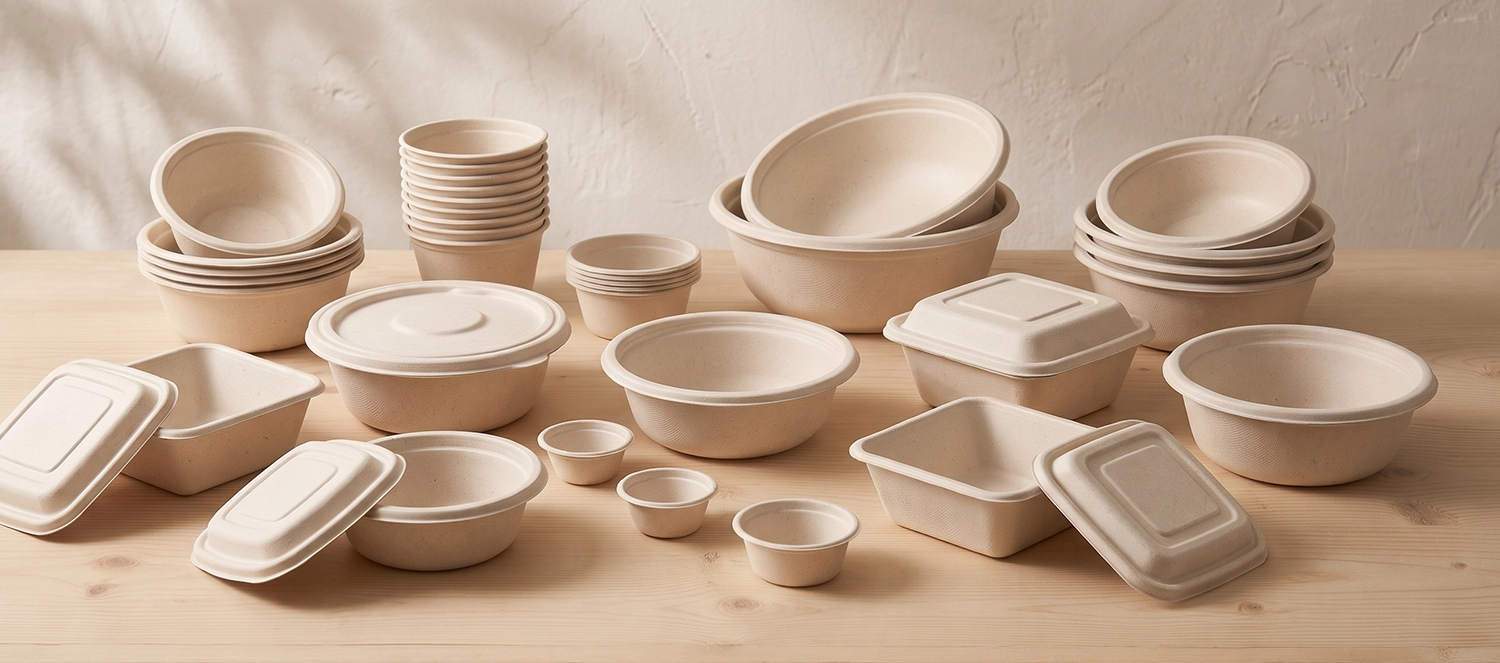
For food service operators evaluating sustainable container options, kraft paper bowls and bagasse containers are often considered together. Neither needs a PE lining or a plastic lid: bagasse is plastic-free fiber, and kraft bowls can use a water-based, PFAS-free, PE-free coating. The choice between them depends on specific application requirements.
When Kraft Paper Bowls Are the Better Choice
- Menu categories where the natural kraft aesthetic strongly reinforces brand positioning: salad bowls, poke bowls, grain bowls, Asian cuisine, healthy food concepts
- Operations where custom printing on the bowl exterior is a priority — the flat paper surface accepts printed branding cleanly
- Cold food applications where the lighter weight and flat lid option create a better presentation
- Operations where a matching kraft bowl and lid aesthetic creates a fully consistent packaging system
When Bagasse Containers Are the Better Choice
- Menu categories with high grease content — bagasse provides natural grease resistance without any coating (Ekoroll’s bagasse is water- and oil-resistant, PFAS-free, and microwave- and freezer-safe), outperforming paper for high-oil dishes like fried food, curries with heavy oil-based sauces and similar
- Applications requiring the strongest heat resistance — bagasse is suitable for hot and cold food and generally performs better with very hot food than paper bowl coatings
- Operations where the premium sustainability signal of bagasse (plastic-free sugarcane fiber) is a specific brand differentiator
- Multi-compartment formats — bagasse is available in compartmented formats that paper bowls typically are not
For a detailed comparison of bagasse vs paper containers across performance dimensions, see: Bagasse vs Paper Food Containers.
Food Applications by Menu Type
Kraft paper bowls are particularly well-matched to the following food service applications.
Poke Bowls and Grain Bowls
The most natural fit for kraft paper bowls. These menu categories are built around fresh, cold or room-temperature ingredients that align perfectly with the kraft paper aesthetic and sustainability positioning. Customers selecting poke bowls and grain bowls are disproportionately sustainability-aware, making the packaging a meaningful brand signal.
Asian Takeaway — Noodles and Rice Dishes
Noodle and rice dishes in takeaway service are the most common high-volume application for kraft paper bowls. The bowl format suits these dishes naturally, and the kraft aesthetic is well-established in this food category across European markets.
Salad Bars and Fresh Salad Service
Kraft bowls provide an excellent presentation for salad bar and fresh salad takeaway service. The kraft aesthetic reinforces the freshness and health positioning of salad-focused concepts. Clear PET lids are often used in this application for product visibility.
Soups and Hot Broth Dishes
Kraft paper bowls with quality barrier coating perform well for soup service in both café and restaurant takeaway applications. The paper construction provides natural heat insulation, keeping the exterior of the bowl comfortable to hold with hot soup inside.
Catering and Events
For catering and event food service, kraft bowls provide portion control, professional presentation and alignment with sustainable event credentials — increasingly relevant for corporate events, festivals and public catering contracts that specify sustainable packaging.
EU Regulatory Compliance
Kraft paper bowls are not subject to the outright bans of the EU Single-Use Plastics Directive, which target EPS food containers, beverage containers and cups (banned since 3 July 2021), plastic cutlery, plates, straws and stirrers. Plastic food containers are not banned but fall under consumption-reduction measures and extended producer responsibility; a paper bowl with a plastic (PE or PLA) lining counts as a food container made partly of plastic.
Water-Based Coated Kraft Bowls
Water-based coated kraft paper bowls have no PE lining (the coating is water-based, PFAS-free and PE-free) and generally fall outside plastic-specific levies; confirm the treatment under each national scheme. They are designed for paper recycling where local collection accepts them (with reasonable food contamination levels) and compostable only where certified for the specific product. General packaging EPR still applies to them, as to all packaging — for example VerpackG licensing and LUCID registration in Germany.
PE-Coated Kraft Bowls
PE-coated kraft bowls contain plastic in the coating, so they fall under the Single-Use Plastics Directive’s measures for food containers (consumption reduction, extended producer responsibility — in Germany the Single-Use Plastics Fund) and, depending on national rules, plastic levies such as Spain’s tax on the plastic content of non-reusable packaging. They cannot be recycled in standard paper streams due to the PE coating. Where these charges apply, the cost differential between PE-coated and water-based coated kraft bowls narrows when they are included in the comparison.
Environmental Claims Compliance
From 27 September 2026, Directive (EU) 2024/825 bans generic environmental claims without recognized excellent environmental performance and sustainability labels not based on a certification scheme or set by public authorities; existing rules already prohibit misleading claims. Recyclability claims therefore need documentation for the waste management infrastructure of the target market. Compostability claims need a certificate for the specific item (EN 13432 for industrial composting, a separate home compost certificate for home composting). PFAS-free claims need specific laboratory test documentation. From 12 August 2026, the PPWR (Regulation (EU) 2025/40) also sets PFAS limits for food-contact packaging.
Wholesale Sourcing Guide
For restaurants and horeca distributors sourcing kraft paper bowls at wholesale volume, the key evaluation criteria are barrier coating type, food contact compliance, available sizes and lids, certification documentation and logistics.
- Barrier coating specification: confirm whether the bowl uses water-based coating, PLA coating or PE coating. This determines recyclability, compostability and plastic tax status
- Food contact compliance: EU food contact material compliance (EC 1935/2004 Declaration of Compliance) for the specific bowl format and coating
- PFAS-free confirmation: request explicit PFAS-free documentation for the paper substrate and coating — kraft paper can contain PFAS treatment without it being declared in standard food contact certificates
- Compostability certification: a certificate for the specific item (industrial or home, as claimed) for compostable claims if required for procurement documentation or waste management programs
- Size range and lid availability: confirm that the size range covers your menu requirements and that matching kraft or PET lid formats are available
- Custom printing: if branded bowls are required, confirm food-safe ink specification and MOQ for custom printed orders
- MOQ: quoted per project, by format, size and print specification
- Sample availability: test under your actual service conditions before bulk orders are placed
Wholesale Kraft Paper Bowls for Restaurants and Horeca
Ekoroll supplies kraft paper bowls with lids wholesale to restaurants, food delivery brands and horeca distributors across Europe. Multiple sizes available. Water-based coated (PFAS-free, PE-free) options designed for paper-stream recycling. With water-based coating, these bowls carry DIN CERTCO home compostable and industrially compostable (EN 13432) certification, held by the producing partner; copies on request. EU food contact compliant. MOQ and pricing quoted per project. Direct supply from Turkey with certification documentation and samples available on request.