Sachet packaging is a small, sealed, flexible pack that holds a single portion of a liquid, gel, powder or granule product — a ketchup or honey portion, a sugar stick, a cream sample. Choose the format by the product (pillow, stick or spouted), the film by the barrier and shelf life the product needs, and test filled samples before ordering in bulk. In the EU, single-use plastic portion packs used in restaurants and hotels are restricted from 1 January 2030, which is already shaping what HoReCa buyers specify.
Sachet packaging is one of the most widely used flexible packaging formats in the world — and one of the most frequently mis-specified. The difference between sachet packaging that performs reliably and a format that leaks, tears under light pressure or fails to dispense cleanly is almost entirely in the specification: film structure, seal integrity, fill weight tolerance and dispensing design. For buyers sourcing sachet packaging for food, cosmetics, pharmaceutical or hygiene applications, understanding these variables is the difference between a product that works at scale and one that generates daily complaints.
This guide covers sachet packaging from specification to application: the formats available, what each is suited for, the film materials and seal specifications that determine performance, the MOQ and procurement realities, and what to verify from suppliers before committing to bulk orders.
What Is Sachet Packaging?
Sachet packaging is a small, sealed flexible package designed to contain a single portion of liquid, semi-liquid, powder or gel product. The defining characteristics of sachet packaging are single-use portion sizing, hermetic sealing for product freshness and hygiene, and ease of opening — typically tear-notched for clean one-handed opening without tools.
Sachet packaging is distinguished from other flexible packaging formats by its portion size (typically 5ml to 50ml for liquids, 2g to 20g for powders) and its single-use intended use. It is not the same as stick packs (which are narrower and typically used for powder or granule products) or pouches (which are larger formats used for multi-serve retail quantities).
Industries That Use Sachet Packaging
Sachet packaging is used across a wide range of industries:
- Food service and horeca: ketchup, mayonnaise, mustard, honey, sugar, salt, sauces and dressings — the highest volume sachet application globally
- Cosmetics and personal care: sample sachets for creams, serums, shampoos and skincare — a primary marketing and sampling format
- Pharmaceutical and nutraceutical: single-dose powders, gels and liquid supplements
- Sports nutrition: energy gels, electrolyte powders and protein single-serves
- Hygiene products: hand sanitizer gel, wet wipes and antiseptic liquids in sealed sachets
- Retail and convenience: single-serve consumer products across food and non-food categories
Explore Ekoroll’s liquid sachet packaging.
Sachet Packaging Formats: Which One for Which Application
The choice of sachet packaging format is determined primarily by the product’s viscosity, fill weight and the user’s opening and dispensing requirements. Getting the format wrong creates operational problems that no amount of quality control on the fill side can fix.
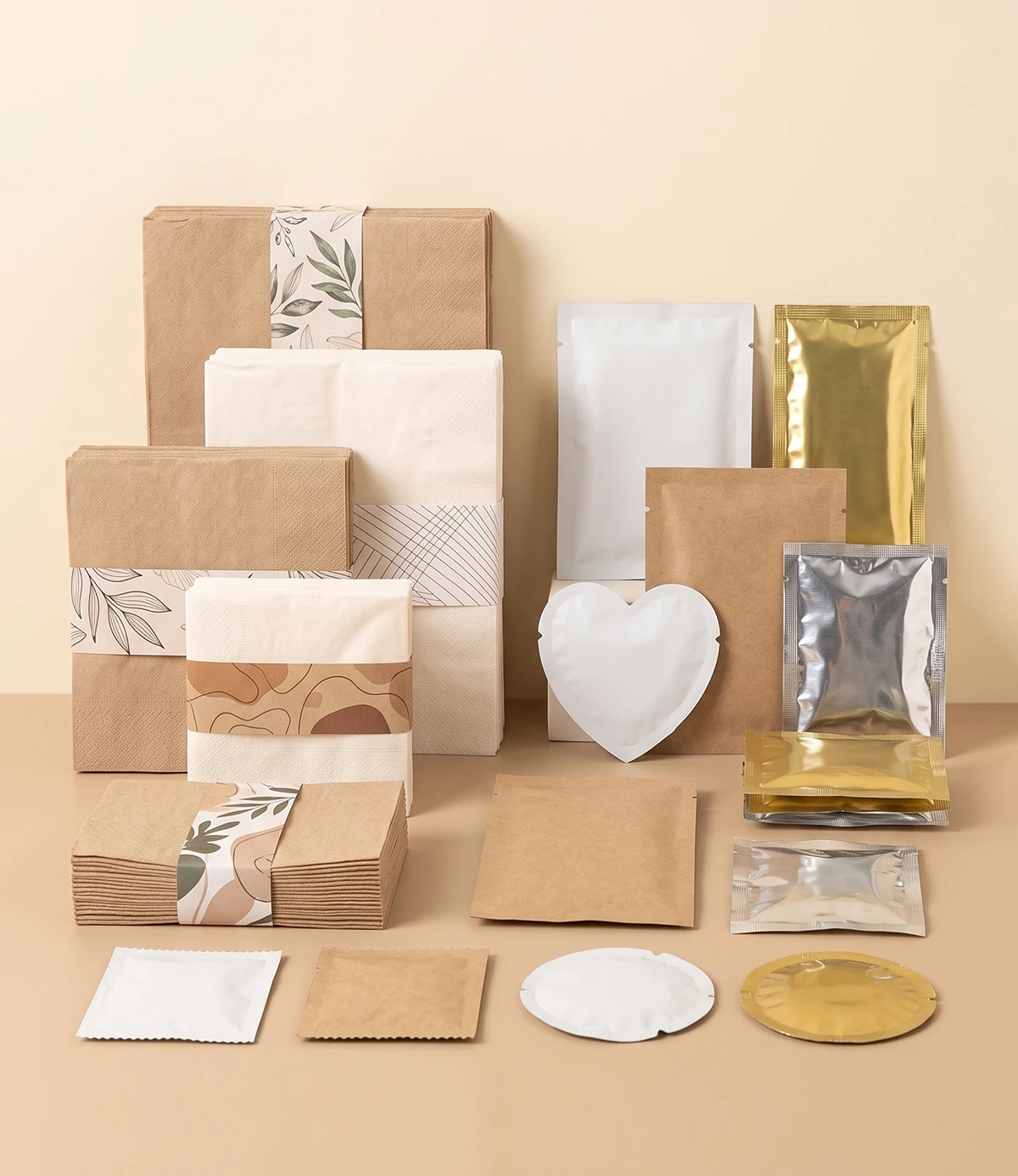
Pillow Sachet
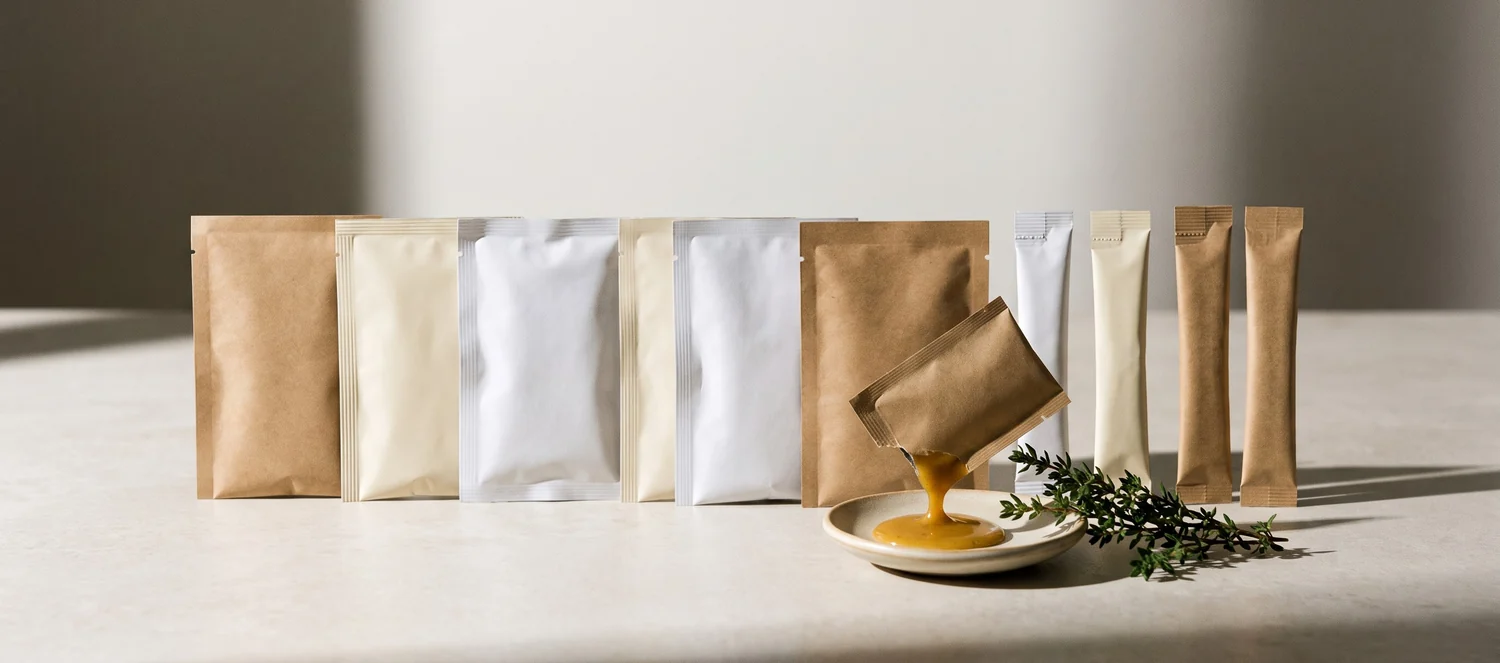
The pillow sachet is the most widely used sachet packaging format: a flat rectangular packet sealed on all four edges with a dome-shaped expansion when filled. It is the standard format for sauce and condiment sachets, honey portions, sugar sachets and cosmetic samples.
- Suited for: low to medium viscosity liquids and gels (ketchup, mayonnaise, honey, mustard, creams), granular products (sugar, salt), powder products (instant coffee, creamer)
- Fill range: 5ml to 30ml for liquids; 3g to 20g for powders
- Opening: tear notch on one or both sides — specify notch position based on product viscosity
- Stacking: flat-stack friendly — efficient for tabletop dispensers and bulk distribution
Stick Sachet (Stick Pack)
A stick pack is a long, narrow tubular sachet — typically 15mm to 20mm wide and 80mm to 120mm long. It is the standard sachet packaging format for single-serve powder products.
- Suited for: powdered drinks, instant coffee, instant soup, protein powder single-serves, sugar singles, creamer
- Fill range: 2g to 15g for powders; 10ml to 15ml for thin liquids
- Opening: top tear — the narrow format allows precise dispensing into a cup
- Not suited for: viscous liquids or gel products — the narrow format creates dispensing problems
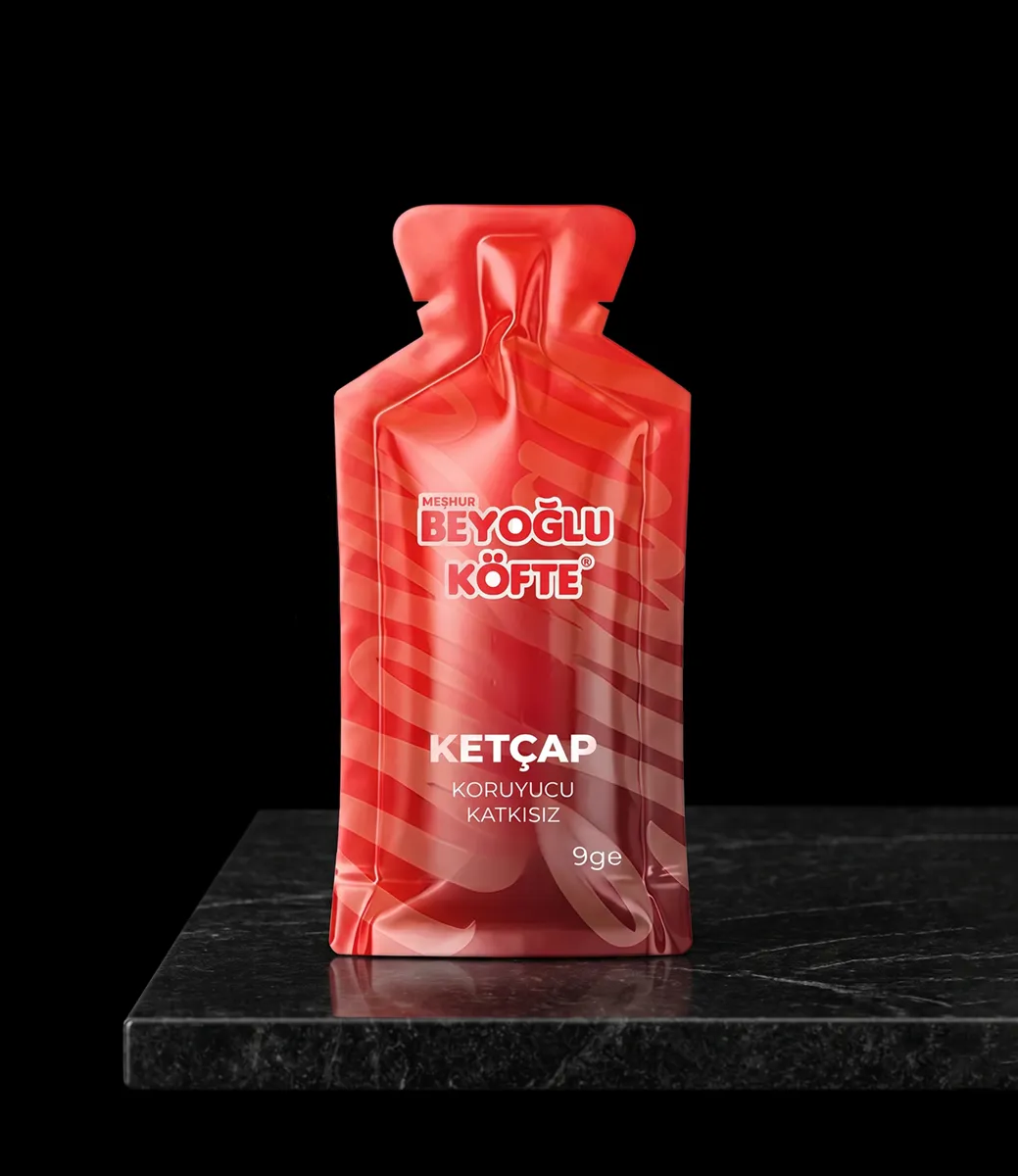
Spouted Sachet
A spouted sachet is a pillow or shaped sachet with an integrated plastic or fiber spout — a small dispensing opening that allows controlled pouring or squeezing of liquid content.
- Suited for: energy gels, liquid nutritional supplements, sauces at higher fill weights (30ml to 100ml), juice portions
- Opening: screw or snap cap on spout — allows partial dispensing and resealing
- Not suited for: low-cost commodity applications where spout cost premium is not justified
Shaped (Die-Cut) Sachet
A shaped sachet uses a custom die-cut form rather than the standard rectangular pillow format. It is a branding-driven format, not a performance-driven one.
- Suited for: premium presentation, branded sampling, promotional and event applications
- Quantity implication: custom die tooling raises the minimum order quantity considerably compared with standard pillow sachets
Sachet Packaging Materials: What Determines Performance
The film material of sachet packaging determines its barrier performance, food safety compliance, seal integrity under pressure and dispensing behavior. For buyers, the material specification is the most important thing to verify from a supplier — and the specification most commonly left unverified in commodity sachet procurement.
Film Structure for Food-Contact Sachet Packaging
Food-contact sachet packaging typically uses a laminated film structure with specific layers for different functions:
- Outer layer: print surface and structural support — typically biaxially oriented polyester (BOPET) or biaxially oriented polypropylene (BOPP)
- Barrier layer: oxygen and moisture barrier — aluminum foil (maximum barrier) or metallized film (moderate barrier, lower cost)
- Seal layer: the food-contact inner layer that provides heat-seal capability — typically cast polypropylene (CPP) or low-density polyethylene (LDPE)
What to Verify from Suppliers
- EC 1935/2004 Declaration of Compliance: required for all food-contact packaging placed on EU markets
- Product-specific compliance: fatty foods, acidic products and alcohol require specific migration testing
- Shelf life compatibility: confirm the barrier specification matches your required shelf life — aluminum foil for 12+ months, metallized film for 6 to 12 months
Sachet Packaging vs Other Flexible Formats
Sachet vs Stick Pack
Both are single-serve formats. Sachet packaging (pillow format) handles liquids, gels, powders and granules across a 5ml to 50ml range. Stick packs are narrower and specialized for powder and granule products where precise pour-into-cup dispensing matters.
Sachet vs Stand-Up Pouch
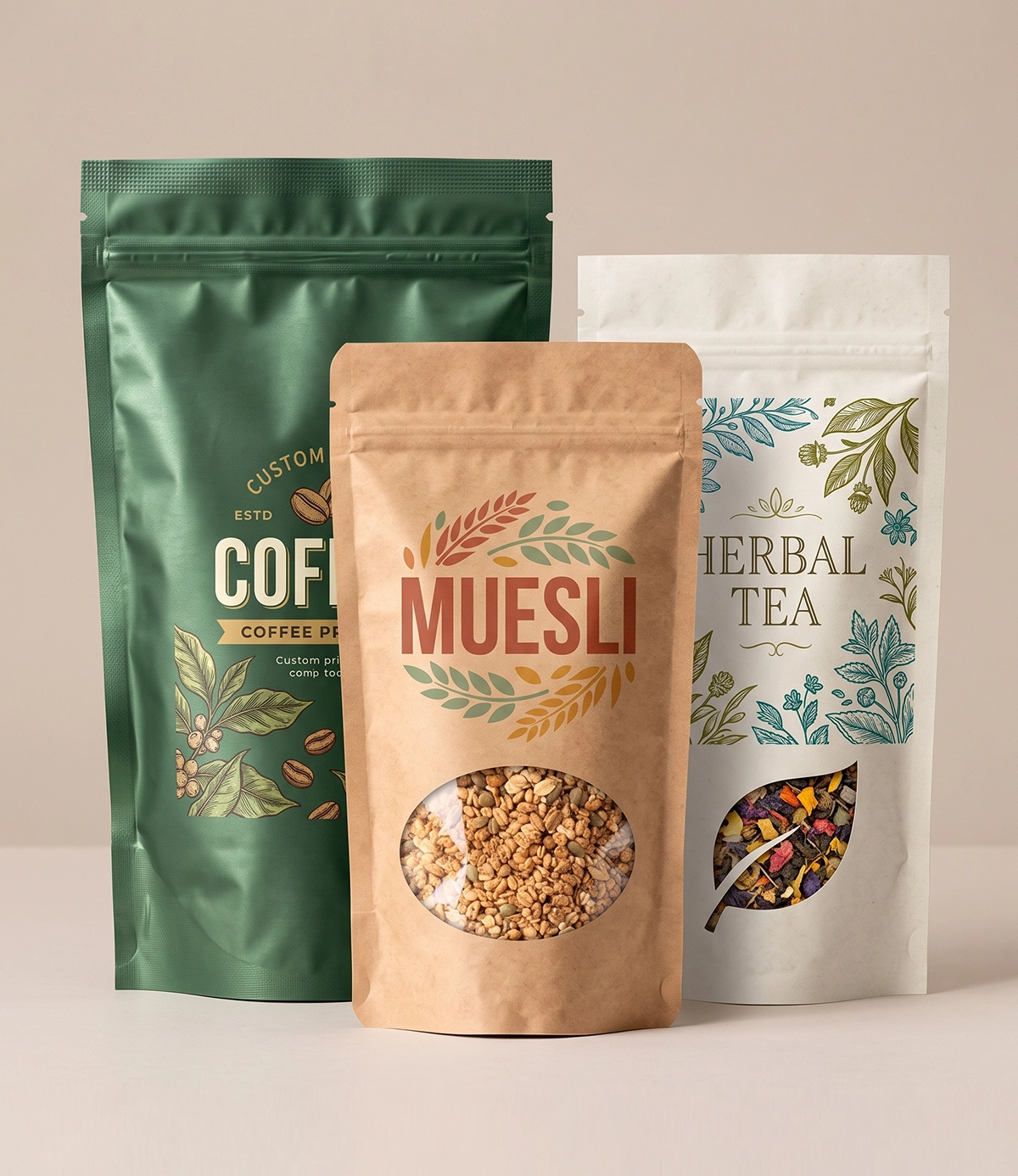
Sachet packaging is a single-serve portion format (5ml to 50ml). Stand-up pouches (doypacks) are multi-serve retail or bulk formats (100ml to 1,000ml+) used for products like coffee, dry goods and snacks. For a complete packaging portfolio, sachets handle single-portion needs while kraft stand-up pouches serve retail-facing multi-serve presentation.
Sachet vs Individual Dispensers
The choice between sachet packaging and bulk dispensers is operational. Sachet packaging is preferable when single-use hygiene is required, when outdoor or delivery service makes open dispensers impractical, and when predictable per-portion cost matters.
Eco-Friendly Sachet Packaging Options
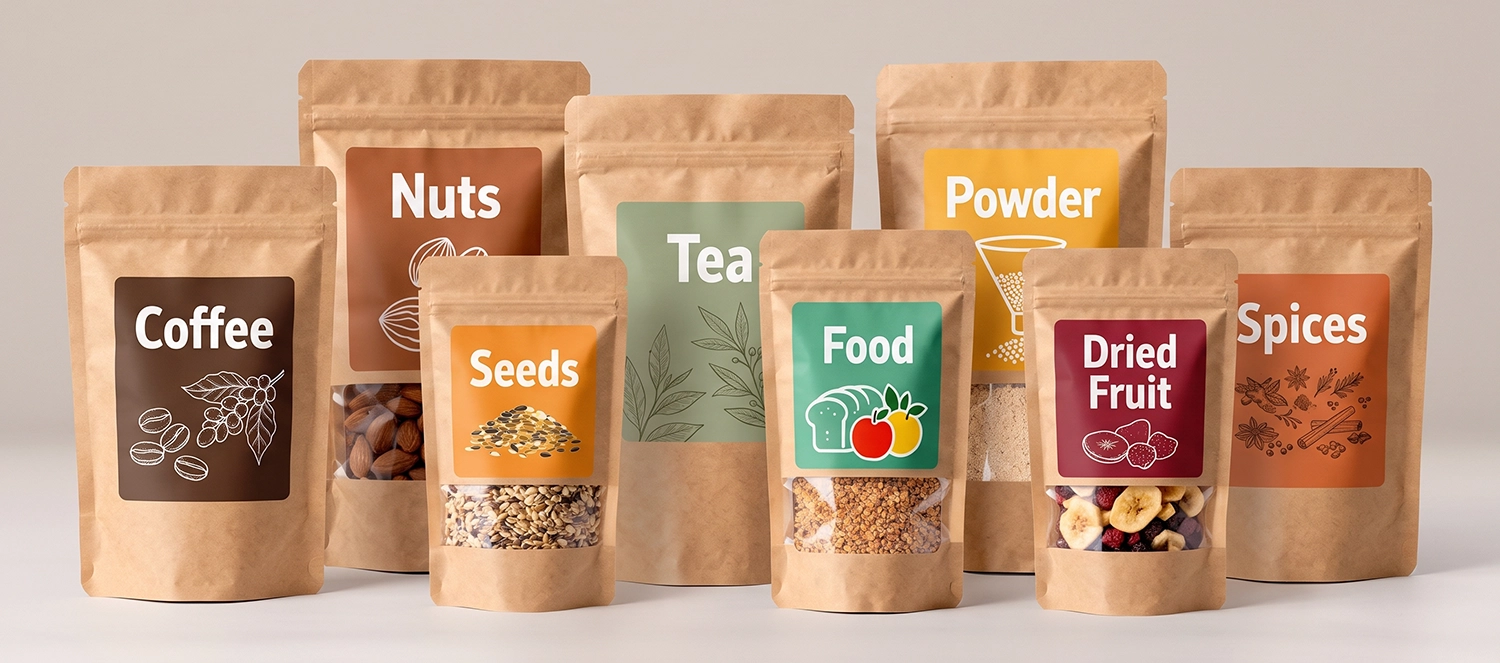
Sustainable sachet packaging is available with specific limitations by product type. Paper-based sachet film is available for dry products (sugar, salt, powder sachets) where moisture barrier requirements are low — kraft paper sachet films give a visible paper look at a modest cost premium. For liquid and sauce sachets, conventional film structures provide the barrier and seal performance required, and fully bio-based or certified compostable alternatives exist but at significant cost premium.
For operators who have switched to eco-friendly food containers, cups and cutlery, sachet condiments are often the remaining conventional plastic component. The documentation requirements for eco-friendly claims are the same as for any other format: specific material verification, not supplier marketing language. Directive (EU) 2024/825, which applies from 27 September 2026, bans generic environmental claims such as “eco-friendly” when they cannot be backed by recognized proof, so ask for the film structure specification behind any sustainability claim.
What Does the EU PPWR Mean for Sachets in Restaurants and Hotels?
The EU Packaging and Packaging Waste Regulation (PPWR, Regulation (EU) 2025/40) entered into force on 11 February 2025 and applies generally from 12 August 2026. Its Annex V lists packaging formats whose use is restricted from 1 January 2030. One of them is single-use plastic packaging for individual portions or servings in the HORECA sector — the sauce, sugar, coffee creamer and condiment portions served with food and drinks consumed on the premises.
What this means in practice for buyers:
- Dine-in condiments are the target. Plastic portion packs used at the table in restaurants, cafés, hotels and canteens are the main format affected. Bulk dispensers, refillable containers and portions in other materials are the alternatives operators are evaluating.
- Check the exact scope. Annex V defines the formats and the exceptions. Before you change a specification, read the Annex V entry and confirm with your supplier whether your film structure falls inside it.
- Paper-based sachets are worth sampling now. For dry products such as sugar, salt and pepper, paper-based sachet films are already practical. For sauces, the barrier and seal needs are higher, so test candidate films with your own product well before 2030.
- Take-away and delivery need their own check. Whether portions packed with take-away and delivery meals are covered depends on the exact wording of Annex V, so confirm it before you change your take-away specification.
For the wider regulatory picture, see the EU packaging regulations guide for HoReCa.
For the complete eco-friendly packaging context, see: Takeaway Packaging Solutions for Food Delivery and Eco-Friendly Packaging for Restaurants.
Sachet Packaging Procurement: MOQ and Sourcing
MOQ and Volume Planning
Minimum order quantities for sachet packaging are generally higher than for rigid packaging formats, because film printing and tooling setup costs are spread over each run; custom-printed and die-cut formats need larger runs than plain ones. Ekoroll quotes quantities per project. For buyers with lower monthly consumption, this means longer inventory holding or consolidation with a distributor who maintains stock from larger production runs.
Samples Before Bulk Orders
Always request sachet samples filled with your specific product before confirming a bulk order. Film specifications that perform perfectly with thin vinaigrette may perform poorly with thick mayonnaise or honey. Test specifically for: seal integrity under squeeze pressure, clean tear-notch opening behavior, dispensing completeness, and flavor or odor transfer from the film to the product. These tests require filled samples under your actual fill conditions.
Custom Printing
Custom-printed sachet packaging (with your brand identity, logo or product information) is available from most manufacturers at premium cost and higher MOQ than plain sachets. For brand sampling and premium presentation, custom-printed sachet packaging provides a consistent brand touchpoint. For commodity applications, plain sachets typically provide better value.
Sachet Packaging from Ekoroll
Ekoroll supplies liquid sachet packaging for honey, sauces, condiments and hygiene products, and kraft stand-up pouches for multi-serve retail packs, from Türkiye to buyers in Europe, the Middle East and Africa. Send us your product, portion size and market, and we will propose a format and film structure, send samples to test with your own product, and quote in writing. Request a quote or browse the catalog.
Products in this article
Sources
- Regulation (EU) 2025/40 on packaging and packaging waste (PPWR) — EUR-Lex
- Regulation (EC) No 1935/2004 on materials and articles intended to come into contact with food — EUR-Lex
- Directive (EU) 2024/825 on empowering consumers for the green transition — EUR-Lex
- New EU Packaging and Packaging Waste Regulation: Highlights and Challenges Ahead — Keller and Heckman LLP