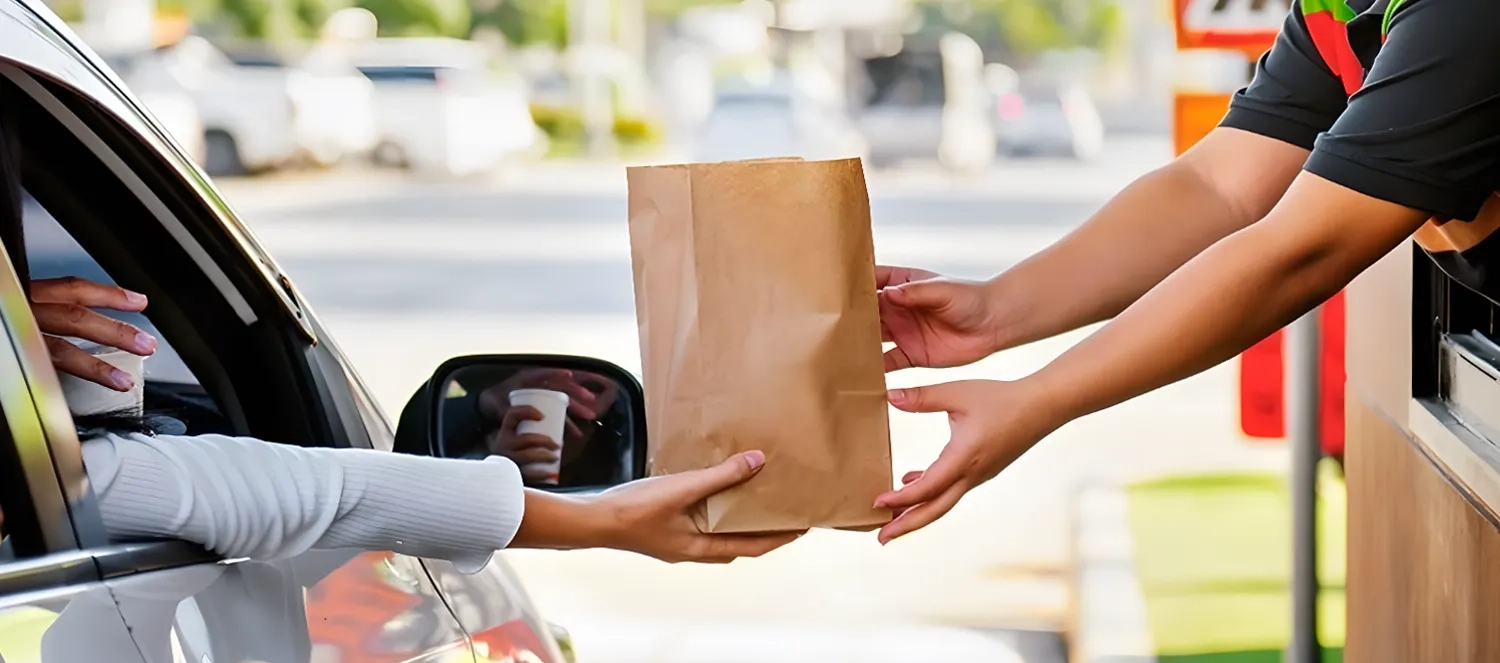
Takeaway packaging for food delivery fails in specific, predictable ways. A container that performs perfectly in a café handing food directly to a customer fails in delivery because the stress conditions are fundamentally different: transit time, bag stacking, thermal cycling, vibration during transport and handling by a delivery driver rather than trained kitchen staff. Getting takeaway packaging right for delivery requires understanding these failure modes — and building a system that addresses them before the food leaves the kitchen.
This guide covers takeaway packaging solutions for food delivery from a system design perspective: which packaging performs for which food type under delivery conditions, what the common failure points are, how to build a complete delivery packaging system, and what the current EU regulatory requirements mean for the formats you choose.
Why Delivery Packaging Is Different from In-Café Packaging
The difference between packaging for in-café service and packaging for delivery is not a matter of degree — it is a matter of fundamentally different performance requirements.
The Five Delivery Stress Conditions
- Extended transit time: in-café service means food reaches the customer within seconds or minutes of packing. Delivery means 15 to 45 minutes of transit after packing — during which temperature continues dropping, condensation builds inside containers and any seal weakness becomes a leak.
- Bag stacking pressure: delivery bags stack containers vertically and horizontally. A container that holds perfectly on a flat surface may leak or deform under the compression of other containers placed on top of it during delivery.
- Vibration and movement: motorcycle and bicycle delivery involves continuous vibration and sudden movements. Liquid dishes, soups and sauces slosh against container walls and lids in ways that don't occur in static service.
- Handling by non-kitchen staff: delivery drivers are not trained food service staff. Containers that require careful orientation, specific lid seating or gentle handling may be mishandled during the handoff and transit process.
- Temperature differential: hot food in an insulated delivery bag creates a microenvironment where steam condenses on cool container surfaces. Packaging that does not manage condensation effectively creates soggy food, weakened packaging structure and customer complaints.
The Implication for Packaging Selection
Every packaging format you evaluate for delivery should be tested under simulated delivery conditions — not just under in-café service conditions. Fill the container with your actual food at your actual packing temperature. Stack it in your delivery bag with representative order contents. Carry it for your average delivery time. Open it and assess: is the food presentation intact? Did the container leak? Did the lid remain sealed? Is there excessive condensation? The answer to these tests, not the supplier's specification sheet, determines whether the format is suitable for your operation.
Packaging by Food Type: What Actually Works
The most common mistake in delivery packaging procurement is buying by container format rather than by food type. A bagasse container that works perfectly for rice dishes may fail for a high-oil curry. A lid that seals adequately for a cool dessert may pop under the steam pressure of a hot soup. Packaging selection should start with the food, not the container.
Hot Meals: Rice, Pasta, Grain Dishes
These dishes are the easiest delivery packaging challenge: moderate moisture, moderate temperature, relatively solid food that does not move aggressively during transit.
- Container: bagasse food containers with fiber lids. Bagasse handles temperatures up to 95°C, manages condensation better than plastic due to its micro-porous fiber structure, and maintains structural integrity under bag stacking. The fiber-on-fiber system of bagasse container plus molded fiber lid provides the most reliable seal for this food category.
- Lid specification: standard fiber lid without additional barrier treatment is adequate for most rice and pasta dishes. For dishes with sauces or gravies, specify barrier-treated fiber lids.
- Size selection: avoid overfilling — containers should be 80 to 85 percent full to allow the lid to seat properly and prevent pressure-based lid displacement during transit.
Explore: bagasse food containers and molded fiber lids.
High-Oil Dishes: Fried Food, Curries, Fatty Meats
High-oil content is the most demanding packaging challenge in delivery. Oil migrates through untreated packaging materials over the transit time of a typical delivery, creating grease-through on the container exterior and structural weakening of the container wall.
- Container: bagasse food containers with integrated PFAS-free additive treatment or water-based barrier coating provide reliable oil resistance for high-fat delivery applications. Specify oil-resistant bagasse formats explicitly — standard untreated bagasse is adequate for moderate-fat dishes but may allow surface oil migration on high-fat dishes over 30 to 45 minutes of transit.
- Lid specification: barrier-treated fiber lid essential. An untreated fiber lid over a high-oil dish will absorb oil and weaken over transit time.
- Test protocol: pack your highest-oil dish at packing temperature, stack in delivery bag, transit simulate for your average delivery time. Inspect the container exterior and lid for oil migration before committing to the format.
Soups, Broths, High-Liquid Dishes
High-liquid dishes are the highest-risk delivery packaging application. Liquid exerts pressure on container walls and lids during transit movement, and any seal weakness becomes a leak under these conditions.
- Container: bagasse containers with secure lid-seal geometry. The container-lid interface is the critical point — the lid must provide a positive seal, not just a resting fit. Kraft paper bowls with lids are an alternative for soups, but the fiber-to-fiber seal of bagasse container plus molded fiber lid is generally more reliable for high-liquid applications.
- Lid specification: barrier-treated fiber lid with positive snap-fit. Test the specific lid-container combination specifically for liquid seal — fill with water at serving temperature, invert for 60 seconds, check for any moisture transfer.
- Packing practice: do not fill soup containers more than 75 percent capacity. The air space allows for liquid movement without pressure on the lid seal during transit vibration.
For kraft bowl options: kraft paper bowls with lids.
Burgers, Sandwiches, Wraps
These formats require packaging that maintains presentation integrity rather than liquid containment. The challenge is condensation management: a hot burger in a sealed container steams itself into a soggy product during delivery transit.
- Primary packaging: PFAS-free greaseproof paper wrap for direct food contact. Greaseproof paper allows minimal steam venting while maintaining grease barrier — better condensation management than sealed containers for bread-based items.
- Secondary packaging: kraft paper takeout boxes for structural protection and presentation. The box maintains form during delivery bag stacking without creating the sealed steam environment that ruins bread texture.
- Critical specification: verify PFAS-free status of greaseproof paper with supplier documentation. PFAS has been commonly used in greaseproof paper formulations for oil resistance. Under the EU regulatory direction on PFAS in food contact materials, PFAS-free certification is both a food safety and compliance requirement.
Explore: PFAS-free greaseproof paper and takeout boxes.
Beverages: Hot and Cold
Beverage packaging for delivery has one additional challenge beyond café service: the cup and its closure must maintain seal integrity during the bag transit, not just for the few minutes of in-café service.
- Hot beverages: lid-free cups with water-based coating maintain seal integrity for standard delivery transit times of 20 to 40 minutes. The folded closure provides comparable leak resistance to conventional cup-and-lid systems under normal delivery conditions. Test with your specific beverages before committing.
- Cold beverages: lid-free cold cups work for standard cold brew and iced coffee delivery. For thick blended drinks, test the specific format with your products — viscosity affects flow and seal behavior.
- Cup placement in delivery bag: cups should be upright in a dedicated cup holder section of the delivery bag, not loose in the main bag compartment. This is a packing procedure issue rather than a cup specification issue, but it is the most common source of delivery beverage complaints.
Explore: lid-free hot cups and lid-free cold cups.
Salads and Cold Dishes
Cold food delivery has different packaging requirements from hot. Temperature maintenance is less critical but presentation integrity and moisture management become more important.
- Container: bagasse containers work well for cold salads and grain bowls. The fiber structure manages the moisture from dressed salads better than sealed plastic containers that create moisture pooling.
- Lid specification: standard fiber lid adequate — no heat-related barrier requirement for cold dishes.
- Dressing: separate dressing packaging is strongly recommended for delivery salads. Dressing mixed at packing results in wilted greens by delivery time for most transit distances. Pack dressing in a small separate container and note this in the order delivery instructions.
Single-serve condiments travel best in sealed sachets — see our sachet packaging guide for formats and materials.
Building the Complete Delivery Packaging System
A delivery packaging system is not a collection of individual items — it is an integrated set of formats that work together to cover every food type on your menu with consistent quality and consistent supplier documentation.
The Core System Components
A complete delivery packaging system for a standard restaurant or café menu typically requires:
- Bagasse food containers (2 to 3 sizes): covering small, medium and large meal portions. Standard sizes: 500ml, 750ml, 1,000ml. Each size is a separate SKU — plan MOQ accordingly.
- Molded fiber lids (matching sizes): one lid format per container size. Verify dimensional compatibility with the specific container format before ordering.
- Kraft paper bowls with lids: for soup and broth applications where the bowl format better matches the food category than a rectangular container.
- Takeout boxes (1 to 2 sizes): for burgers, sandwiches and structured meal items. Kraft paper construction, food-safe.
- PFAS-free greaseproof paper: for direct food wrap applications and as a liner in takeout boxes.
- Lid-free cups (1 to 2 sizes): covering your primary hot and cold beverage sizes. 12oz and 16oz cover most café menu ranges.
- Wooden or bamboo cutlery sets: FSC certified, included with orders requiring cutlery. A system that is plastic-free in containers and cups but includes plastic cutlery is not a plastic-free system.
SKU Management
Every format in the system is a procurement SKU requiring its own MOQ management, reorder cycle and buffer stock calculation. A standard delivery packaging system of 8 to 10 SKUs is operationally manageable from a single supplier. Multiple suppliers for different components creates documentation fragmentation, inconsistent quality management and higher procurement administration cost.
Single Supplier vs Multiple Suppliers
For operations building a complete plastic-free delivery packaging system, single-supplier procurement delivers measurable advantages: unified certification documentation across all formats, aggregated volume pricing, simplified EPR reporting (one packaging data source rather than four to six), and single point of accountability for quality issues. See: How to Choose a Food Packaging Supplier for EU Markets.
EU Regulatory Requirements for Delivery Packaging in 2025
Delivery packaging in European markets is subject to the same regulatory framework as in-café packaging — with specific implications that are particularly relevant for food delivery operations.
- SUP Directive and tethered lids: delivery operations using separate snap-on plastic cup lids are non-compliant with the tethered lid requirement in force since July 2024. Lid-free cups and non-plastic fiber lids both resolve this without format redesign.
- Plastic packaging taxes: PE-lined containers and plastic lids are subject to plastic packaging taxes in UK, Spain, Italy, Germany, France and Portugal. Bagasse containers, fiber lids and water-based coated cups carry no plastic tax.
- PFAS in food contact materials: particularly relevant for greaseproof paper and barrier-treated containers. Verify PFAS-free status with laboratory test documentation for all paper-based food contact formats.
- Green Claims Directive (from 2026): "eco-friendly packaging" or "sustainable delivery" claims require verified documentation. Build your certification documentation portfolio now if you plan to make these claims in customer communications.
For the complete regulatory framework: EU Plastic Ban Explained and Horeca Packaging Procurement Guide.
Packaging Performance Testing: The Delivery Simulation Protocol
Before committing to any packaging format for delivery, run this testing protocol with your actual food products under simulated delivery conditions.
- Pack at actual packing temperature: fill containers with your actual food at your kitchen packing temperature — not at room temperature. Temperature affects container performance, lid seal integrity and condensation behavior.
- Assemble a representative order: pack a complete order as it would leave the kitchen — multiple containers, cups, cutlery, greaseproof-wrapped items — in your actual delivery bag configuration.
- Transit simulation: carry the packed bag for your average delivery transit time with normal movement (walking, steps, light jostling). Do not use a static soak test — movement is the relevant stress condition for delivery.
- Open and assess: inspect each item after transit. Evaluate: lid seal integrity (any leakage?), container structural integrity (any deformation?), food presentation (is it what a customer should receive?), condensation levels (is bread soggy? are vegetables wilted?), oil migration on container exterior (for high-fat dishes).
- Fail criteria: any leakage is an automatic fail. Significant condensation damage to bread-based items is a fail. Container deformation that makes the item difficult to open is a fail. Everything else is a quality judgment — assess against the customer experience standard you want to deliver.
Complete Delivery Packaging System: Wholesale from a Single Supplier
Ekoroll supplies complete plastic-free delivery packaging systems wholesale to restaurants, food delivery brands and horeca distributors across Europe. Bagasse containers, fiber lids, lid-free cups, PFAS-free greaseproof paper, wooden cutlery — all from one supplier with unified certification documentation. Factory-direct from Turkey. MOQ from 5,000 units per format.
Frequently Asked Questions
The best delivery packaging depends on your food type, but a complete plastic-free system for most European delivery operations consists of: bagasse food containers with molded fiber lids for hot meals and salads, kraft paper bowls with fiber lids for soups, PFAS-free greaseproof paper and kraft takeout boxes for burgers and sandwiches, lid-free water-based coated cups for beverages, and FSC certified wooden cutlery. This system covers standard delivery menu ranges, carries no plastic packaging tax in applicable EU markets, meets tethered lid requirements, and provides the documentation needed for Green Claims Directive compliance from 2026. The key is testing every format with your actual food products under simulated delivery conditions before committing to bulk orders.
Leakage prevention requires addressing three separate points: the container material, the lid seal and the fill level. For container material, bagasse with barrier treatment provides better liquid resistance for high-oil and high-liquid dishes than untreated formats. For lid seal, use a molded fiber lid with a positive snap-fit and verify the seal with the fill-and-invert test (fill with liquid at serving temperature, invert for 60 seconds, check for moisture transfer). For fill level, do not fill containers more than 80 to 85 percent capacity — the air space allows for liquid movement during transit without pressure on the lid seal. The most common source of leakage in delivery operations is overfilling, not packaging quality — address packing procedure as well as format specification.
Bagasse containers handle the large majority of delivery food types well: hot meals, cold salads, grain bowls, most curry and sauce dishes with barrier-treated versions, and cold food applications. The specific limitation is very high-oil content dishes where untreated bagasse may allow surface oil migration over long transit times — specify oil-resistant (barrier-treated) bagasse for these applications. The other limitation is food requiring transparency through the lid (salad bars, fresh food retail) where clear PET containers have a presentation advantage that bagasse cannot replicate. For most standard restaurant and café delivery menus, bagasse with appropriate lid specification is suitable across all food types. Test with your specific highest-fat and highest-liquid dishes before bulk ordering.
Yes. Water-based coated lid-free cups maintain seal integrity during standard delivery transit times of 20 to 40 minutes under normal handling and bag conditions. The folded closure provides comparable leak resistance to conventional cup-and-lid systems for standard hot and cold beverages. Key conditions: the cup should be carried upright in a dedicated cup holder section of the delivery bag (not loose in the main compartment), and the folded closure should be fully seated before bag packing. Test with your specific beverages at your serving temperatures before committing. Thick blended drinks may behave differently — test these formats specifically if they represent significant volume in your delivery menu.
A complete plastic-free delivery packaging system for EU markets requires: EC 1935/2004 Declaration of Compliance for every food contact format; EN13432 certification from TÜV Austria or DIN CERTCO for all formats claimed to be compostable (bagasse containers, fiber lids, water-based coated cups); PFAS-free third-party laboratory test results covering both paper substrate and coating for all paper-based food contact formats (cups, greaseproof paper, barrier-treated containers); FSC certification for wooden cutlery; and written coating type confirmation (water-based, not PE or PLA) for all cups. From 2026, these documents are needed to substantiate any sustainability claims about your packaging under the EU Green Claims Directive. A supplier unable to provide all of these for their products is not adequately documented for professional EU market procurement.