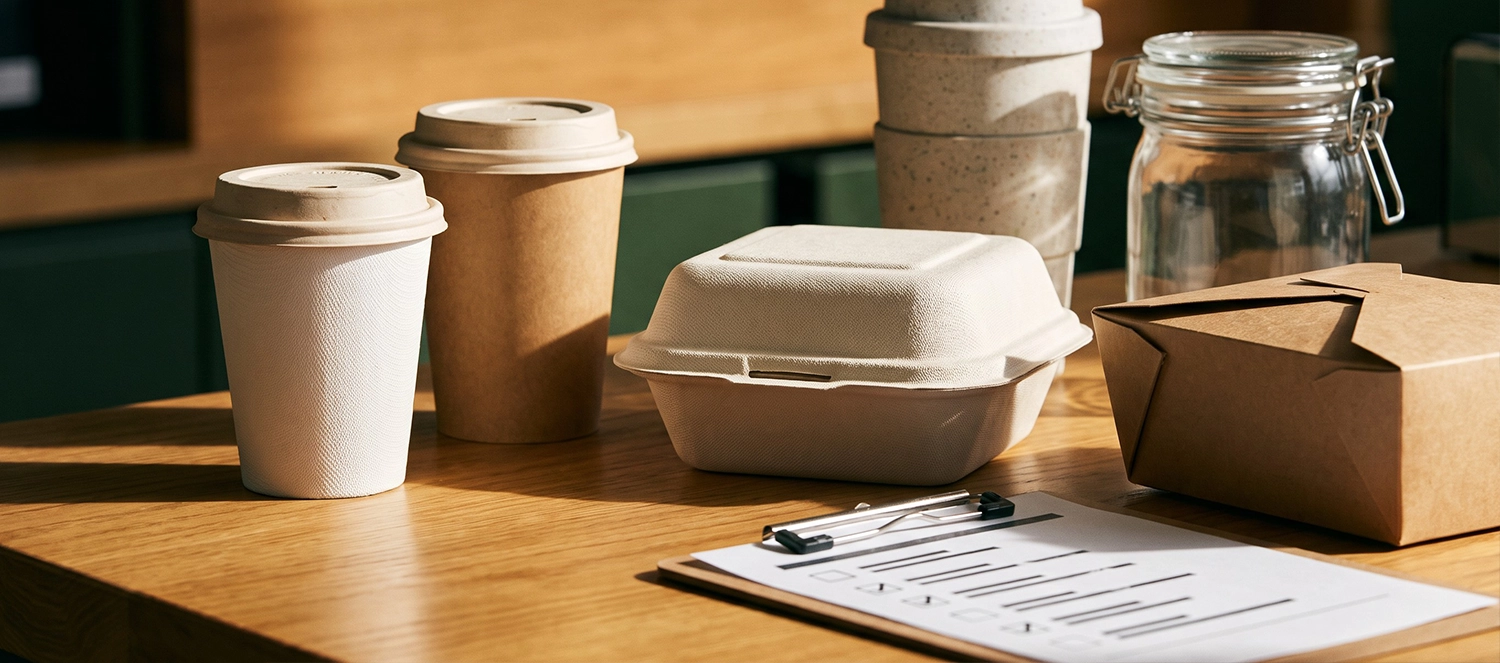
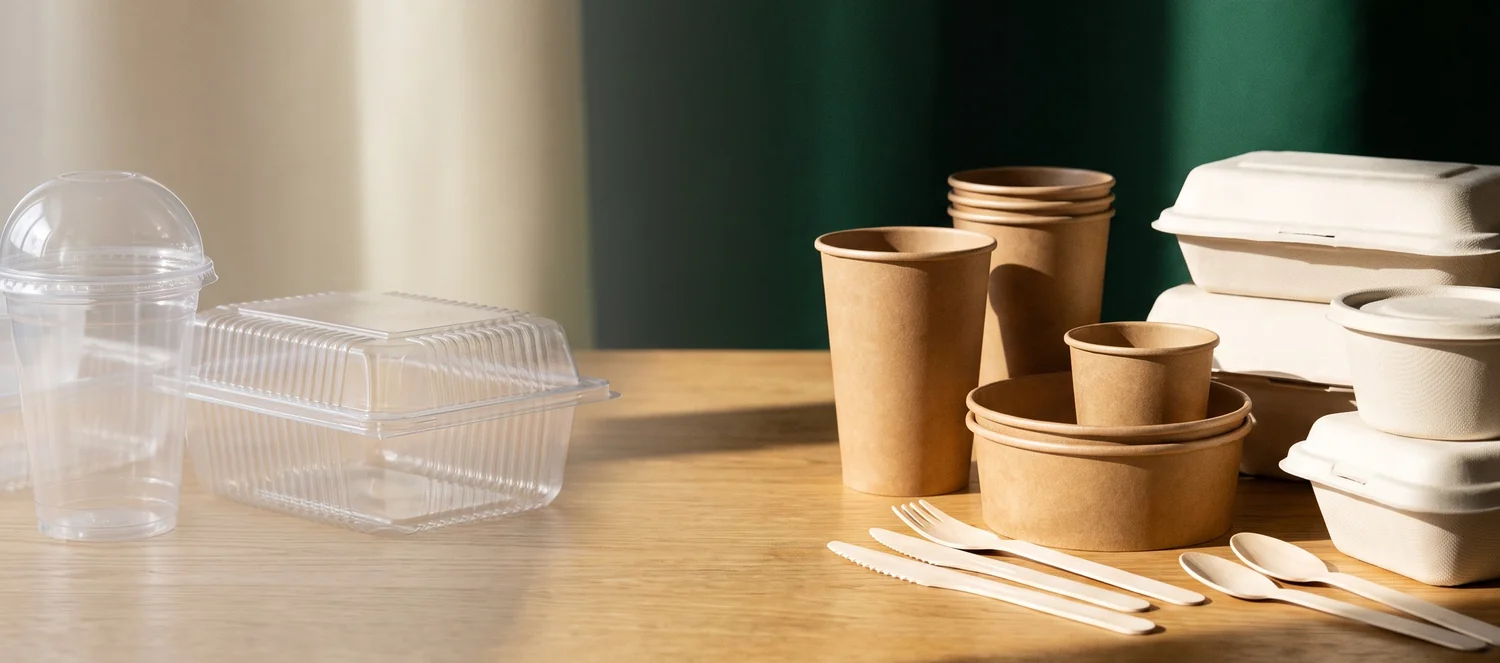
The EU plastic ban is not a single regulation with a single deadline. It is a layered set of directives, regulations, national implementations, EPR schemes and taxes that together are reshaping the regulatory environment for food packaging across European markets. For food service operators, horeca distributors and packaging buyers, understanding what is already in force, what is coming and what the practical implications are for procurement decisions is essential for both compliance and commercial planning.
This guide explains the EU plastic ban for food service packaging in plain terms: what is banned, what is restricted, what is taxed, what is coming, and what the alternatives are for each affected format.
The EU Single-Use Plastics Directive: What It Is and What It Covers
The primary instrument of the EU plastic ban is Directive (EU) 2019/904, known as the Single-Use Plastics Directive (SUP Directive). It was adopted in June 2019 and its bans have applied across EU member states since July 2021. It targets single-use plastic products — items made entirely or partly from plastic and typically used once before disposal — that make up a disproportionate share of plastic litter in European environments. Following the Commission’s 2021 guidelines, bio-based and biodegradable plastics such as PLA count as plastic under the Directive; unmodified natural fiber such as bagasse or molded fiber without plastic does not.
The SUP Directive addresses single-use plastic products in different ways:
- Banned products (Article 5): specific single-use plastic items that cannot be placed on the EU market at all
- Consumption reduction (Article 4): products whose consumption member states must reduce through national measures — including cups for beverages with their covers and lids, and food containers
- Product requirements (Article 6): tethered caps and lids for beverage containers up to 3 liters (bottles and beverage cartons)
- Marking (Article 7) and EPR (Article 8): items that can still be sold but require specific labeling and producer responsibility
What Is Completely Banned
The following single-use plastic products have been banned from placement on the EU market since July 2021. These bans apply across all EU member states and affect all businesses placing these products on European markets.
Food Service Items Banned
- Single-use plastic cutlery: plastic forks, knives, spoons and chopsticks, including those made of PLA or CPLA. This is one of the most directly relevant bans for food service operations. Wooden, bamboo and other non-plastic alternatives are the usual replacement
- Single-use plastic plates: plastic plates used for single-use food service are banned. Paper and fiber alternatives are the usual replacement
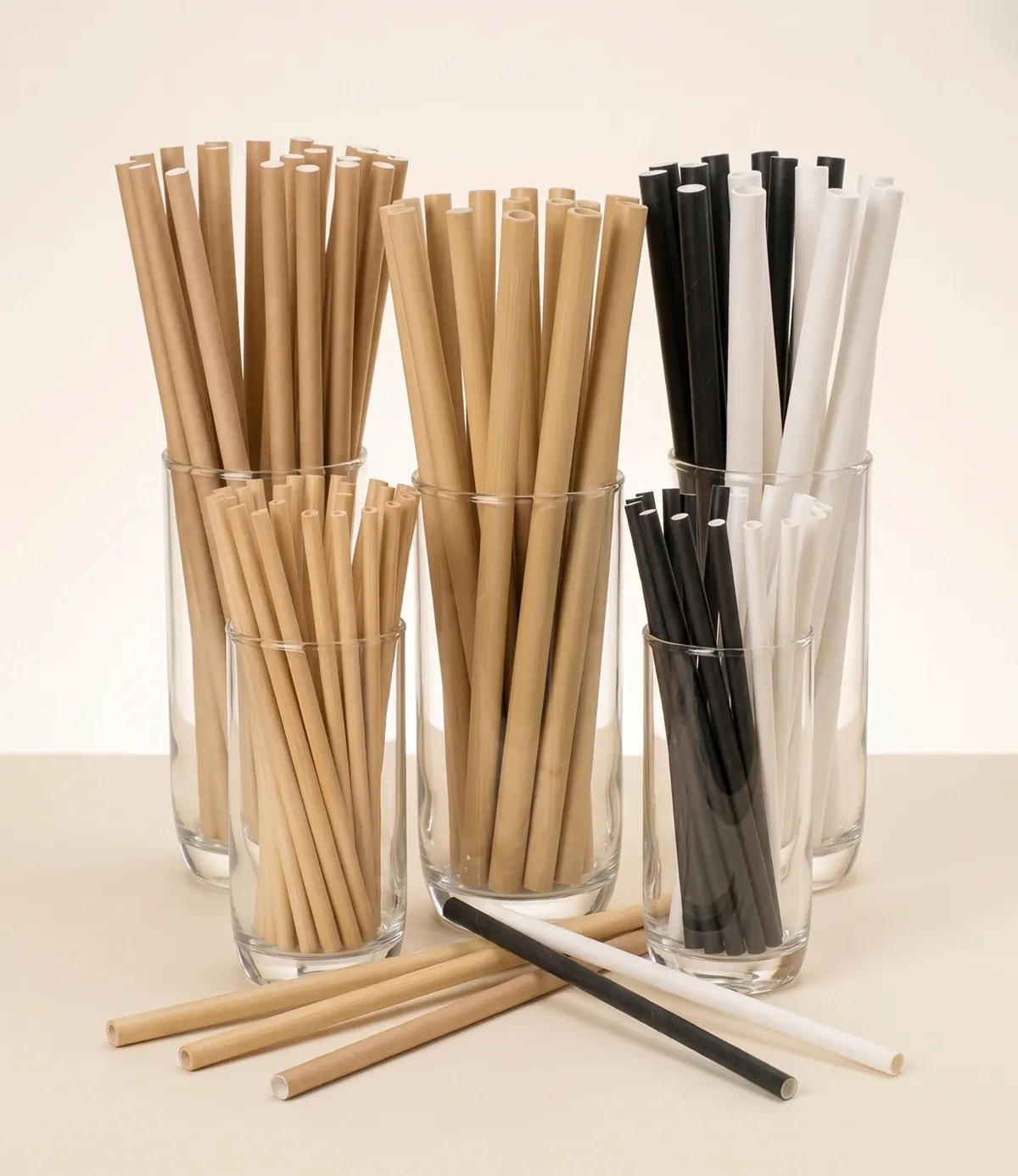
- Plastic straws: single-use plastic straws are banned. Paper straws and reusable alternatives are the usual replacement
- Plastic stirrers: single-use plastic drink stirrers are banned. Wooden alternatives are the usual replacement
- Expanded polystyrene (EPS) food containers: single-use EPS food containers are banned. This directly affects operations using polystyrene takeaway boxes. Bagasse, paper and molded fiber alternatives are the usual replacement
- Expanded polystyrene cups and beverage containers: EPS beverage cups and containers are banned alongside EPS food containers
- Oxo-degradable plastic products: all products made from oxo-degradable plastic are banned
These are not recommendations or targets — they are legal prohibitions. Any business supplying food service in EU markets using these formats is in direct violation of current law. For suppliers outside the EU, the ban applies at the point of market entry.
What Is Restricted or Regulated
Beyond outright bans, the SUP Directive creates requirements for products that can still be placed on the market but are subject to specific conditions.
Plastic Beverage Cups and Lids — Reduction, Marking and EPR
Single-use plastic beverage cups and their lids — including PE- or PLA-lined paper cups and snap-on plastic lids — are not banned. They are covered by three sets of rules:
- Consumption reduction: member states must achieve a measurable reduction in the consumption of “cups for beverages, including their covers and lids”. Measures differ by country, from mandatory reusable options (in Germany, the obligation under § 33 VerpackG to offer a reusable alternative) to charges on single-use cups
- Marking: cups made partly of plastic must carry a printed marking informing consumers about the plastic content and correct disposal
- EPR: producers of plastic cups and lids are covered by extended producer responsibility, including litter clean-up costs; in Germany they pay into the Single-Use Plastics Fund (Einwegkunststofffonds)
A frequent misunderstanding concerns tethered lids. The SUP rule on tethered caps (Article 6, in force since 3 July 2024) applies to caps and lids of beverage containers up to 3 liters, such as plastic bottles and composite beverage cartons. It does not apply to cups. A snap-on plastic lid on a coffee cup does not need to be tethered and is not illegal. Operators who replace plastic lids with molded fiber lids or lid-free cups do so to reduce cost, reporting and customer-perception issues — not to fix a tethering problem.
Plastic Food Containers — Reduction Measures and EPR
Single-use plastic food containers (other than EPS, which is banned) are covered by the national consumption-reduction measures and by EPR, and in Germany by the Single-Use Plastics Fund. In Portugal, a €0.30 contribution applies per single-use plastic or aluminium take-away/delivery ready-meal package. While not banned, these products face increasing cost pressure from EPR fees, levies and reduction measures.
Replacing cup lids specifically? See our guide on plastic lid replacement in Europe.
The EU Packaging and Packaging Waste Regulation (PPWR)
The SUP Directive is not the only regulation affecting food packaging in EU markets. The EU Packaging and Packaging Waste Regulation, Regulation (EU) 2025/40, entered into force on 11 February 2025 and has applied since 12 August 2026. It adds binding requirements that significantly affect food packaging procurement decisions.
PFAS Limits for Food-Contact Packaging
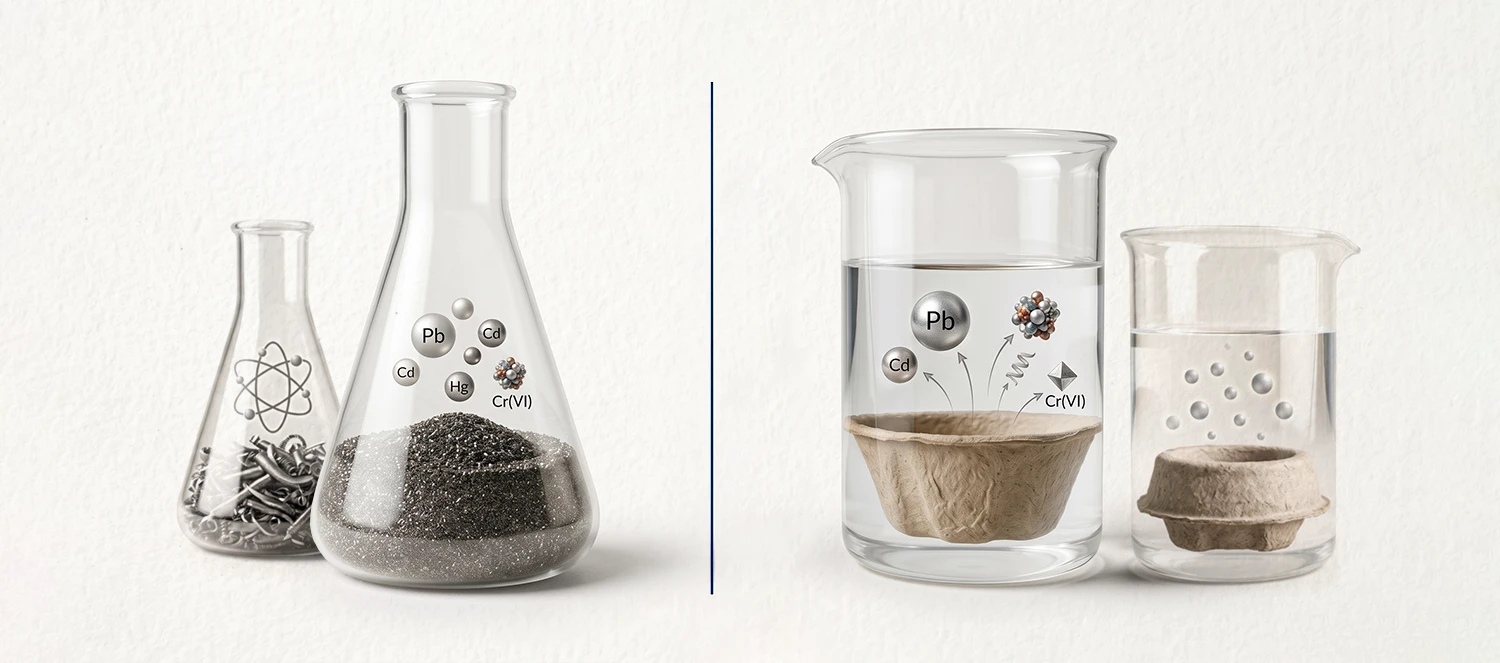
Since 12 August 2026, the PPWR limits PFAS in food-contact packaging: 25 ppb for any single PFAS (targeted analysis), 250 ppb for the sum of PFAS (targeted analysis) and 50 ppm for total PFAS including polymeric PFAS.
Recyclability Requirements
Recyclability criteria for packaging placed on the EU market phase in from 2028 to 2030. Packaging that cannot be recycled at scale will face increasing compliance pressure. PE-coated paper cups, which are hard to recycle in standard paper streams because the plastic lining has to be separated from the fiber, are directly affected.
Recycled Content Requirements
The PPWR introduces minimum recycled content requirements for plastic packaging from 2030, with different thresholds for contact-sensitive applications (including food packaging) to ensure food safety.
Reuse Targets
The PPWR includes reuse targets for specific packaging formats that phase in from 2028 to 2030, with relevance for takeaway food and beverage service.
What This Means for Food Packaging Procurement
The PPWR reinforces the commercial case for fiber-based formats and PE-free coatings. Paper cups with a water-based, PFAS-free, PE-free coating (designed for paper recycling where local collection accepts them), Ekoroll bagasse food containers (home compostable & 100% bagasse, certified by TÜV AUSTRIA OK compost HOME) and other paper-based alternatives are well-positioned compared to PE-lined and hard-to-recycle plastic formats.
For a detailed guide to PPWR specifically — including the 12 August 2026 PFAS limits and a checklist for buyers — see: PPWR-Compliant Food Packaging: PFAS-Free Cups for the 2026 Deadline.
Plastic Taxes and Levies Across Europe
Independent of the SUP Directive, a few countries have introduced national plastic taxes or levies that directly increase the procurement cost of plastic food packaging. The picture is more varied than often reported:
Current Plastic Tax and Levy Landscape
- United Kingdom (not EU): Plastic Packaging Tax on plastic packaging components with less than 30% recycled plastic — £223.69 per tonne from 1 April 2025 and £228.82 per tonne from 1 April 2026; in force since 1 April 2022
- Spain: €0.45 per kilogram on non-reusable plastic packaging placed on the Spanish market, including the plastic portion of composite packaging — in force since 1 January 2023
- Italy: a plastic tax of €0.45 per kilogram has been legislated but repeatedly postponed, now to 2027 — not in force
- Germany: no plastic packaging tax. Producers of certain single-use plastic products (including cups for beverages and their lids, and food containers) pay into the Single-Use Plastics Fund, based on quantities placed on the market since 2024. Separately, VerpackG licensing fees and LUCID registration apply to all packaging, including paper and bagasse
- France: no per-kilogram plastic packaging tax; EPR fees are eco-modulated under the AGEC law
- Portugal: a €0.30 contribution per single-use plastic or aluminium take-away/delivery ready-meal package (plastic since July 2022, aluminium since September 2023) — a per-package levy, not a per-kilogram tax
The EU plastic own resource (€0.80 per kilogram of non-recycled plastic packaging waste) is often mentioned in this context, but it is paid by member states to the EU budget, not by companies.
These plastic-specific measures apply to packaging containing plastic — including bio-based plastics such as PLA — and not to packaging without plastic, such as bagasse or molded fiber. General EPR fees still apply to all packaging. Both points matter for the total cost comparison between plastic and fiber-based packaging.
Environmental Claims: Directive (EU) 2024/825
Directive (EU) 2024/825 (Empowering Consumers for the Green Transition), applicable from 27 September 2026, affects how food service businesses can communicate about their packaging. It does not restrict packaging itself — it restricts misleading environmental claims about it. The separately proposed Green Claims Directive (COM(2023) 166) was not adopted: in June 2025 the Commission announced its intention to withdraw it.
What Changes Under Directive 2024/825
- Generic environmental claims such as “eco-friendly,” “green” or “biodegradable” are banned unless the trader can show recognized excellent environmental performance relevant to the claim
- Claims that a product is “climate neutral” or has a reduced climate impact based on greenhouse gas offsetting are banned
- Sustainability labels that are not based on a certification scheme or established by public authorities are banned
What This Means for Packaging Communications
Food service brands using general “eco-friendly” language about their packaging need to replace it with specific, documented claims. A compostability certificate for the specific product, PFAS test results and coating-type documentation provide the substantiation for specific claims such as “home compostable,” “PFAS-free” or “PE-free coating.” Unsubstantiated claims are a legal risk under Directive 2024/825 and national consumer law.
Alternatives for Each Banned or Restricted Format
For each format affected by the EU plastic rules, the following alternatives are available for food service operations.
| Banned or Restricted Format | Alternative | Status |
|---|---|---|
| Single-use plastic cutlery (forks, knives, spoons), including PLA | Wooden or bamboo cutlery | Banned since July 2021 |
| EPS food containers and cups | Bagasse food containers | Banned since July 2021 |
| Plastic straws | Paper straws | Banned since July 2021 |
| Plastic stirrers | Wooden stirrers | Banned since July 2021 |
| Plastic cup lids (reduction measures, EPR, national levies) | Molded fiber lids or lid-free cups | Legal; tethered-cap rule does not apply to cups |
| PE-lined paper cups (marking, EPR, PPWR recyclability) | Paper cups with a water-based, PFAS-free, PE-free coating | Marking and EPR now; recyclability criteria 2028–2030 |
| PP and PET food containers (reduction measures, EPR) | Bagasse containers, kraft boxes | EPR and reduction measures now |
What Businesses Need to Do Now
For food service operations and horeca distributors in European markets, the practical checklist covers four areas.
Immediate Compliance (Already Required)
- Remove single-use plastic cutlery (including PLA versions) from service entirely and replace with wooden or bamboo alternatives
- Remove EPS food containers and cups and replace with bagasse, paper or fiber alternatives
- Remove plastic straws and stirrers
- Register with the relevant national EPR system for all packaging you place on the market — plastic, paper and bagasse alike
- Check that cups made partly of plastic carry the SUP marking
Plastic Cups and Lids (Ongoing)
- Plastic lids are legal and do not need to be tethered, but they carry reduction measures, EPR and, in some markets, levies
- Molded fiber lids or lid-free cup formats with integrated closures remove the plastic lid from the cost and reporting picture
PPWR (Since August 2026, Further Stages 2028 to 2030)
- Check PFAS test results for paper-based food-contact packaging against the PPWR limits
- Transition PE-lined cups to water-based coated alternatives designed for paper recycling
- Make sure every format you describe as compostable has a certificate covering that specific product
- Review remaining plastic packaging formats against the upcoming PPWR recyclability criteria
Environmental Claims (Since 27 September 2026)
- Review all environmental claims about packaging used in customer communications
- Replace generic claims with specific claims based on certification documentation
- Obtain and maintain documentation for each specific claim made
For a complete step-by-step guide to the transition process, see: How to Switch to Plastic-Free Packaging.
Packaging Wholesale for Restaurants and Horeca
Ekoroll supplies packaging wholesale to restaurants, cafés, food delivery brands and horeca distributors across Europe: bagasse food containers, lid-free cups, molded fiber lids, wooden cutlery and PFAS-free greaseproof paper — none of them among the plastic items banned by the SUP Directive, with product documentation for the EU rules described above. Explore our complete eco-friendly packaging range or contact us for wholesale pricing and documentation.