Most food delivery packaging problems are not random. They happen for specific, diagnosable reasons — and once you understand the root cause of each failure, the fix is usually straightforward. The challenge is that most food businesses only recognize packaging failures after they receive customer complaints, negative reviews or refund requests. By then, the damage is already done.
This guide covers the most common food delivery packaging mistakes in detail: what the failure looks like, what causes it, what it costs operationally and how to fix it. This is a troubleshooting guide, not a general overview. If you are experiencing a specific delivery packaging problem, use the section headings to navigate directly to the relevant failure and its solution.
For the complete system design guide, see: Takeaway Packaging Solutions for Food Delivery.
Mistake 1: Using In-Café Packaging Formats for Delivery
What It Looks Like
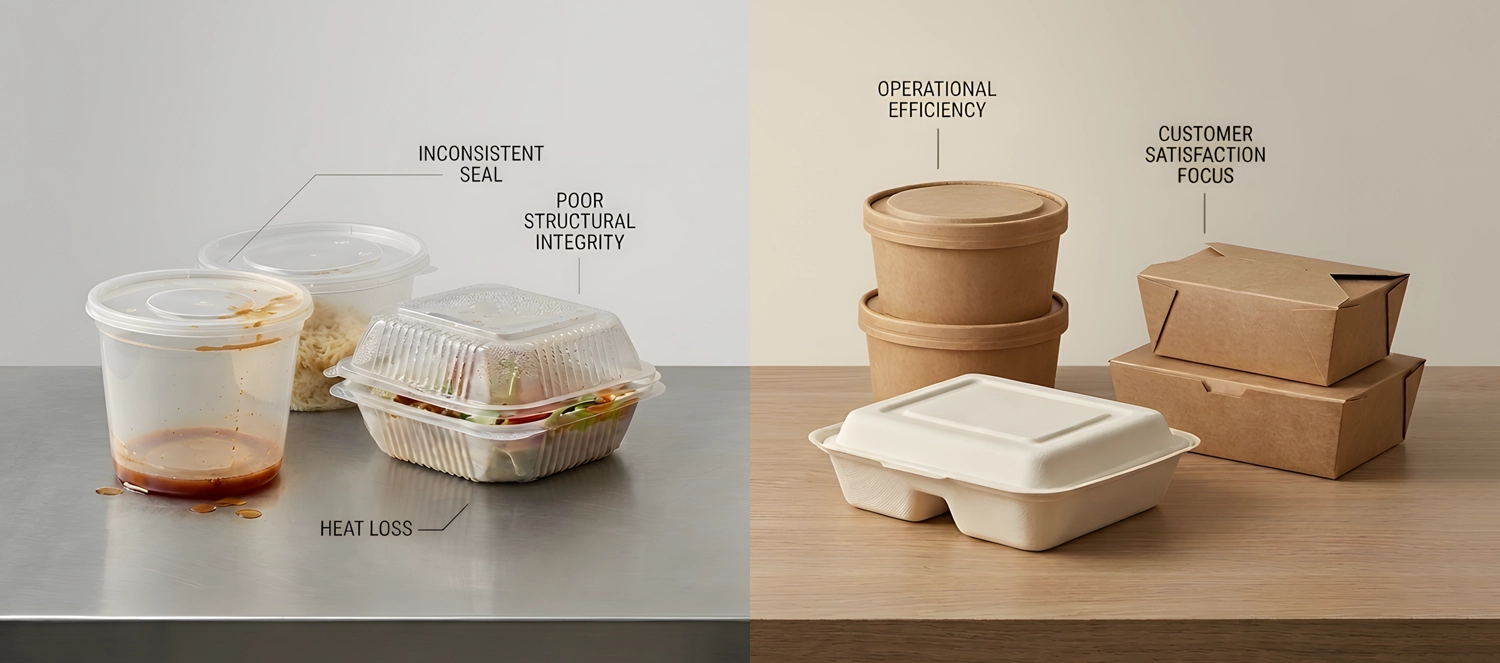
Meals arrive with displaced presentation, leaked sauces, soggy bread items or spilled beverages. The food quality is good at packing but degraded on arrival.
Root Cause
In-café packaging is designed for handoff within seconds or minutes of packing and immediate consumption. Delivery packaging must perform over 15 to 45 minutes of transit with movement, stacking pressure and temperature differential. A container that works perfectly for café service may fail completely in delivery because it was never designed for the stresses of a delivery bag.
Specific Failure Modes
- Café cups with conventional plastic snap-on lids: the snap-on fit that works for a few-minute café handoff may not hold under the lateral forces of a moving delivery bag
- Flat containers without positive lid-seal geometry: resting-fit lids (lid sits on top without a positive snap) fail when the bag is carried at an angle or when other items are stacked on them
- Single-wall cups without adequate coating: the cup walls soften under extended hot liquid contact during delivery transit, reducing structural integrity before the customer receives the order
The Fix
Test every packaging format under simulated delivery conditions — not in the café. Fill with your actual food at packing temperature, assemble in your delivery bag, carry for your average transit time, then evaluate. Formats that fail this test need to be replaced with delivery-appropriate alternatives regardless of how well they work in café service. For the complete testing protocol, see: Takeaway Packaging Solutions for Food Delivery.
Mistake 2: Lid-Seal Failure on Sauce and Liquid Dishes
What It Looks Like
The most common delivery complaint: the customer opens the bag to find sauce or liquid has leaked into the bag, contaminating other items, creating mess and often making some food inedible.
Root Cause
Lid-seal failure on liquid-heavy dishes almost always has one of three causes: the lid does not provide a positive seal (it rests rather than snaps), the container is overfilled so the liquid creates pressure on the lid from below, or the wrong lid is being used with the container (dimensional mismatch).
Diagnosing Your Specific Cause
- Resting-fit lid: press down on the lid of a filled container. If the lid lifts easily without a click or resistance, it is a resting-fit lid without positive seal geometry. Under delivery transit forces, this lid can displace.
- Overfilling: check your packing practice. Containers should be 75 to 85 percent full for liquid-heavy dishes. Overfilling creates hydraulic pressure on the lid that causes displacement under transit vibration.
- Dimensional mismatch: if your lid and container are from different suppliers or different product ranges, the rim tolerance may not be optimized for a positive seal even if the lid appears to fit. A fit that looks correct may not provide reliable seal under pressure.
The Fix
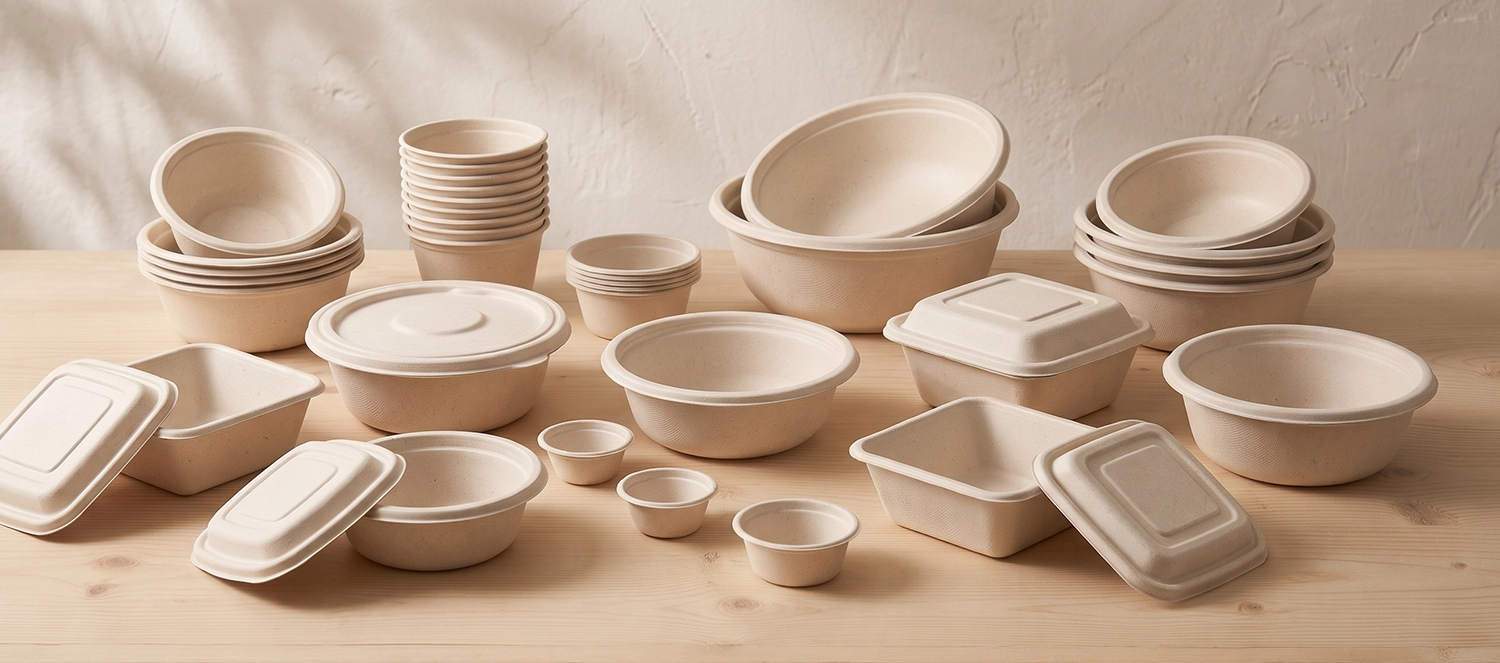
For positive lid seal, use molded fiber lids matched to bagasse containers from the same supplier system — the container-lid interface is engineered for positive snap-fit. Fill liquid-heavy dishes to a maximum of 75 percent capacity. If you are using containers and lids from different suppliers, test the combination with the fill-and-invert test: fill with water at serving temperature, invert for 60 seconds, any moisture transfer means the seal is insufficient for liquid delivery applications. See: Manufacturer-direct bagasse containers and molded fiber lids.
Mistake 3: Condensation Damage to Bread-Based Items
What It Looks Like
Burgers, sandwiches and wraps arrive with soggy buns, softened bread, wilted lettuce and deteriorated texture. The food looked good at packing but is unpleasant to eat on arrival.
Root Cause
Hot food in a sealed container creates a steam environment. Bread absorbs steam very rapidly. A burger in a sealed box for 30 minutes of delivery transit generates enough internal steam to make the bun soft and structurally compromised. This is not a container quality issue — it is a consequence of sealing hot food that releases steam in a confined space.
Why Sealed Containers Make This Worse
Many operations switch to more secure containers to reduce leakage complaints. For burgers and sandwiches, more secure sealing makes condensation damage worse by trapping more steam in contact with the bread for longer. This is a case where the fix for one problem (leakage) creates another (condensation) if the wrong solution is applied.
The Fix
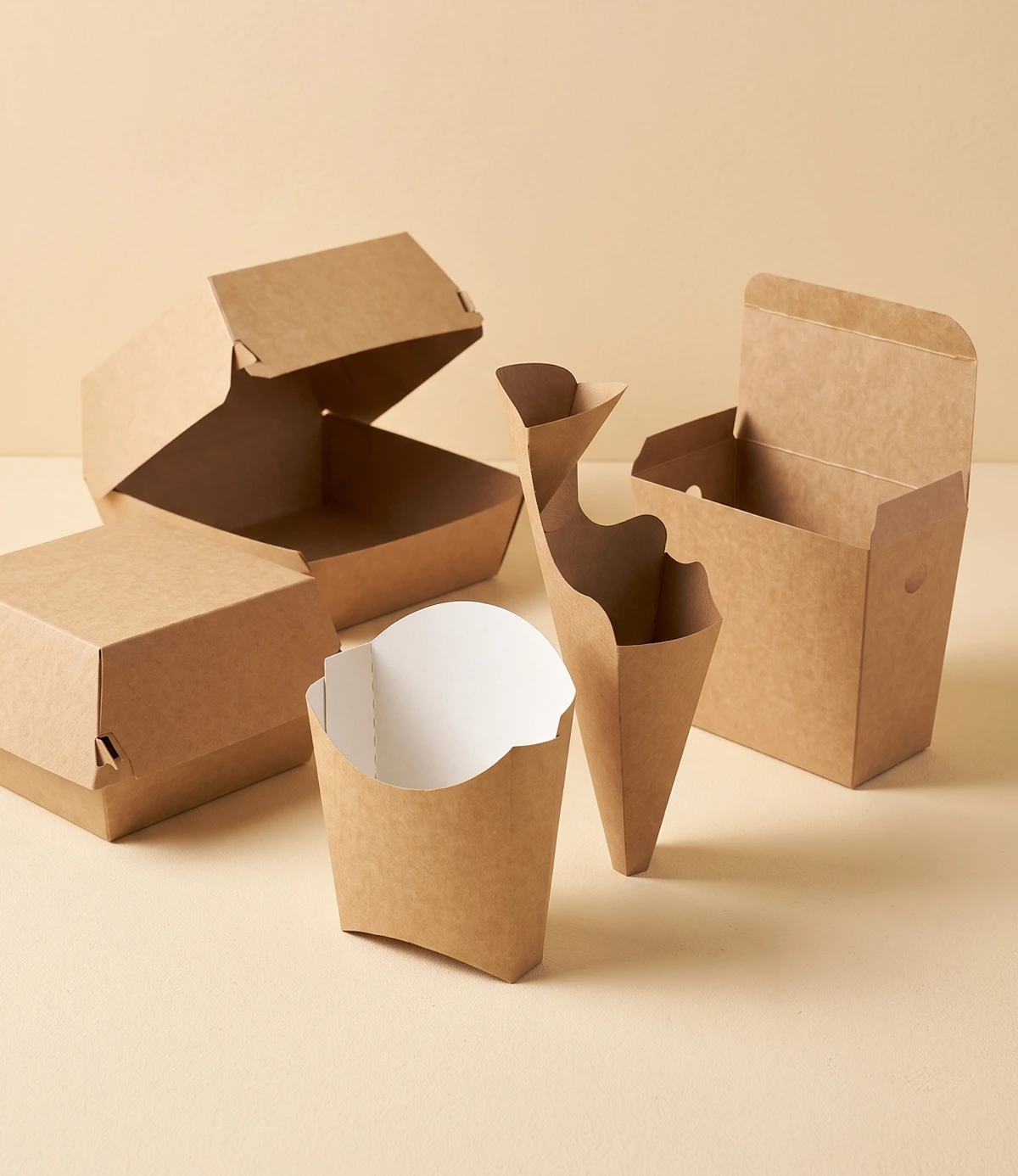
For burgers, sandwiches and wraps, the correct primary packaging is PFAS-free greaseproof paper wrap, not a sealed container. Greaseproof paper allows minimal steam venting while maintaining grease barrier — it manages the condensation problem that sealed containers create. Use a kraft paper takeout box as secondary packaging for structural protection and delivery bag presentation. The box does not seal the food — it protects the wrapped item. This approach handles both the structural integrity and the condensation problem simultaneously.
Explore: PFAS-free greaseproof paper and kraft takeout boxes.
Mistake 4: Wrong Container Size for the Food Item
What It Looks Like
Food arrives having moved around the container during transit — protein pieces on one side, sauce pooled in a corner, garnishes displaced, rice or grain scattered across the container surface. The food is fine but the presentation is poor and some items have dried out from being exposed on the container surface.
Root Cause
Containers that are significantly larger than the food portion they contain allow food movement during transit. The food is essentially loose in the container rather than fitted to the container space. Every bump and movement of the delivery bag displaces food items and degrades presentation.
The Cost of Getting This Wrong
Presentation matters for delivery repeat ordering. Customers who receive well-presented food that looks as good as the restaurant’s photos order again. Customers who receive the same food displaced into a messy container associate poor presentation with food quality — even if the food itself is excellent. This affects reviews, ratings on delivery platforms and repeat order rates.
The Fix
Match container size to actual food portion with no more than 20 percent headspace for solid food items. This typically means carrying two or three container sizes rather than using a single universal container. A 500ml container for a small portion, 750ml for a medium and 1,000ml for a large covers most restaurant menu ranges. The SKU management cost of maintaining two to three sizes is significantly lower than the cost of poor presentation and the customer complaints it generates. For the size reference: Disposable Paper Cups Guide covers cup sizing; apply the same principle to food containers.
Mistake 5: Using PE-Lined Containers That Degrade Under Heat
What It Looks Like
Containers feel soft or slightly deformed when the customer receives them. In more severe cases, PE-coated containers show surface wrinkling or visual warping at container edges after extended transit with very hot food.
Root Cause
PE (polyethylene) coating in paper containers is a plastic layer that softens under sustained heat. For in-café service — where the food is consumed within minutes — this is rarely a problem. For delivery, where the container may hold hot food for 30 to 45 minutes, the PE coating can soften, and the overall container structure loses some rigidity. This is more pronounced with very hot dishes and with containers using thin PE coatings.
Choosing the right container matters — kraft paper bowls with lids reduce leaks and spills during delivery.
Additional Problems with PE-Lined Containers
Beyond the structural issue, PE-lined containers carry regulatory and cost consequences in EU markets: the PE layer makes them single-use plastic products under the SUP Directive (EU) 2019/904, with plastic-specific EPR costs and possible national reduction measures (in Germany, for example, payments into the Single-Use Plastics Fund), and the lining makes them harder to recycle in paper streams. The structural weakness under sustained heat is the operational problem — but the regulatory and cost implications are the strategic reason to switch.
The Fix
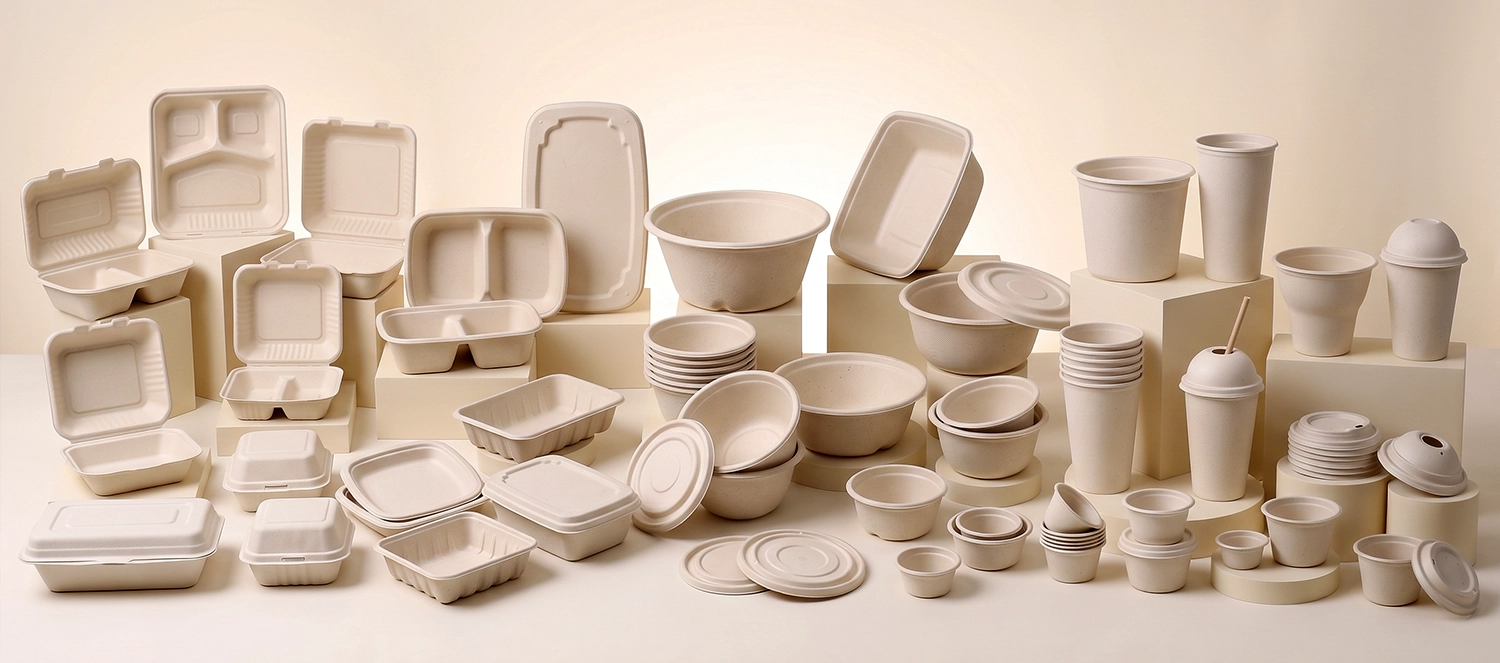
Switch to bagasse containers, which have no PE lining. Bagasse is suitable for hot and cold food without structural degradation because the heat resistance is a property of the fiber itself, not a coating. Bagasse containers are more structurally rigid than PE-lined paper containers under sustained hot food conditions, and Ekoroll’s bagasse containers are water- and oil-resistant, PFAS-free, and microwave- and freezer-safe. Because they contain no plastic, they fall outside plastic-specific measures such as plastic taxes and SUP charges; normal packaging EPR (for example VerpackG licensing in Germany) still applies, as it does to all packaging. Ekoroll bagasse is home compostable & 100% bagasse (TÜV AUSTRIA OK compost HOME); the certificate is held by the producing mill, copy on request. See: Bagasse vs Paper Food Containers and Water-Based Coating vs PE Paper Cups.
Mistake 6: Inconsistent Packing Practices Across Staff
What It Looks Like
Delivery packaging failures are inconsistent — some orders arrive perfectly, others have the same problem repeatedly. The problem correlates with specific team members, specific shifts or specific times of day rather than with specific menu items.
Root Cause
Packaging systems that rely on individual judgment rather than documented procedure produce inconsistent outcomes. This is particularly common when:
- Lid seating requires a specific technique that some staff apply correctly and others do not
- Fill level guidance is approximate (“about full”) rather than specific (“80 percent maximum”)
- Container size selection is left to individual judgment rather than a per-menu-item standard
- New staff have not been trained on the specific packaging system before they pack delivery orders
The Fix
Create a packaging standard operating procedure for delivery orders: one page, visual where possible, posted at the packing station. Cover: which container for which menu item (by name), maximum fill level for liquid-containing items, how to seat each lid correctly, how to orient items in the delivery bag. Run a five-minute training session with every new team member before they pack their first delivery order. Audit packaging quality on five to ten orders per week by opening packed bags before they go out and scoring against the SOP. This is a management process fix, not a packaging product fix — but it often eliminates more delivery complaints than switching packaging formats.
Mistake 7: Not Verifying PFAS-Free Status on Greaseproof Paper
What It Looks Like
This mistake is invisible until it becomes a regulatory or liability problem. PFAS in greaseproof paper does not change how the paper looks, feels or performs — it is undetectable without laboratory testing.
Root Cause
PFAS (per- and polyfluoroalkyl substances) have been widely used in greaseproof paper to provide oil and moisture resistance. The paper is still actively in supply chains from manufacturers who have not transitioned to PFAS-free alternatives. Many operations are using PFAS-containing greaseproof paper without knowing it because they have not requested specific PFAS-free documentation from their supplier.
Why This Matters Now
PFAS migrate from food contact materials into food — this has been documented in published research. Denmark has banned PFAS in paper and board food contact materials since July 2020. EU-wide, the Packaging and Packaging Waste Regulation (EU) 2025/40 limits PFAS in food-contact packaging from 12 August 2026 (25 ppb for any single PFAS, 250 ppb for the sum of PFAS, 50 ppm total PFAS including polymeric PFAS). A broader universal PFAS restriction is still being evaluated at ECHA. Operations using PFAS-containing greaseproof paper face increasing food safety and regulatory risk.
The Fix
Request PFAS-free laboratory test results from your greaseproof paper supplier — results from an ISO 17025 accredited laboratory covering both the paper substrate and any coating. A supplier who cannot provide these results cannot confirm PFAS-free status. Switch to a supplier who can. PFAS-free greaseproof paper is available at comparable pricing from qualified suppliers. See: PFAS-Free Paper Cups Guide (the same PFAS principle applies to greaseproof paper). Explore: PFAS-free greaseproof paper wrap.
Mistake 8: Overcomplicating the Packaging System
What It Looks Like
The operation maintains eight or more container SKUs for a menu of twenty items. Staff regularly use the wrong container for specific items because there are too many options to remember. Reorder management is complex and stock-outs of specific container types occur regularly. Packing speed during peak periods is slower than it should be because staff have to select from too many container options.
Root Cause
Packaging systems that grew incrementally — adding a new container format for each new menu item or operational situation — without periodic consolidation rationalization. Each addition made sense individually, but the cumulative result is an over-complex system with more SKUs than the operation can manage efficiently.
The Fix
Conduct a packaging audit: list every container SKU currently in use, the menu items it serves and the monthly volume. Identify which items share compatible portion sizes that could use the same container. Reduce to the minimum number of container formats that cover your full menu range — typically three food container sizes, one or two takeout box sizes, one bowl size, and one or two cup sizes covers most standard restaurant menus. Consolidating to a single supplier for your full packaging range simplifies this significantly: one certification documentation portfolio, one reorder relationship, one volume pricing negotiation. See: How to Choose a Food Packaging Supplier for EU Markets.
Mistake 9: Ignoring Cup Lid Performance and Plastic Cup Rules
What It Looks Like
Operations still send beverages with separate snap-on plastic lids on delivery orders. The lids pop off during transit and end up loose in the delivery bag, often with spilled coffee around them.
Root Cause
Many delivery operations have not reviewed their cup format in years. Snap-on plastic lids are legal — the EU tethered-cap rule applies to caps of beverage bottles and cartons, not to cups — but they are a weak point in transit, and plastic cups and lids are a regulatory target. Under the Single-Use Plastics Directive (EU) 2019/904, member states must reduce consumption of beverage cups including their lids, cups made partly of plastic must carry a printed marking, and producers pay extended producer responsibility fees for these items. Some countries add further plastic-specific charges, such as Germany’s Single-Use Plastics Fund. Customers also increasingly notice and question plastic lids.
The Fix
Switch to lid-free cups (no separate lid at all, with a water-based, PFAS-free, PE-free coating) or to non-plastic fiber lids. Lid-free cups eliminate the lid-detachment-in-bag problem entirely and remove the plastic lid from your packaging list. See: Plastic Lid Alternatives for Coffee Cups and Are Lid-Free Coffee Cups Worth It. Explore: lid-free hot cups and lid-free cold cups.
The Packaging Audit: How to Find Your Specific Problems
Rather than trying to fix all possible mistakes at once, identify which specific problems your operation has first. Run this simple audit:
- Review your last 30 customer complaints about delivery: categorize each by type (leakage, temperature, presentation, wrong item, etc.). Which packaging-related category has the most complaints? Start there.
- Pack a test order with your current packaging: fill containers with your highest-risk food items (most liquid, most oil, most steam) at packing temperature. Pack in your delivery bag configuration. Carry for your average delivery transit time. Open and evaluate against the failure modes in this guide.
- Ask your delivery drivers: they handle every order. They see which containers leak, which lids pop open, which bags smell of sauce. Their observation is direct operational intelligence that your complaint data understates because many customers never complain — they just do not reorder.
- Check your return and refund data by item: which specific menu items generate the most delivery complaints? These are your highest-risk packaging applications — prioritize fixing the packaging for these items first.
Delivery-Ready Packaging Wholesale: Complete System from One Supplier
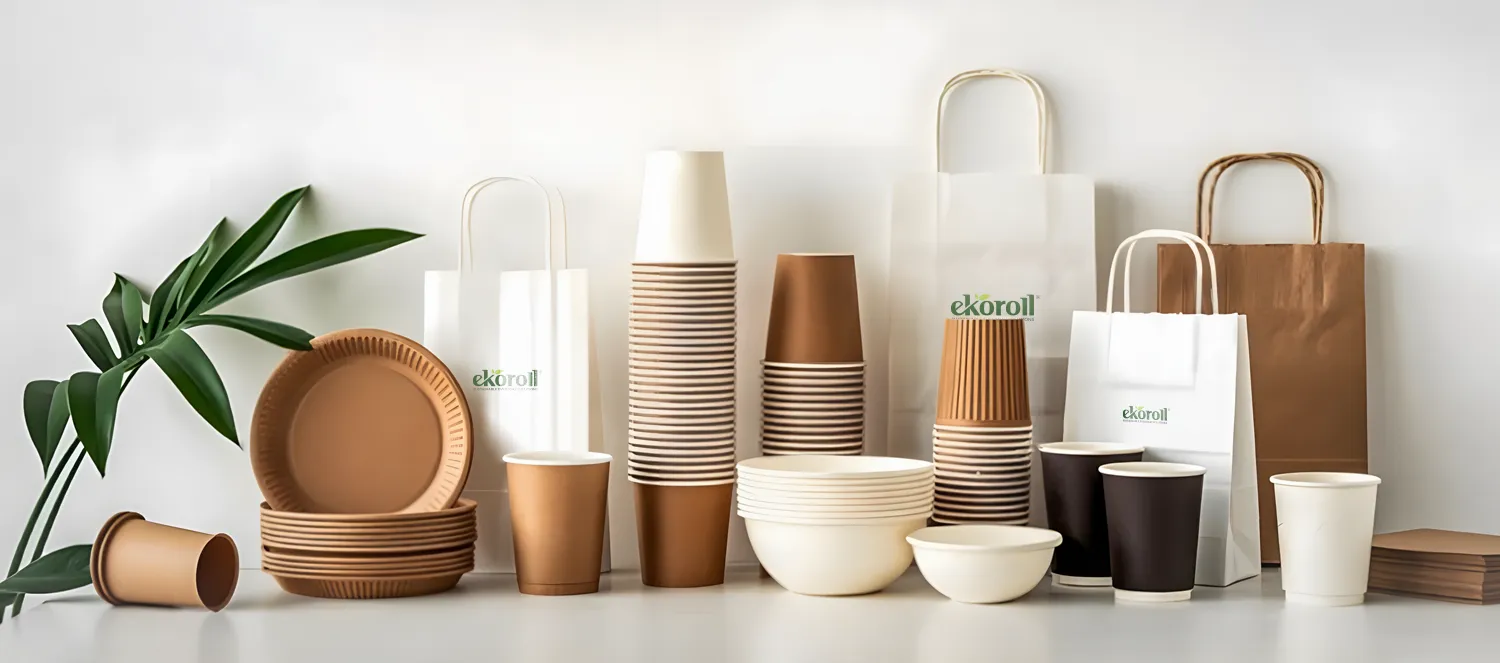
Ekoroll supplies delivery-optimized packaging systems wholesale to restaurants, cloud kitchens and food delivery brands across Europe. Bagasse containers, fiber lids, lid-free cups, PFAS-free greaseproof paper, kraft takeout boxes, wooden cutlery. Supplied from Türkiye. MOQ and lead times quoted per project. Product documentation available on request.