European food businesses and distributors source sustainable food packaging from suppliers and manufacturers in Türkiye (Turkey) for three reasons: duty-free trade under the EU–Türkiye customs union, a food-contact framework drafted in line with EU law, and shorter supply lines than Far East sourcing. This guide explains how the trade framework works, which EU rules apply to the packaging itself, what changes for you as an importer, which documents to request, and how to run samples and orders with a Turkish supply partner.
This guide is written for procurement teams at restaurant groups, café chains, caterers and packaging distributors who compare suppliers for paper cups, food containers, bagasse tableware and printed accessories.
Why European buyers source packaging from Türkiye
Türkiye has an established paper and packaging industry next to the EU single market. For a European buyer, the practical advantages are:
- Customs union access. Industrial goods in free circulation, including paper and fiber packaging, move between Türkiye and the EU with zero customs duties and zero quotas.
- A familiar framework. Türkiye’s food-contact framework regulation is drafted in line with EU law, so declarations and test reports follow logic your quality team already knows.
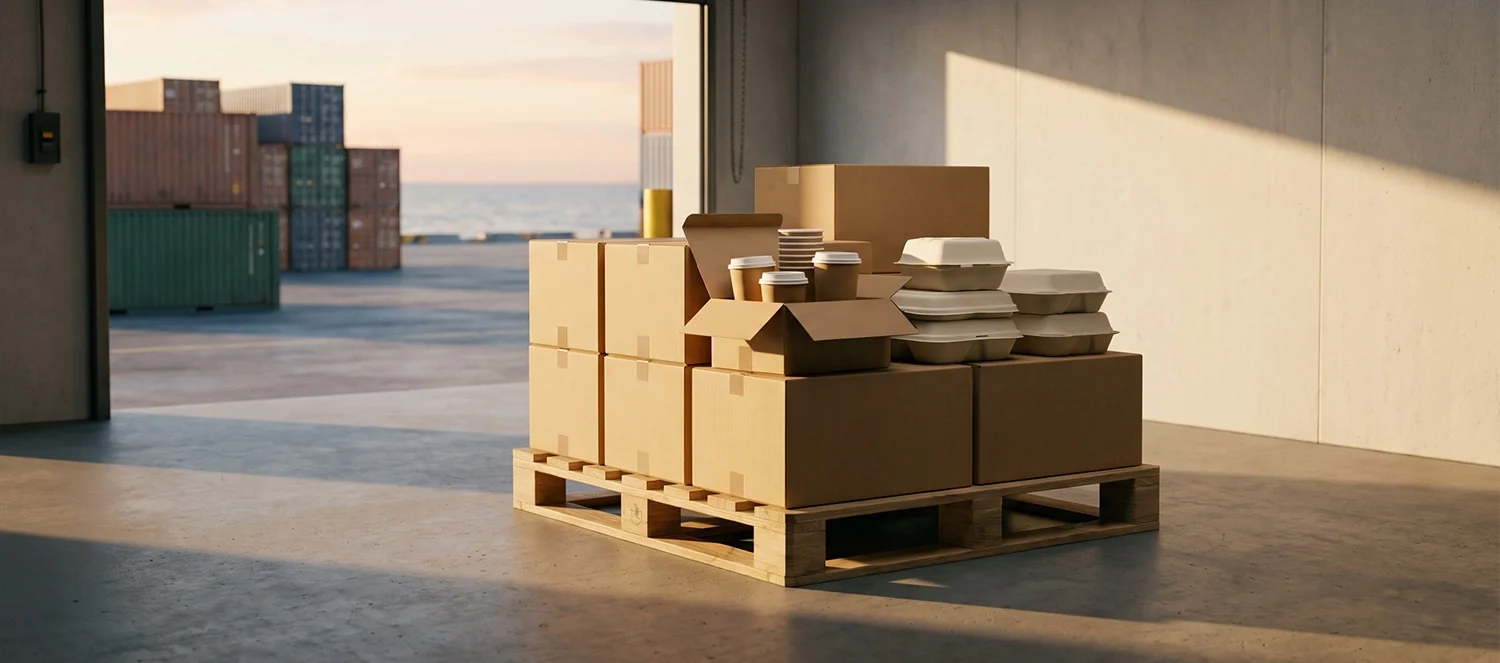
- Shorter supply lines. Goods can reach EU markets by sea and by road. That makes reorders, sample rounds and urgent top-ups easier to plan than with Far East sourcing.
- Range in one place. Paper cups, food containers, bagasse items, flexible packaging and accessories can be consolidated with one supply partner and one set of documents.
None of this replaces checking the product itself. The sections below cover what to verify.
How Türkiye compares with other sourcing routes
| Factor | Türkiye | Far East | Within the EU |
|---|---|---|---|
| Customs duties on industrial goods | None for goods in free circulation (customs union) | Depend on the product and origin | None (single market) |
| Customs documents | A.TR movement certificate plus transport documents | Full import declaration and origin rules | None for intra-EU movement |
| Transit to EU markets | Short sea routes and road freight | Long ocean routes | Shortest, mostly road |
| Sample round-trips | Fast, same region | Slow, long distance | Fast |
| EU product rules | Apply in full | Apply in full | Apply in full |
| Your role under the PPWR | Importer | Importer | Distributor (when buying from an EU manufacturer) |
The last two rows matter most: the origin of a product never changes the rules it must meet in the EU.
How the EU–Türkiye customs union works for packaging
The customs union has applied since 1995. It is based on the 1963 Ankara Agreement and covers industrial products and processed agricultural products. Agricultural products and coal and steel products follow separate regimes.
| Topic | What it means for packaging buyers |
|---|---|
| Customs duties | None on industrial goods in free circulation, such as paper cups, food containers and fiber packaging. Goods made outside Türkiye qualify only once they are in free circulation there, with Turkish import duties paid. |
| Document | An A.TR movement certificate travels with the goods and proves their customs status (free circulation). It is not a certificate of origin. |
| Tariff | Türkiye applies the EU common customs tariff to third countries. |
| Technical rules | Product requirements of the destination market still apply: food-contact, packaging and labelling rules are checked per product. |
| Taxes and fees | VAT, national plastic taxes and EPR fees in the destination country apply as for any other supply. |
The European Commission’s Access2Markets page on the customs union is the reference for the legal detail and the A.TR procedure.
Which EU rules apply to the packaging itself
Duty-free movement does not change what the product must comply with. For food packaging sold in the EU, four sets of rules matter most. Our guide to EU packaging regulations for horeca businesses covers them in more depth.
Food-contact materials
Regulation (EC) No 1935/2004 is the framework for every material that touches food. It requires that packaging does not transfer constituents to food in quantities that could endanger health or change the food unacceptably, and that it is traceable. Regulation (EC) No 2023/2006 adds good manufacturing practice. Material-specific measures apply on top, for example Regulation (EU) No 10/2011 for plastic layers. Paper and board have no harmonised EU specific measure, so declarations usually also refer to the national rules of the market where the product is sold.
Türkiye’s Turkish Food Codex regulation on food-contact materials, published in Official Gazette No. 30382 on 5 April 2018, is drafted in accordance with Regulation 1935/2004. A supplier serving EU buyers should therefore be used to issuing declarations of compliance against the EU framework.
The Packaging and Packaging Waste Regulation (PPWR)
Regulation (EU) 2025/40 has applied since 12 August 2026. For buyers of Turkish packaging, four points matter:
- PFAS limits for food-contact packaging. Packaging may not be placed on the market at or above 25 ppb for any single PFAS or 250 ppb for the sum of PFAS measured by targeted analysis, or 50 ppm for total PFAS including polymeric PFAS. Above 50 mg/kg total fluorine, proof of the fluorine’s origin can be requested. There is no harmonised test method yet, and packaging placed on the market before 12 August 2026 does not have to be withdrawn. Read more in our explainer on PPWR-compliant, PFAS-free packaging.
- If you import, you are the importer. An EU business that places packaging made in Türkiye on the EU market takes on PPWR importer obligations: check that the manufacturer has done the conformity assessment and drawn up the technical documentation and EU declaration of conformity, and indicate your own name and address.
- Manufacturer obligations. The manufacturer must meet the packaging requirements and provide that documentation, so ask for it with your first quote.
- More rules follow. Design-for-recycling criteria (delegated acts) apply from 2030; harmonised sorting labels (implementing acts) apply from August 2028 at the earliest; reuse targets in the Regulation apply from 2030.
For every grease- or moisture-resistant item the practical question is: how is the barrier made, and is there test evidence that it is PFAS-free?
Single-use plastics rules
Directive (EU) 2019/904 bans some single-use plastic products, requires Member States to reduce consumption of others (including cups and their lids), and requires marking and extended producer responsibility for cups. Beverage cups made wholly or partly of plastic must carry the marking set out in Implementing Regulation (EU) 2020/2151. According to the Commission’s guidelines, a paper cup with a plastic lining or coating, such as PE, counts as partly plastic.
Water-based (dispersion) barrier coatings can also be polymers within the Directive’s definition of plastic, so a PE-free cup is not automatically outside the marking rules; classification depends on the coating chemistry and national transposition. Ask your supplier for the coating’s composition and how the cup body and the lid are classified for your markets.
National plastic taxes and EPR
Several EU countries apply plastic packaging taxes and extended producer responsibility fees. They are charged in the country where the packaging is placed on the market, not at the Turkish border. Formats with less plastic, such as bagasse containers or cups that need no separate plastic lid, change which fees apply. Confirm the classification with your national scheme.
Documents to request from a Turkish supplier
A good supplier sends these without being chased. Check that each document covers the exact item, its coating or barrier, and the producer that made it.
| Document | What it should show | Applies to |
|---|---|---|
| Declaration of compliance (food contact) | Conformity with Regulation 1935/2004, GMP Regulation 2023/2006 and any specific measure for the material (e.g. 10/2011 for plastic layers; for paper and board, the national rules your market applies); conditions of use | All food-contact items |
| PPWR EU declaration of conformity and technical documentation | Packaging requirements met by the manufacturer | Every packaging item placed on the EU market |
| Migration test reports | Results from an accredited laboratory for the intended food types and temperatures | As required by the specification |
| PFAS test evidence | Targeted PFAS analysis plus total fluorine screening against the PPWR limits | Paper and fiber items with barriers |
| Compostability or recyclability documentation | The certificate or test report, the product it covers, and who holds it | Only where you make such claims |
| Product specification | Material, coating, dimensions, tolerances, packing | Every item |
| Commercial and transport documents | Invoice, packing list, A.TR movement certificate, bill of lading or CMR | Every shipment |
A certificate that names a different company, a different product or an expired date does not support your claim. Ask who holds each certificate and keep copies with your product files.
How to run samples, orders and logistics
Sourcing goes smoothly when the brief is complete at the start. A practical sequence:
- Brief. Share the product, reference images, size or capacity, food type, print requirements, quantities per item and destination.
- Proposal and quote. The supplier proposes formats and materials and quotes price, minimum order quantity and lead time for your project.
- Samples. Test the samples with your real food, drinks, lids and service routine, including transport if you deliver.
- Documents. Review the food-contact declaration, the PPWR documentation and the test evidence before you approve the specification.
- Artwork. For custom print, approve digital proofs and, where needed, a printed proof.
- Order and production. Confirm the specification, packing and delivery terms in writing.
- Shipping. Agree the Incoterms (for example EXW, FCA or CIF), the transport mode and who handles the A.TR and import formalities.
For delivery, buyers usually choose between full container loads (FCL), consolidated shipments (LCL) and road freight. The right option depends on volume, the number of items in the order and how quickly you need the goods. Ask for the current routing and transit options when you request a quote.
How to evaluate a Turkish packaging supply partner
Use the same questions you would ask any supplier, with attention to documentation and consistency.
- Range. Can one partner cover cups, containers, fiber items and accessories so you consolidate orders and documents?
- Documentation discipline. Are declarations and test reports current, specific to the product and issued in your name or your customer’s when required?
- Origin transparency. Does the quote state where each item is produced, the shipping route and which customs documents apply?
- Claims accuracy. Does the supplier describe coatings precisely (for example water-based, PFAS-free, PE-free) and avoid claims it cannot document?
- Sampling. Are samples available quickly, and are they from the same production route as the bulk order?
- Communication. Is there one contact who answers in your language and time zone?
- Print and development. Can the partner develop custom sizes, print and new formats when your range changes?
Our guide to choosing a food packaging supplier, the explainer on MOQ in the packaging industry and the integrated lid paper cup supplier guide go deeper into these questions.
Sourcing sustainable packaging with Ekoroll
Ekoroll is a manufacturer-direct supply partner based in İzmir, Türkiye. We supply food-service brands, retailers and distributors with:
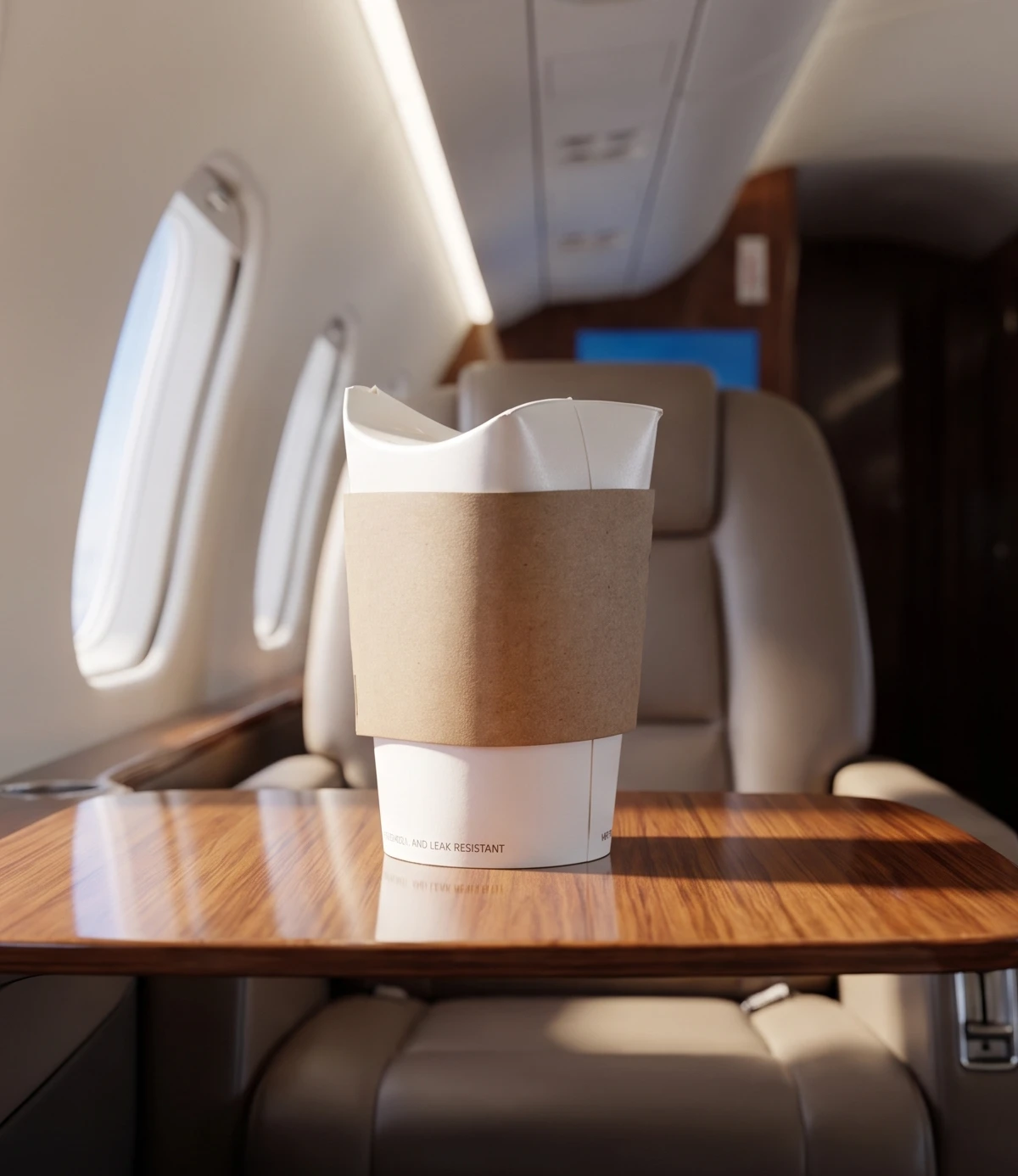
- Lid-free paper cups and disposable paper cups with water-based, PFAS-free, PE-free coatings
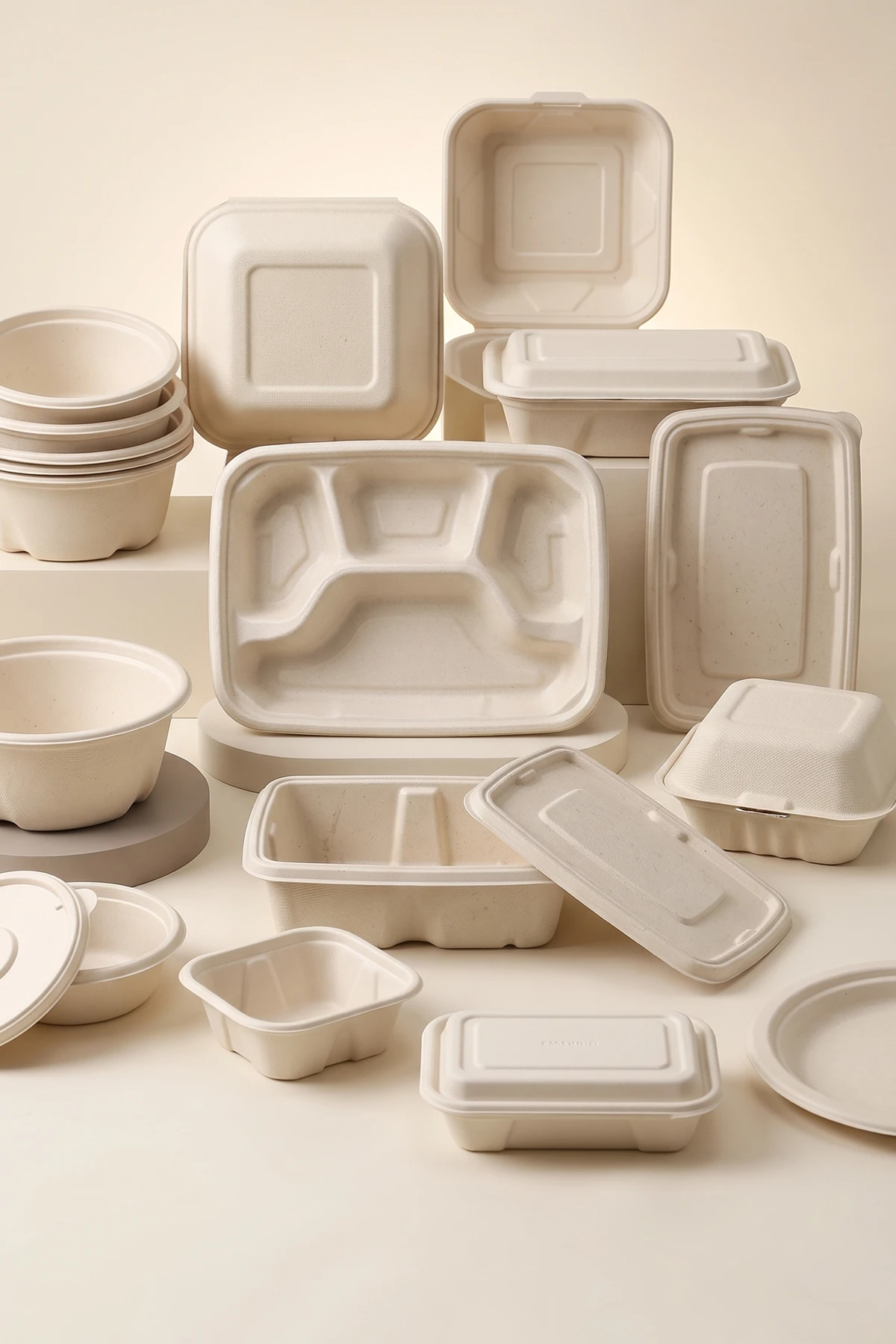
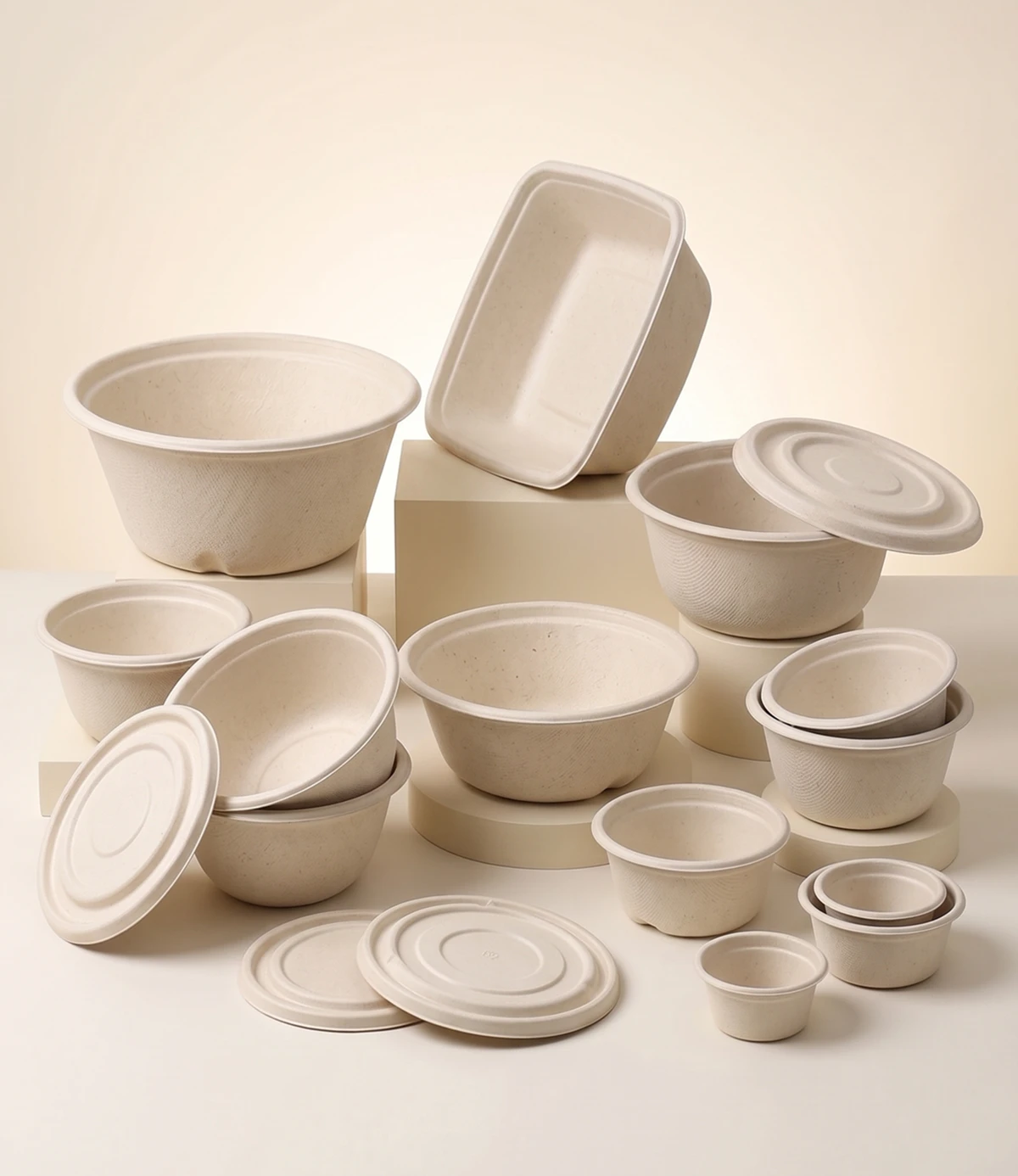
- Bagasse food containers, plates, bowls and molded fiber lids
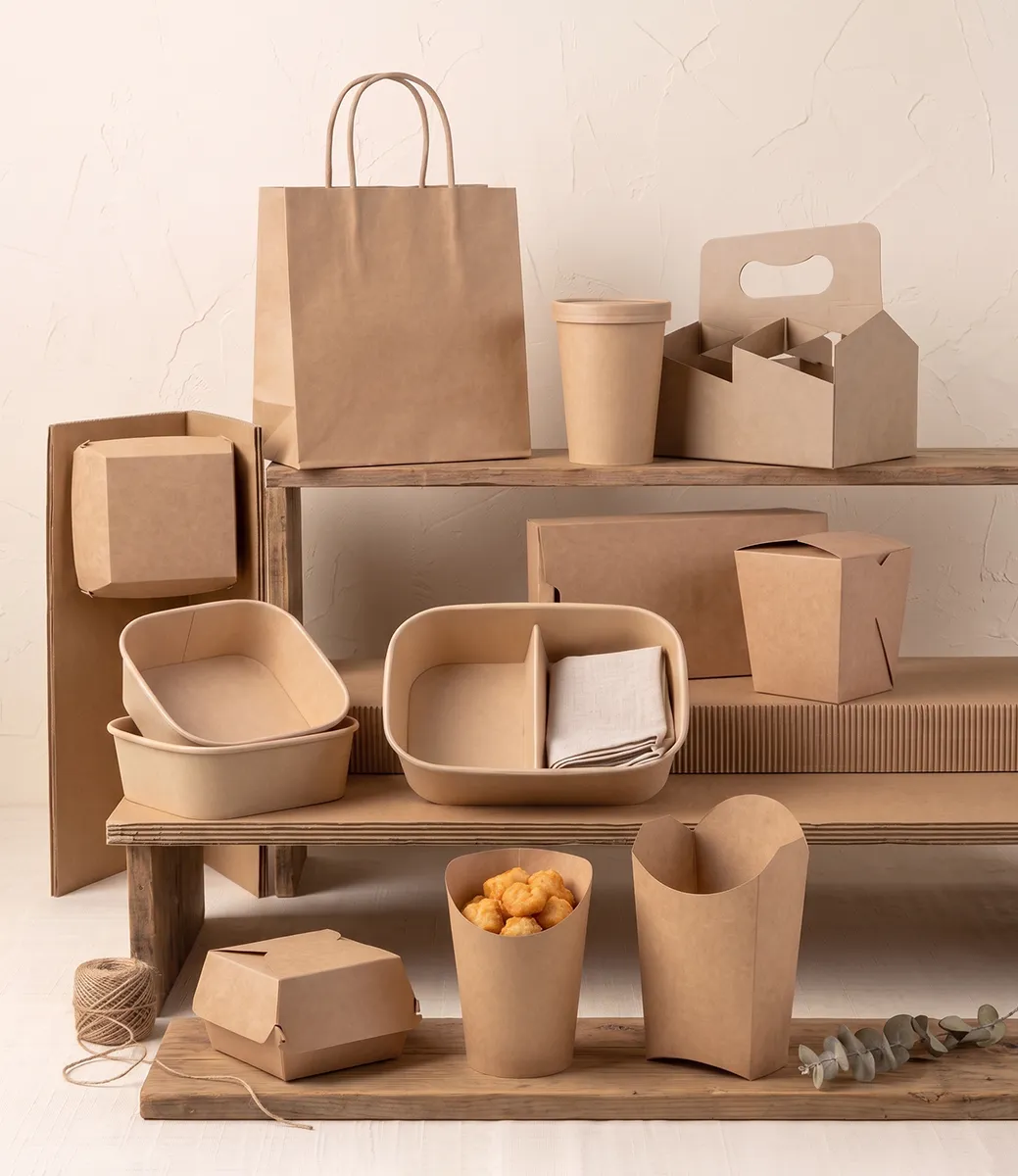
- Paper food packaging for takeaway and delivery
- Retail and flexible packaging and custom packaging development
Depending on the product, items are produced in Türkiye or by partner factories abroad; origin, shipping route and customs documents are stated in each quote. Prices, minimum order quantities and lead times are quoted per project. Food-contact and compostability documentation is provided according to the final product specification and production route. Browse the packaging catalogue or send us your brief to request samples and a quote.
Products in this article
Sources
- EU–Türkiye Customs Union — European Commission, Access2Markets
- Regulation (EU) 2025/40 on packaging and packaging waste (PPWR) — EUR-Lex
- Regulation (EC) No 1935/2004 on materials intended to come into contact with food — EUR-Lex
- Regulation (EC) No 2023/2006 on good manufacturing practice for food-contact materials — EUR-Lex
- Directive (EU) 2019/904 on single-use plastic products — EUR-Lex
- Commission guidelines on single-use plastic products (2021/C 216/01) — EUR-Lex
- Commission Implementing Regulation (EU) 2020/2151 on marking of single-use plastic products — EUR-Lex
- Turkish Food Codex Regulation on materials and articles intended to come into contact with foodstuffs (Official Gazette No. 30382) — UNEP LEAP / FAOLEX, 2018-04-05
- PPWR: key changes for food packaging — Campden BRI