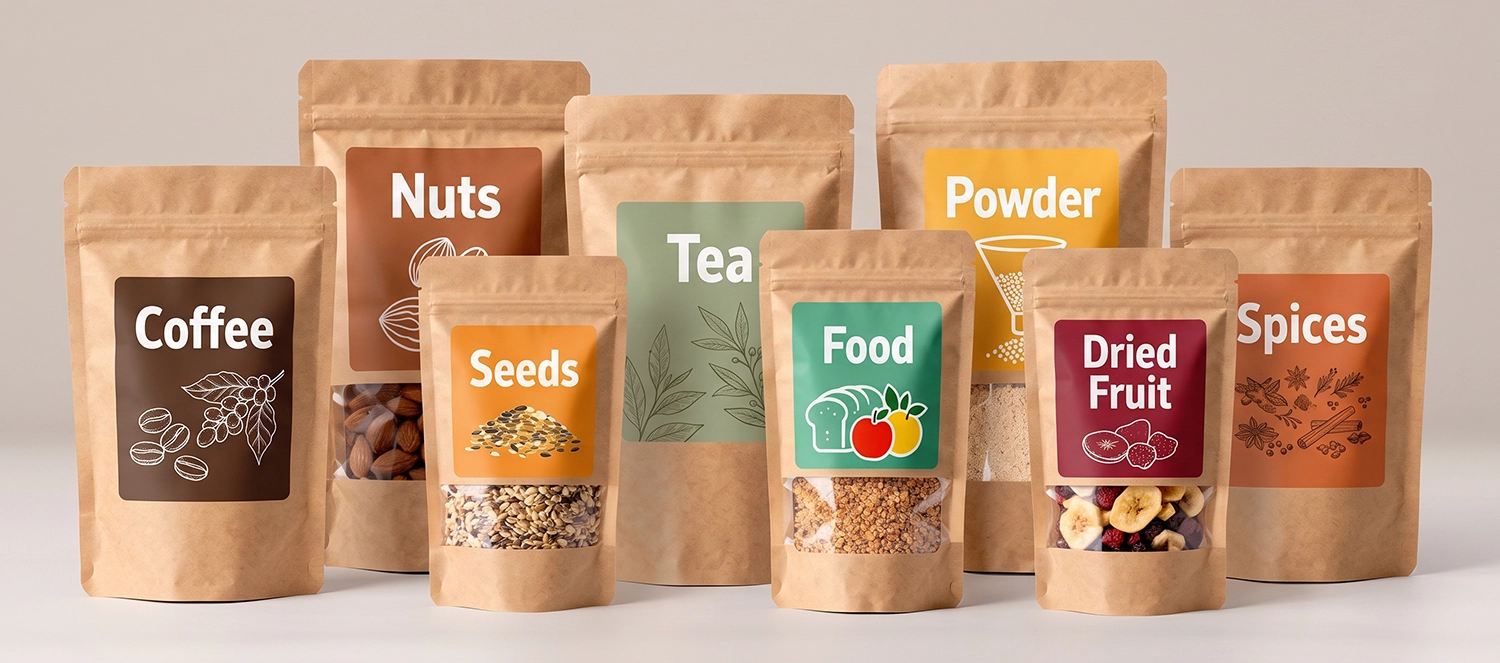
A kraft stand-up pouch, also called a doypack, is a flexible bag with a folded bottom gusset that lets it stand on a shelf. It usually has kraft paper on the outside for a natural look and one or more barrier layers inside that protect the product. To choose one, start from the product: pick the barrier structure by how long and how well the product must be protected, the size by the product’s weight and density, and the features — zipper, window, degassing valve — by how the customer uses it.
This guide covers what a stand-up pouch is and how it compares with other bag formats, which structure suits which product, how to size a pouch for 100 g to 1 kg, the features that matter for coffee, nuts and powders, what the EU recyclability rules mean for pouches, and what to ask a supplier.
What Is a Stand-Up Pouch (Doypack)?
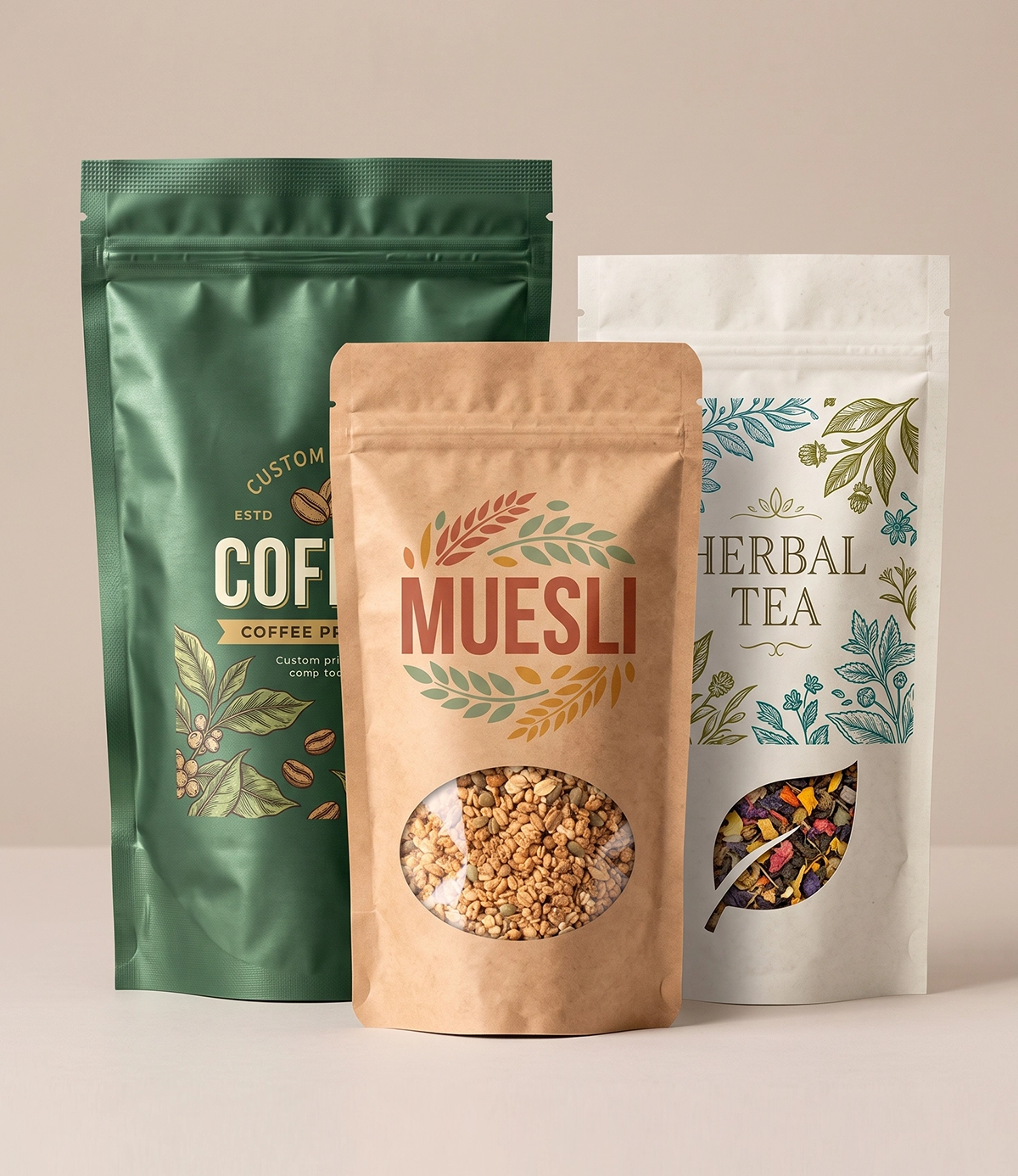
A stand-up pouch is a bag made from flexible film or laminated paper, sealed on the sides and with a folded gusset at the bottom. When the pouch is filled, the gusset opens into a flat base and the pouch stands upright. The name “doypack” comes from the format’s French inventor, Louis Doyen, and is now used for stand-up pouches in general.
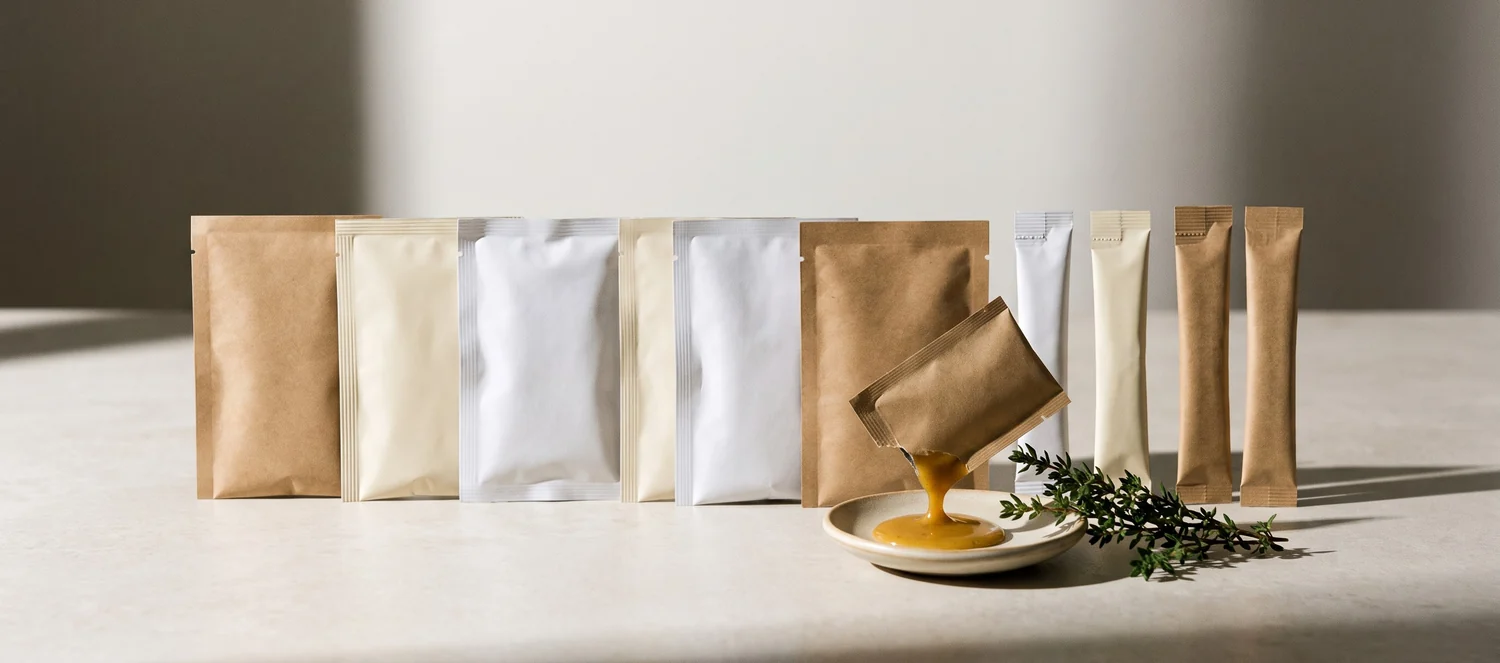
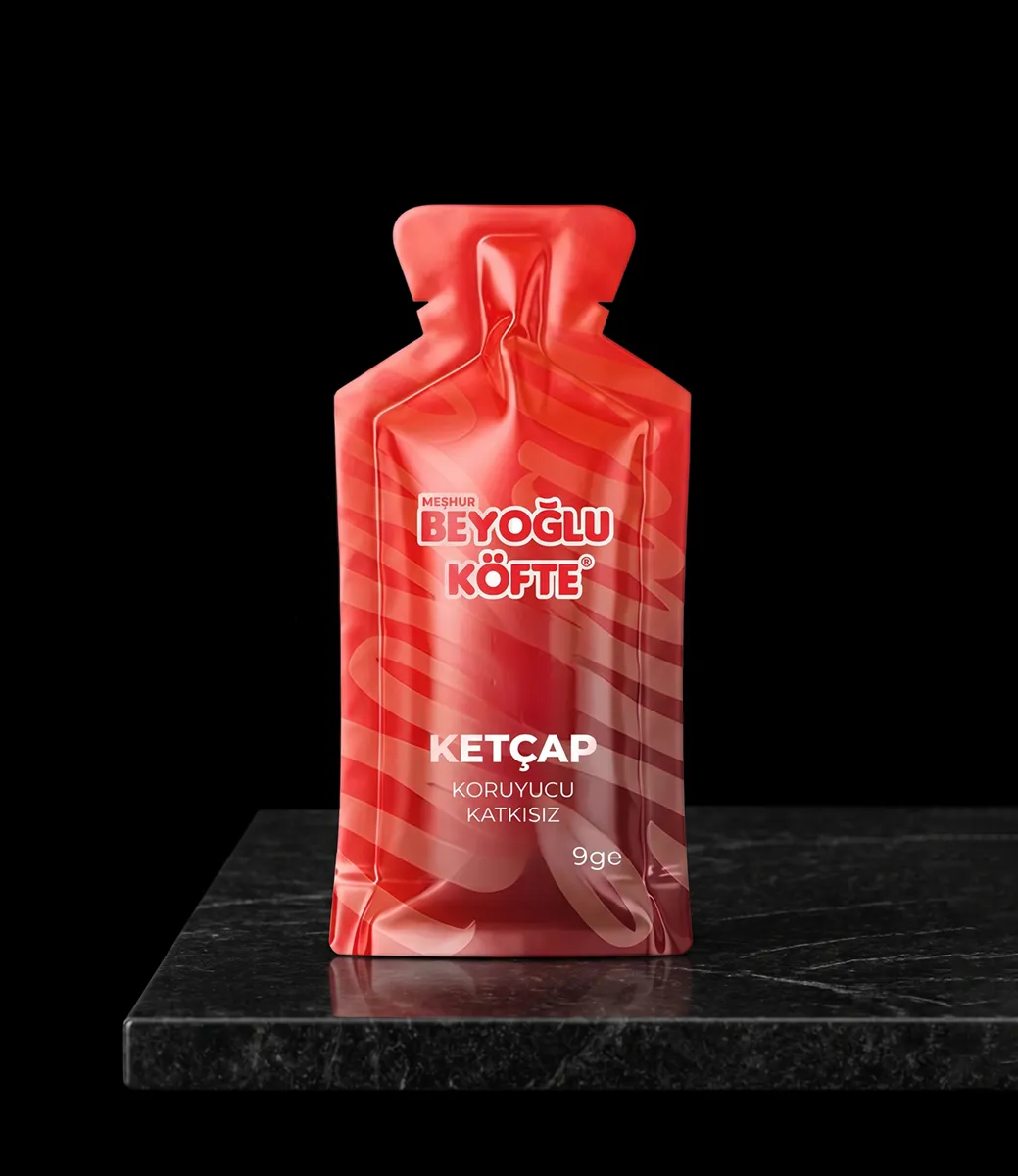
Stand-up pouches are the main multi-serve format for dry foods sold in retail: coffee, tea, nuts and dried fruit, snacks, granola, powders, spices and pet treats. For single portions, the right format is a sachet or stick pack — see our sachet packaging guide.
Stand-up pouch vs flat bottom bag vs other formats
| Format | How it stands | Best for | Notes |
|---|---|---|---|
| Stand-up pouch (doypack) | Round bottom gusset | Nuts, snacks, powders, 100 g–1 kg coffee | Most common; large front print area |
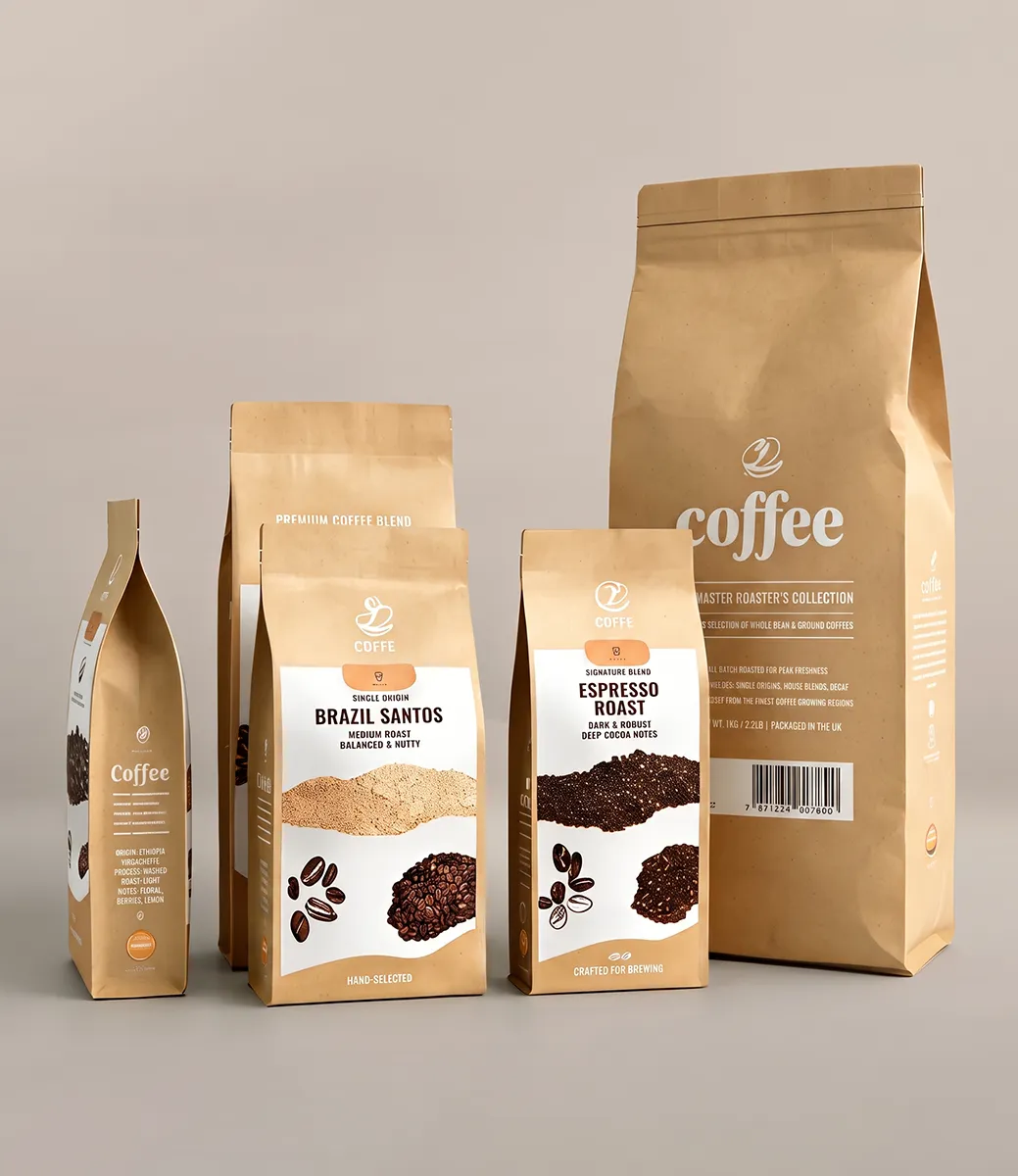
| Flat bottom bag (box pouch) | Flat rectangular base, side gussets | Coffee, tea, premium dry goods | Strong shelf presence; five print panels |
| Quad seal / side gusset bag | Side gussets on a solid base | Coffee, larger fills | Classic coffee look; wide side panels |
| 3-side seal / pillow bag | Lies flat | Portions, refills, samples | Lowest material use; does not stand |
| Shaped pouch | Custom die-cut outline | Promotions, kids’ products | Needs custom tooling |
Which Structure for Which Product?
The look of a kraft pouch says little about what is inside the wall. What protects the product is the layer structure.
| Structure | Typical build | Suits | Shelf life (indicative) |
|---|---|---|---|
| Single-layer kraft | Kraft paper with a thin inner coating | Dry products sold quickly: bakery, sweets, some spices | Short |
| Kraft + plastic film | Kraft paper laminated to PE or PP | Nuts, snacks, granola, tea | Medium |
| High barrier with foil | Kraft / PET / aluminum foil / PE | Coffee, oily nuts, products sensitive to oxygen and light | Long |
| Aluminum-free high barrier | Kraft or film with a metallized or coated barrier layer | Coffee and tea where foil is not wanted | Medium to long |
| Mono-material | PE/PE or PP/PP throughout | Products where recyclability is the priority | Depends on barrier grade |
Three questions decide the structure:
- What attacks the product? Oxygen makes nuts and coffee go stale, moisture softens snacks and cakes powders, light degrades some spices and tea.
- How long must it last? A product sold within weeks needs far less barrier than one that sits in a warehouse for a year.
- Where will the empty pouch go? If your market expects recyclable packaging, a mono-material or paper-based structure narrows the barrier options, so test it early.
How to Size a Stand-Up Pouch
Pouches are sized by width × height + bottom gusset. Weight alone does not decide the size: 250 g of coffee beans takes far more space than 250 g of sugar. The table below is a rough guide for coffee beans and whole nuts, with a 4–5 cm bottom gusset.
| Fill (coffee beans, nuts) | Indicative size (W × H) |
|---|---|
| 100 g | about 12 × 20 cm |
| 250 g | about 14–16 × 22–24 cm |
| 500 g | about 18–20 × 26–30 cm |
| 1 kg | about 23–26 × 33–36 cm |
Before you fix a size:
- Fill a sample with your product, not water or rice, and check the headspace above the zipper.
- Leave room for the zipper and the seal: the zipper sits 3–5 cm below the top, and the product should end below it.
- Check the shelf: measure the shelf or box the pouch must fit and how it looks next to competing products.
Zipper, Window, Valve and Other Features
- Zipper (press-to-close): lets the customer reclose the pouch. Standard for multi-serve products.
- Window: shows the product. Popular for nuts, granola and pasta; avoid it for light-sensitive products or use a smaller window.
- One-way degassing valve: essential for freshly roasted whole-bean coffee. Roasted coffee releases carbon dioxide for days; the valve lets it out without letting oxygen in.
- Tear notch: a clean first opening above the zipper.
- Hang hole (euro slot): for display on hooks.
- Spout: for liquids, purées and refills.
- Finish: natural kraft, matt, gloss or a paper-like touch; spot effects on printed films.
Recyclability and EU Rules for Pouches
Two sets of EU rules matter for food pouches:
- Food contact. The layer that touches the food must be a food-contact material, with a declaration of compliance under Regulation (EC) No 1935/2004 and, for plastic layers, Commission Regulation (EU) No 10/2011. Ask for a declaration that covers the full structure, including inks on the inside and the zipper.
- Recyclability under the PPWR. The EU Packaging and Packaging Waste Regulation (EU) 2025/40 applies generally from 12 August 2026. It requires packaging placed on the EU market to be recyclable from 1 January 2030, assessed against design-for-recycling criteria to be set by the Commission. Multi-material laminates — for example kraft paper bonded to aluminum foil and plastic — are the hardest to recycle; mono-material PE or PP pouches and paper-based pouches with a thin barrier are the structures designed for recycling.
Directive (EU) 2024/825 also restricts generic environmental claims such as “eco-friendly” that cannot be substantiated, so print sustainability claims on a pouch only when the structure and documentation support them.
Buying Stand-Up Pouches: What to Ask a Supplier
- Full layer structure in writing, layer by layer, and the barrier values the supplier quotes for it.
- Declaration of compliance for food contact covering the whole structure.
- Recyclability: which recycling stream the structure is designed for, and the supporting documentation.
- Size and fill test: samples filled with your product before the print order.
- Features: zipper type, valve type (coffee), window size and position, tear notch, hang hole.
- Printing: number of colors, print method, finish, and whether the design is printed on the film or on a label.
- Supply format: ready-made pouches or printed roll stock for your form-fill-seal line.
- Lead time and minimum order: both depend on stock, custom print and structure, and are confirmed in the quote.
Stand-Up Pouches from Ekoroll
Ekoroll supplies stand-up pouches and flexible bags — doypacks, flat bottom coffee bags, quad seal, 3-side seal and shaped pouches — with zipper, window, degassing valve or spout, in single-layer kraft, multi-layer barrier, aluminum-free high-barrier and mono-material structures designed for recycling. Pouches are supplied ready-made or as printed roll stock for form-fill-seal lines; food-contact and performance documentation is provided according to the final structure. See the full retail and flexible packaging range, and sachets and stick packs for single portions.
Send us your product, fill weight, shelf life and market, and we will propose a structure and size, send samples to fill with your own product, and quote in writing. Request a quote or browse the catalog.
Products in this article
Sources
- Regulation (EU) 2025/40 on packaging and packaging waste (PPWR) — EUR-Lex
- Regulation (EC) No 1935/2004 on materials and articles intended to come into contact with food — EUR-Lex
- Commission Regulation (EU) No 10/2011 on plastic materials and articles intended to come into contact with food — EUR-Lex
- Directive (EU) 2024/825 on empowering consumers for the green transition — EUR-Lex
- New EU Packaging and Packaging Waste Regulation: Highlights and Challenges Ahead — Keller and Heckman LLP