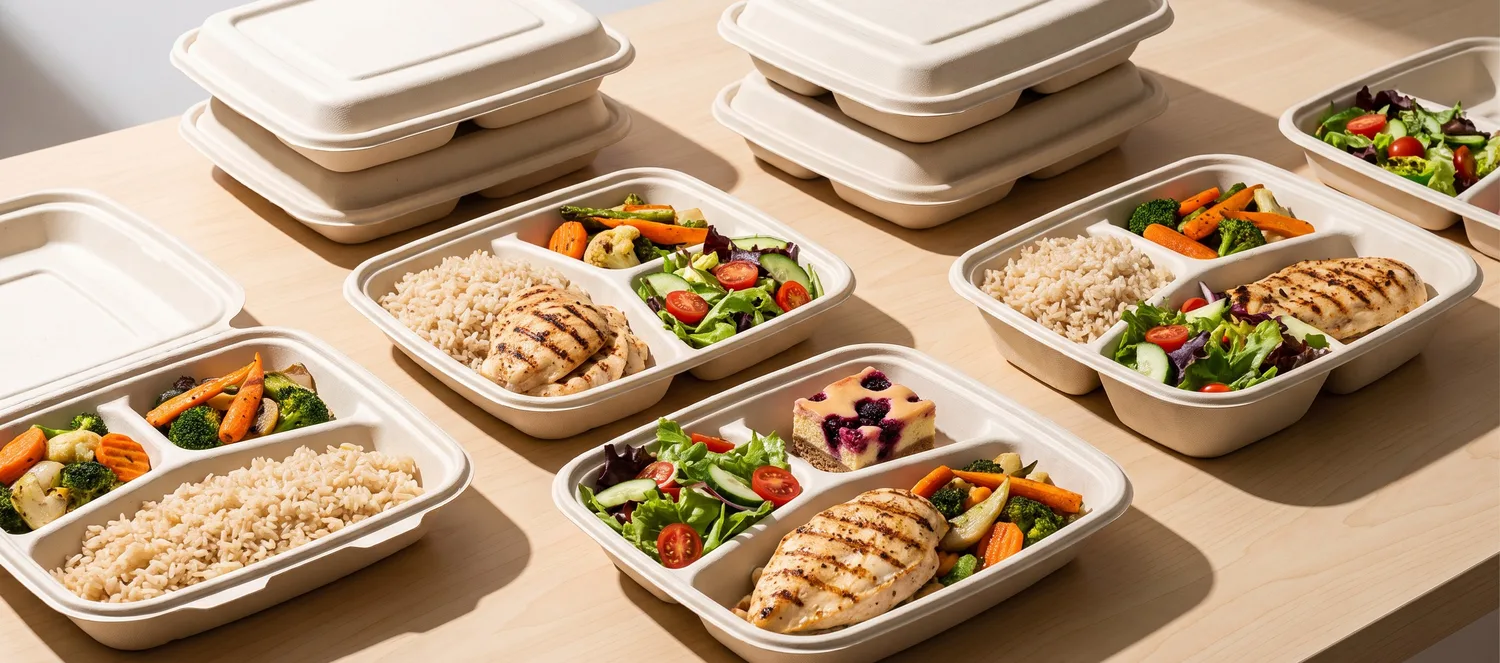
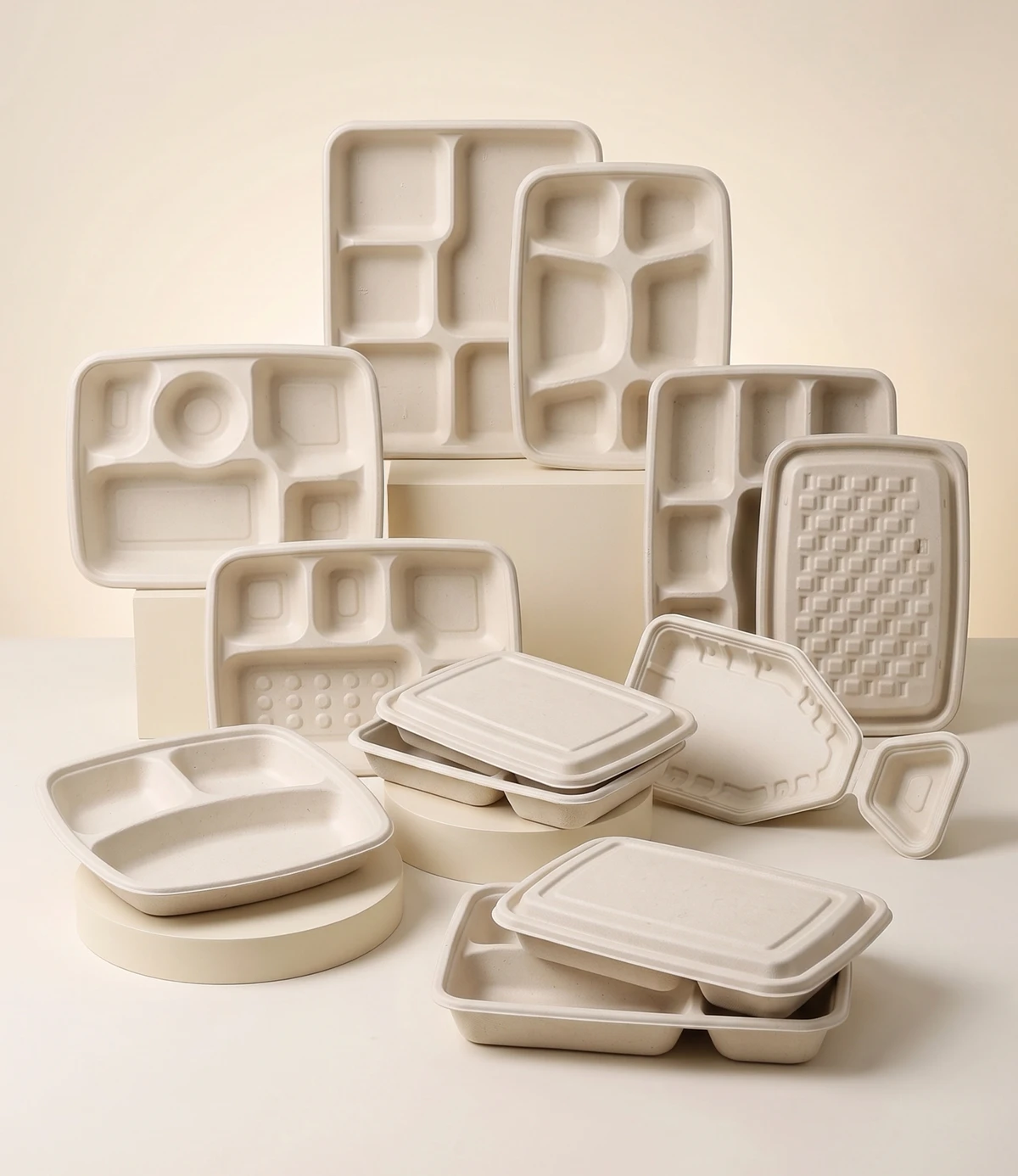
A bagasse compartment tray is a disposable meal tray molded from sugarcane fiber, with fixed sections for a main, sides, salad and dessert, closed with a molded fiber lid. Canteens, schools, hospitals, corporate and contract caterers use them to pack a complete meal in one piece: assembly is quicker, portions stay consistent and the meal arrives presentable. To choose one, start from the menu cycle: pick the number of compartments and the depth for the meals you serve most, add a lid if meals are transported or held, and test the tray on your own line.
This guide covers compartment layouts, deep and shallow trays, lids, cook-chill and reheating, where trays work best, how they compare with clamshells and plastic trays, and how to test them.
Compartment Layouts
| Layout | Typical use |
|---|---|
| 3 compartments | Main, side and salad — the standard meal tray |
| 4 compartments | Main, two sides and salad or dessert |
| 5 compartments | Main, two sides, salad and dessert or bread |
| 6 compartments | Full set meals, children’s menus, tasting meals |
| Shallow 5–8 compartments | Lighter meals, snacks, buffets, platters |
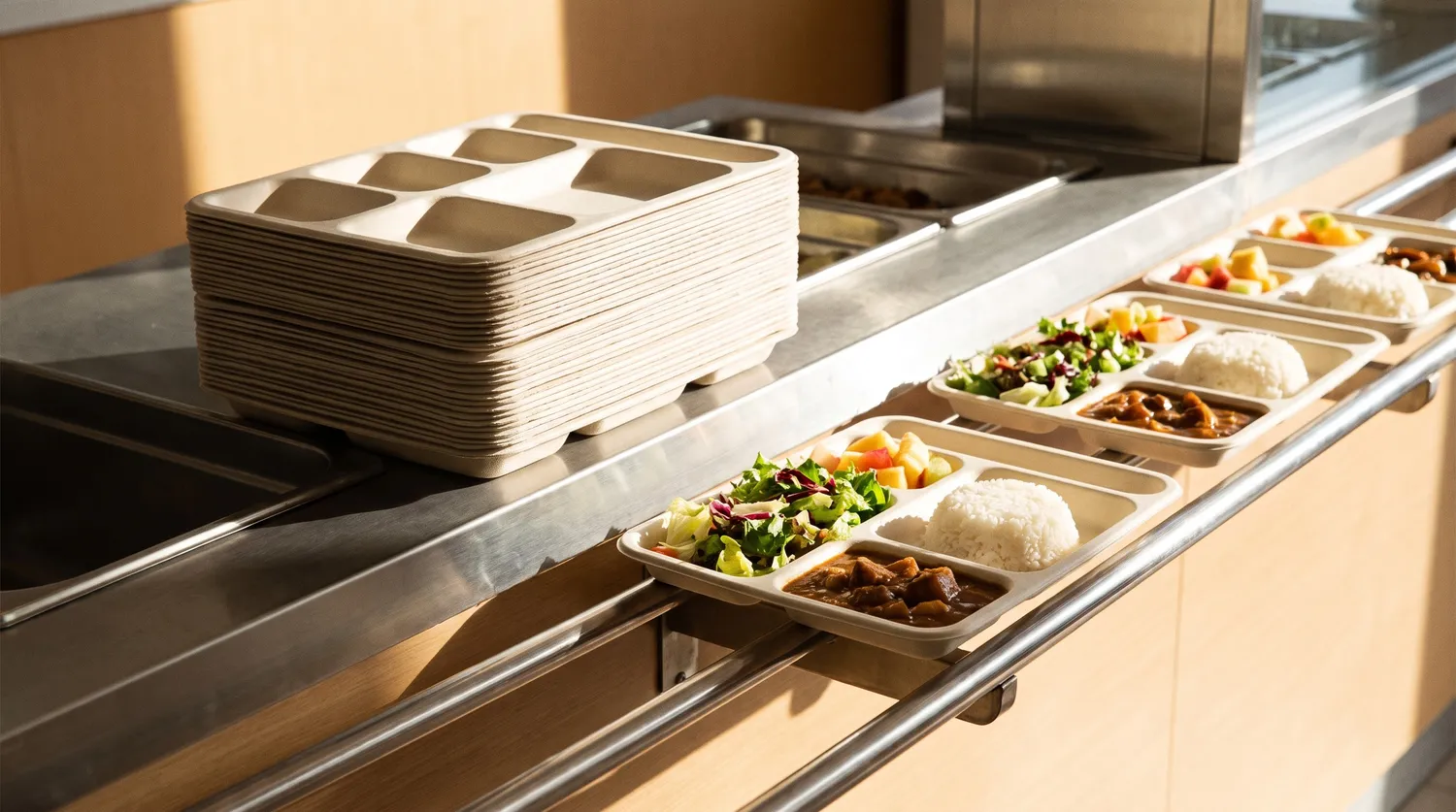
Deep or shallow? Deep trays hold hot mains with sauce, rice and stews; shallow trays suit lighter meals, cold food, snacks and buffet presentation. Keep the menu’s wettest dish in the deepest section.
Lids, Holding and Transport
- Molded fiber lids made for the tray keep the whole pack fiber-based and protect the meal in transport.
- Fit after holding: steam and condensation affect fit, so test the lid on a filled tray after it has been held for your usual time.
- Stacking: check that closed, filled trays stack in your trolleys, hot boxes and vehicles without crushing the lids.
- Labels: leave a flat area on the lid for menu, allergen and date labels.
Cook-Chill, Cook-Freeze and Reheating
Ekoroll bagasse trays are microwave- and freezer-safe and suitable for hot and cold food, so they work in programs where meals are cooked ahead, chilled or frozen, and reheated for service. Reheat for a short time and do not use the trays in a conventional oven. Test your full cycle — fill, chill or freeze, hold, reheat — with your own meals.
Where Compartment Trays Work Best
- Workplace and university canteens: fast assembly at the counter, consistent portions.
- Schools and children’s meal programs: fixed sections help balance a meal and keep foods apart.
- Hospitals and care homes: portion control and hygienic single-use service.
- Contract and event catering: hundreds of identical meals packed and transported.
- Transport catering: trains, coaches and crew meals, where stacking and lids matter.
- Ready meals and meal prep: cook-chill meals sold or delivered in one tray.
Compartment Trays vs Clamshells vs Plastic Trays
| Bagasse compartment tray | Bagasse clamshell | Plastic compartment tray | |
|---|---|---|---|
| Construction | Open tray with separate fiber lid | One piece with hinge and tab | Molded plastic, often with plastic lid |
| Best for | Catering lines, many identical meals | À la carte takeaway | — |
| Filling | Open; fast on a counter or line | Close in one movement | Open |
| Microwave and freezer | Yes (Ekoroll bagasse) | Yes (Ekoroll bagasse) | Depends on the plastic |
| EU single-use rules | No plastic layer | No plastic layer | Single-use plastic food container; EPS banned |
| End of life | Home compostable (TÜV AUSTRIA OK compost HOME) | Home compostable | Recycling where collected |
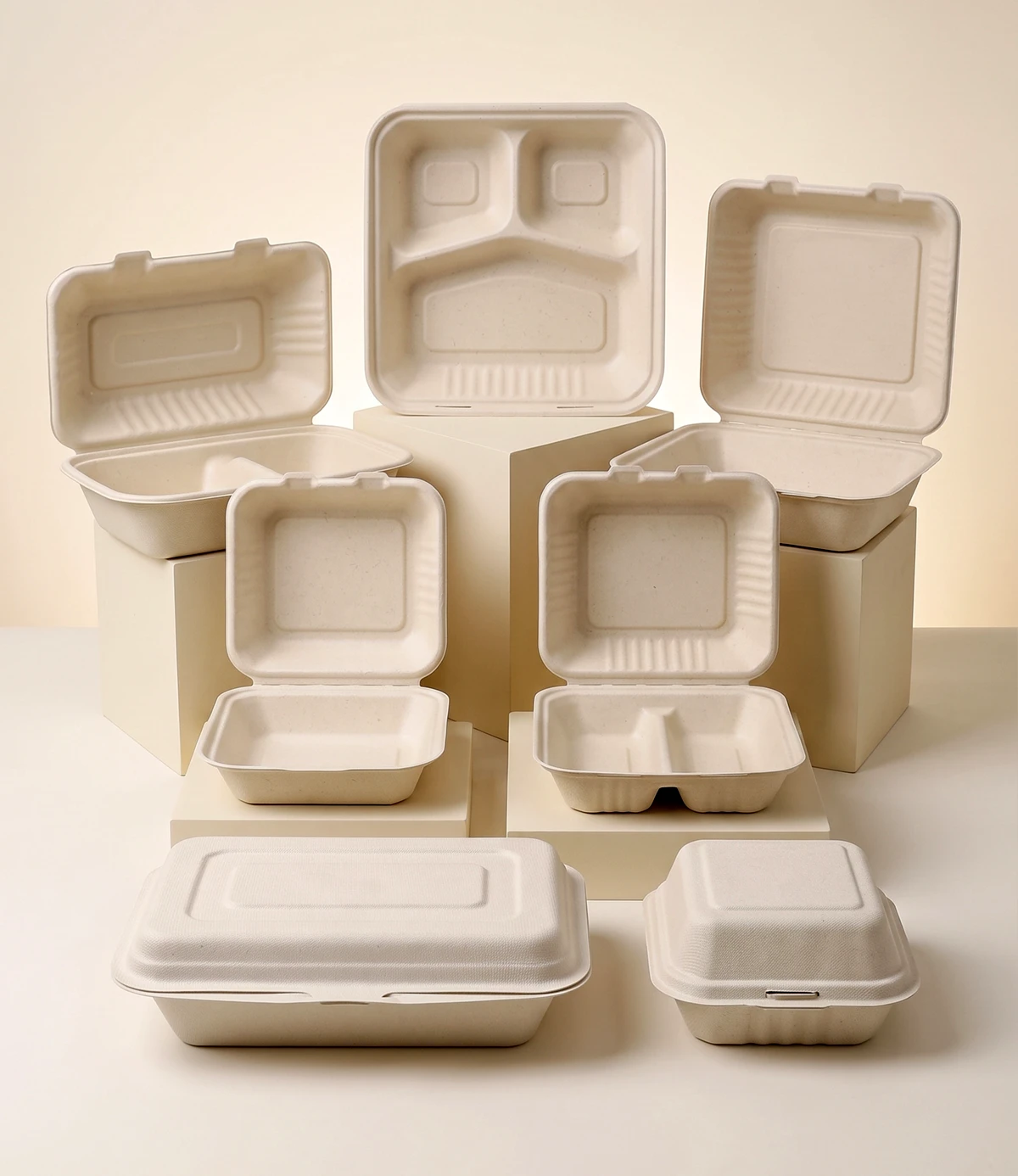
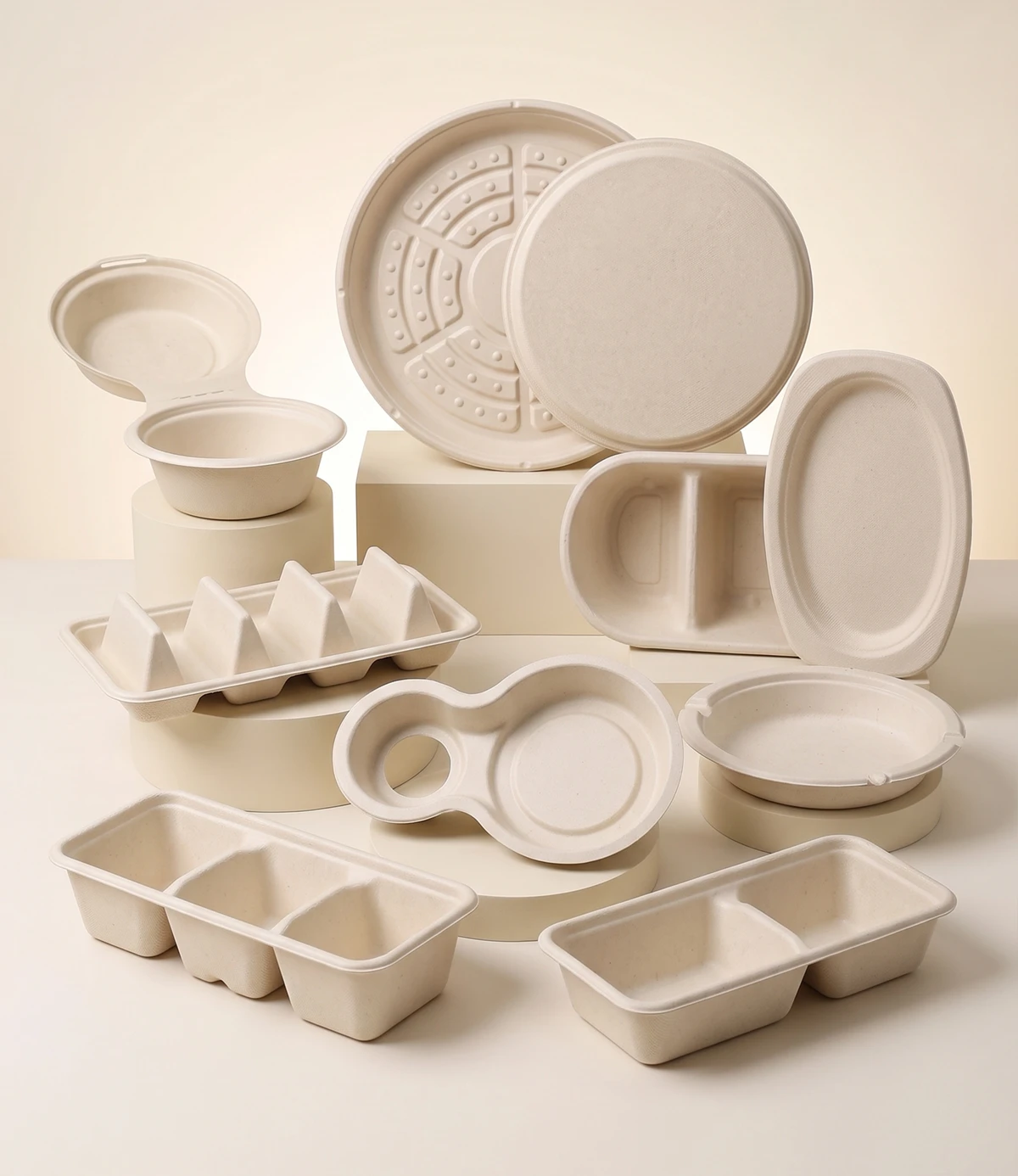
For one-piece boxes, see our guide to bagasse burger boxes and clamshells; for open serving trays and cup carriers, see bagasse trays and serving accessories.
How to Test Compartment Trays
- Fill time: time how long it takes to fill one tray on your line at a busy moment.
- Containment: put your wettest dish in a section and check that sauce does not cross into the next one when the tray is carried.
- Holding: close and hold filled trays for your usual time, then check lid fit and the base.
- Transport: stack filled trays in your trolley or vehicle for a typical trip.
- Reheating: run your full chill or freeze and reheat cycle.
- Waste: check how trays are collected after service; where organic waste is collected, home compostable fiber trays can go with it.
Bagasse Compartment Trays from Ekoroll
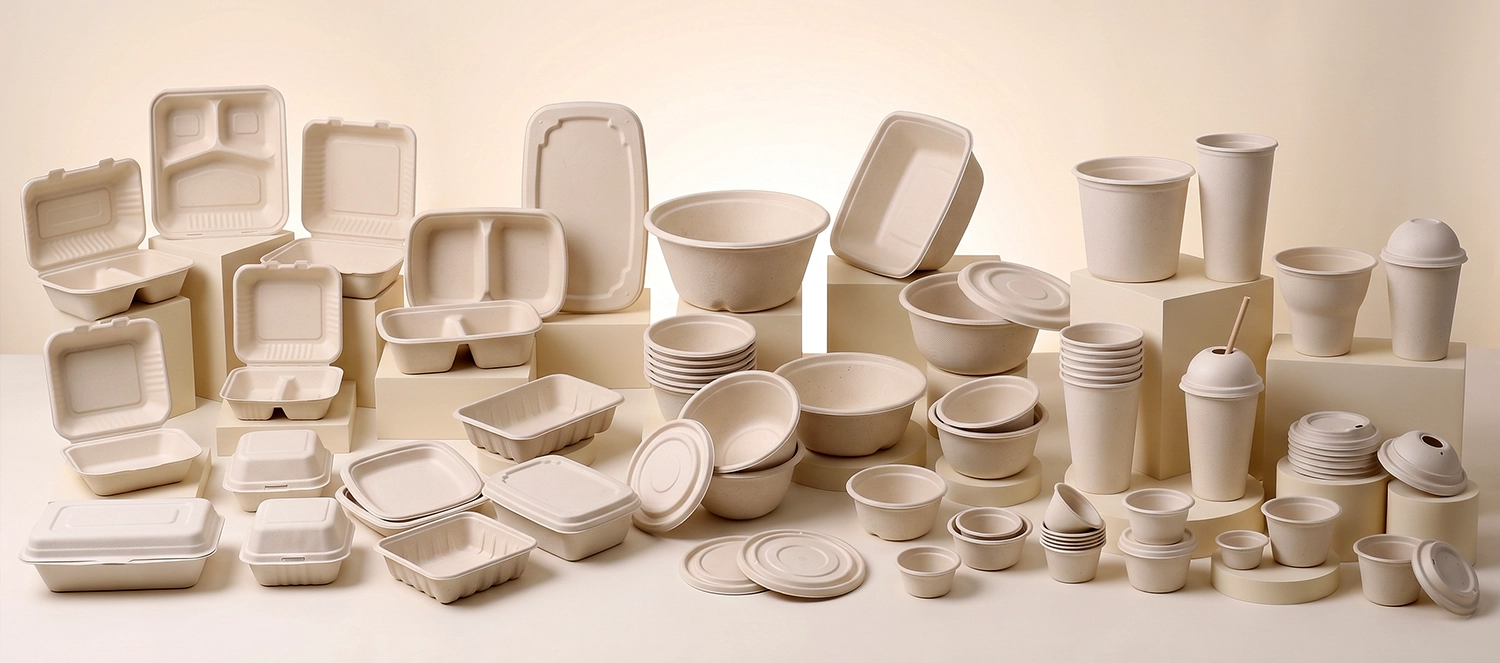
Ekoroll supplies bagasse compartment meal trays from three to eight compartments, deep and shallow, with molded fiber lids, plus bagasse clamshell boxes and open bagasse trays and serving accessories. Compartment layouts and volumes can be developed around your menu cycle with dedicated tooling for larger programs, and supply is planned for institutional and contract caterers. Like all Ekoroll bagasse, the trays are home compostable and 100% bagasse (TÜV AUSTRIA OK compost HOME), PFAS-free, microwave- and freezer-safe, water- and oil-resistant, and suitable for hot and cold food. See the whole range in our bagasse packaging guide and what is bagasse?.
Send us your menu cycle, meal counts and market, and we will propose layouts, send samples and quote in writing. Request a quote or browse the catalog.
Products in this article
Sources
- Directive (EU) 2019/904 on the reduction of the impact of certain plastic products on the environment (SUP Directive) — EUR-Lex
- Regulation (EU) 2025/40 on packaging and packaging waste (PPWR) — EUR-Lex
- Regulation (EC) No 1935/2004 on materials and articles intended to come into contact with food — EUR-Lex