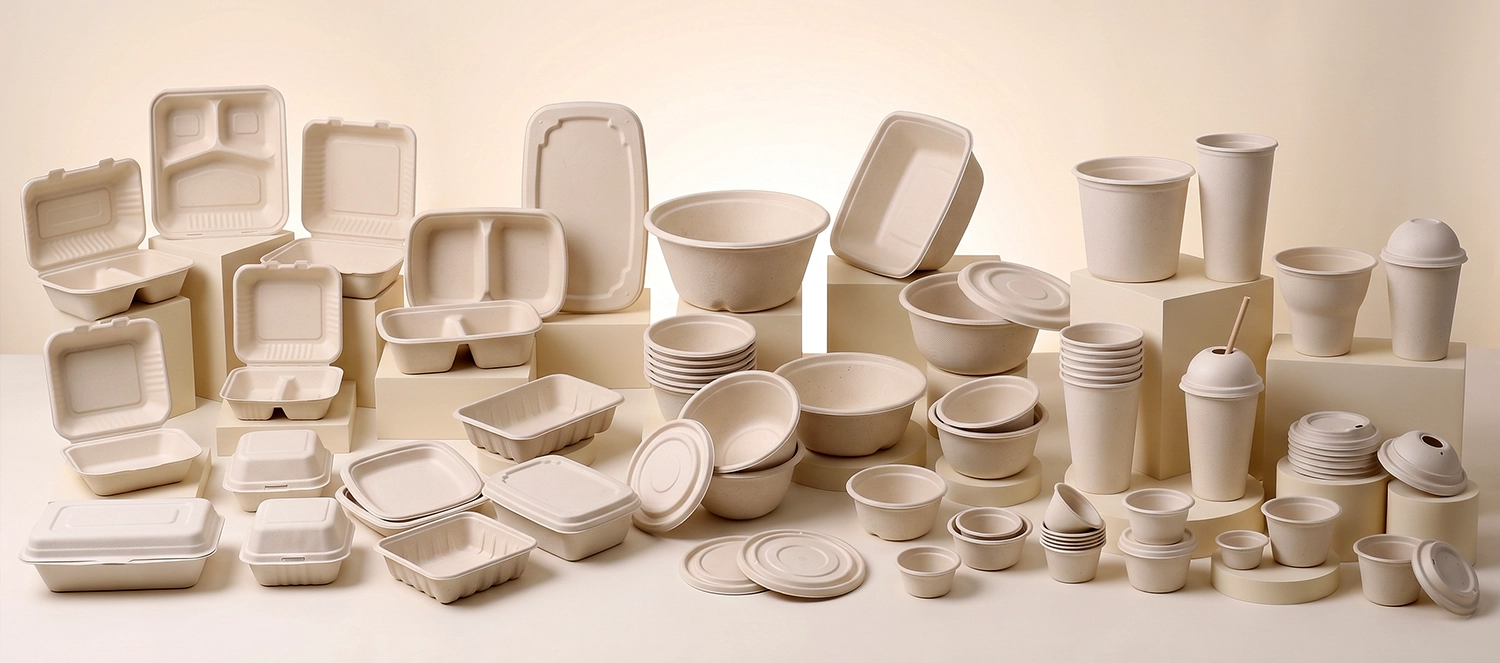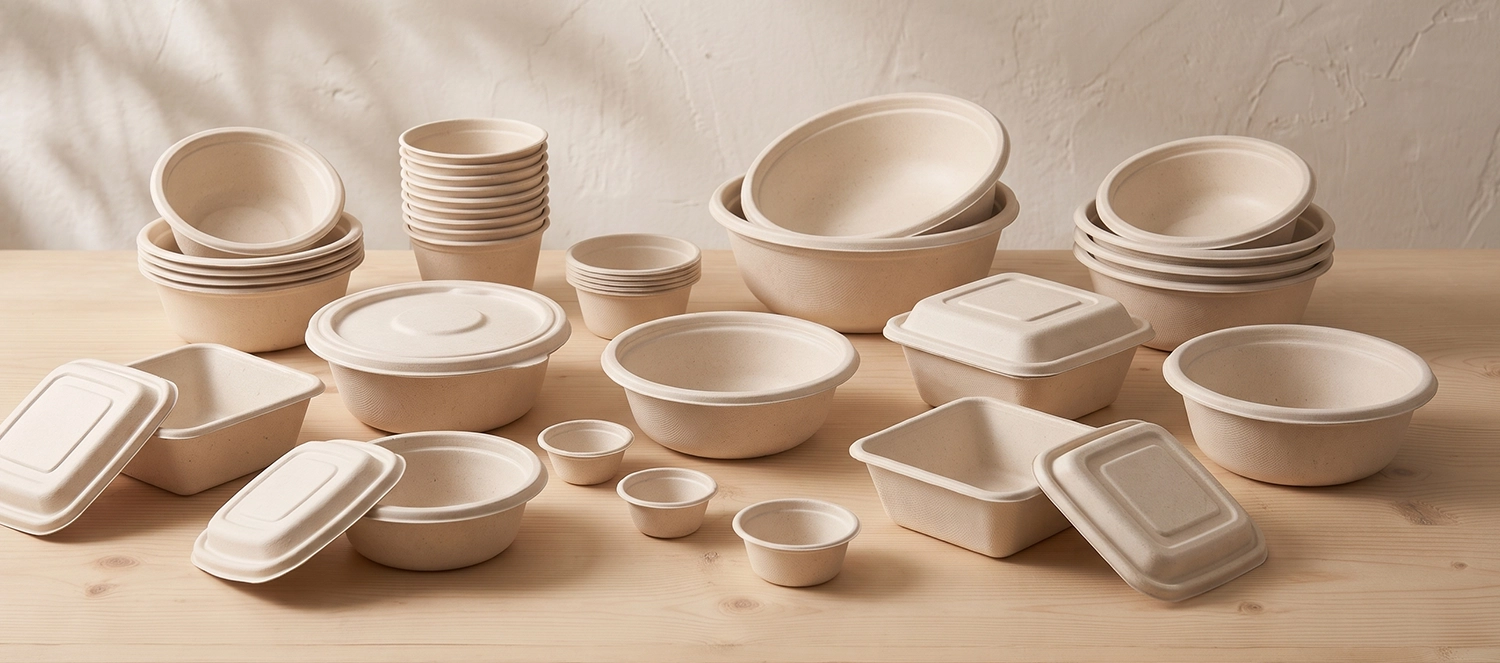
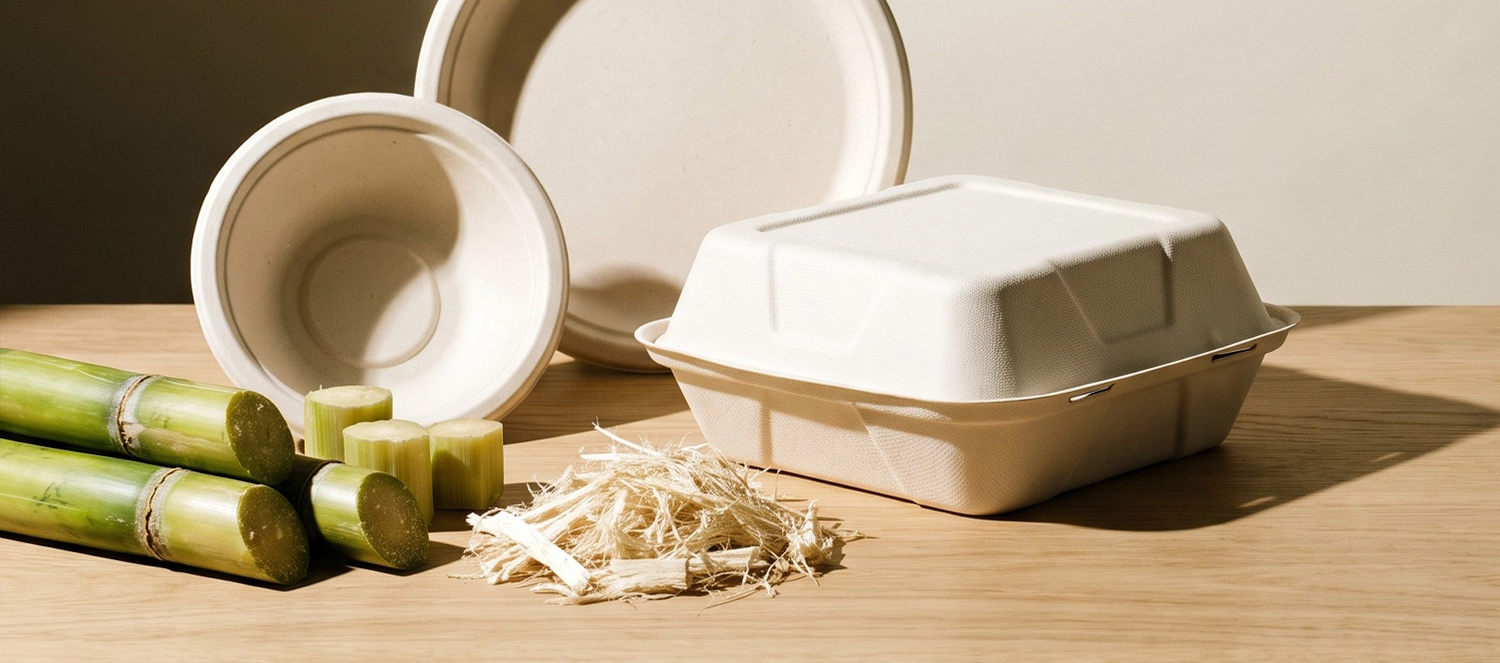
Bagasse is the fibrous material left after sugarcane stalks are crushed to extract their juice. Pulped with water and formed in heated molds, it becomes rigid, lightweight plates, bowls, boxes and trays for food service. Ekoroll bagasse is 100% bagasse, home compostable (TÜV AUSTRIA OK compost HOME), PFAS-free, microwave- and freezer-safe, water- and oil-resistant and suitable for hot and cold food.
This page answers the questions buyers and customers ask most about bagasse: what it is, how it is made, and whether it is compostable, biodegradable, plastic, microwave-safe, waterproof, safe for food and recyclable.
What Is Bagasse?
Bagasse (sometimes spelled “bagass”) is the dry pulp that remains after sugarcane or sorghum stalks are crushed for their juice. It is mostly cellulose fiber. Sugar mills have long burned it for energy; it is also used to make paper, board and, increasingly, molded food packaging. Because it is a by-product of sugar production, bagasse packaging uses a material that already exists instead of virgin wood pulp or fossil plastics.
The word comes from the French bagasse, via Spanish bagazo, meaning the residue left after pressing.
How Is Bagasse Tableware Made?
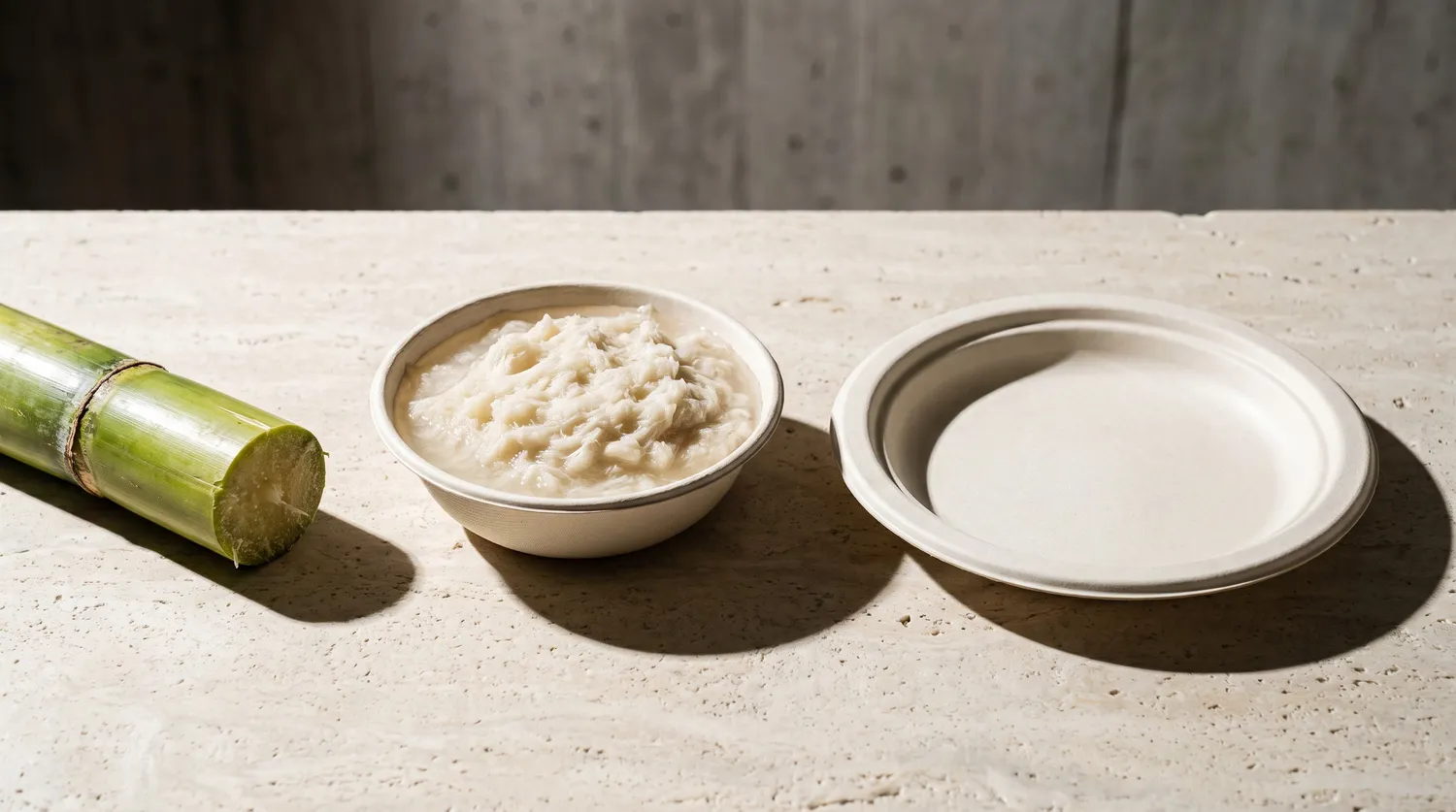
- Collecting the fiber. After the juice is extracted, the bagasse is collected and cleaned.
- Pulping. The fiber is mixed with water into a pulp.
- Forming. The pulp is drawn onto a mold in the shape of the plate, bowl or box.
- Hot pressing. Heated molds press out the water and set the shape, giving a smooth, dense, rigid surface.
- Trimming and inspection. Edges are trimmed, and the items are checked, stacked and packed.
Clamshells and boxes are molded in one piece, with the hinge and the lid formed together. Lids for bowls and cups are molded separately to fit their rims.
Is Bagasse Compostable?
Bagasse fiber is compostable, but what matters for a buyer is the certificate of the exact product:
- Home compostable — certified to break down in a home compost heap under the conditions of a scheme such as TÜV AUSTRIA’s OK compost HOME. Ekoroll bagasse is home compostable and 100% bagasse; the certificate is held by the producing mill and a copy is available on request.
- Industrially compostable — certified to break down in an industrial composting facility, which runs hotter than a home heap (for example under EN 13432).
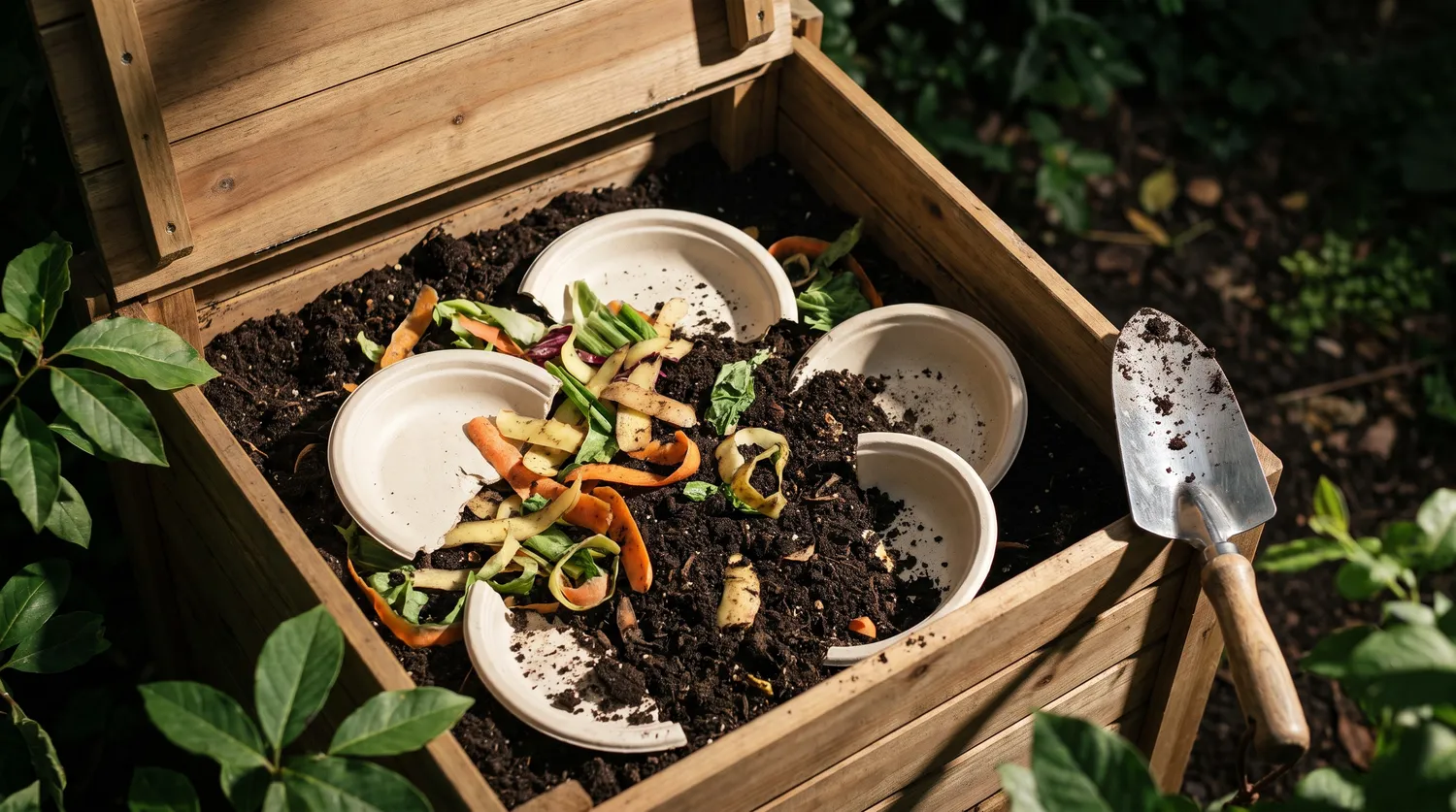
For the difference between the two and what “biodegradable” really means, see compostable vs biodegradable packaging.
Is Bagasse Biodegradable?
Bagasse is a plant fiber and biodegrades. But “biodegradable” on its own says nothing about time or conditions, so it is a weak claim. Directive (EU) 2024/825 restricts generic environmental claims that cannot be substantiated. A certified “home compostable” or “industrially compostable” claim, backed by the certificate, is the claim to look for.
Is Bagasse Plastic?
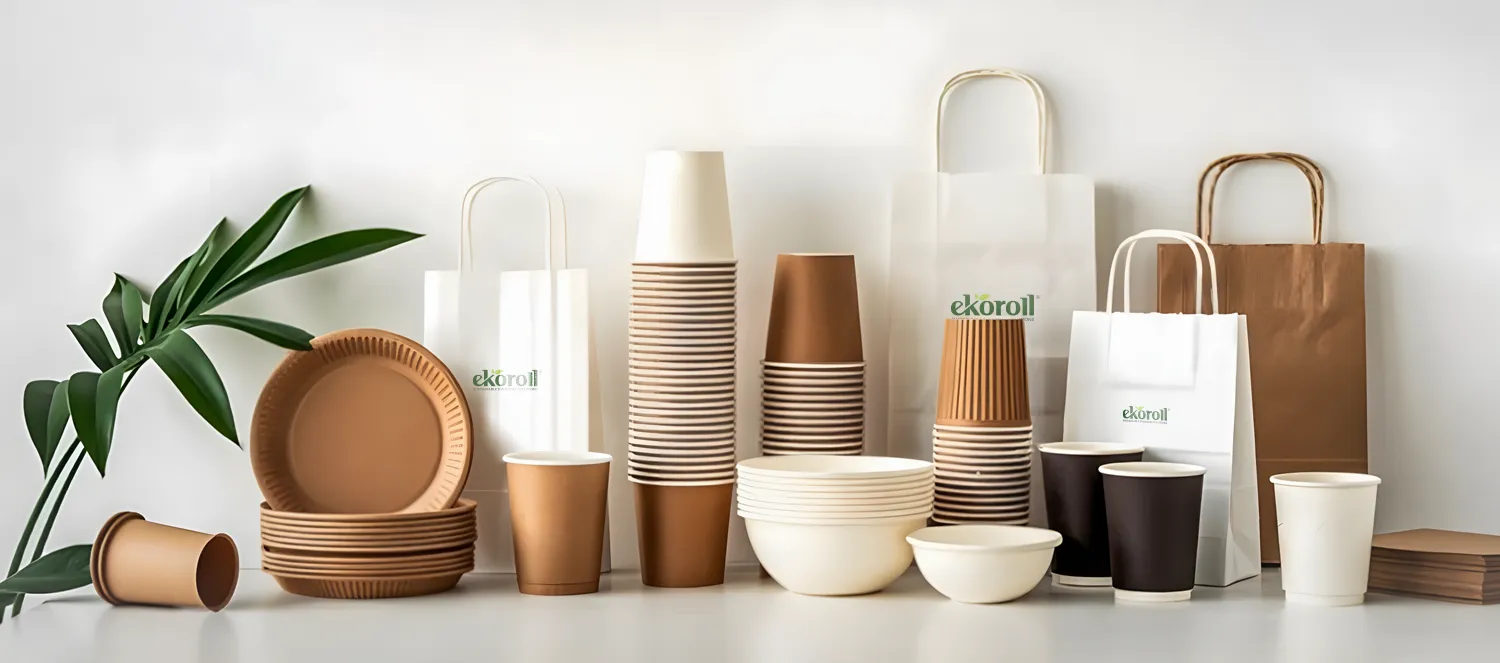
No. Bagasse is a plant fiber, not a plastic. Ekoroll bagasse products are 100% bagasse, with no plastic layer or plastic coating. This matters in the EU: under the Single-Use Plastics Directive, single-use plastic plates and expanded polystyrene food containers are banned, and paper products with a plastic lining count as plastic. Uncoated fiber products are outside those rules.
Is Bagasse Microwave-Safe and Freezer-Safe?
Ekoroll bagasse is microwave- and freezer-safe and suitable for hot and cold food. Reheat for a short time; do not use bagasse in a conventional oven, under a grill or on a hob.
Is Bagasse Waterproof and Oil-Resistant?
Ekoroll bagasse is water- and oil-resistant, so it holds wet, greasy and hot dishes such as curries, grills and fries. For soups and very liquid dishes that travel in delivery, choose a bowl and lid designed as a leak-resistant system — the Ekoroll Anti-Leak Series — and test it with your own food.
Is Bagasse Safe for Food? What About PFAS?
Bagasse food packaging is a food-contact material. Ask any supplier for a declaration of compliance under Regulation (EC) No 1935/2004 for the exact product.
The main safety question for molded fiber is PFAS. Some molded fiber products used fluorinated chemicals for grease resistance in the past. Since 12 August 2026, the EU Packaging and Packaging Waste Regulation bars food-contact packaging that contains PFAS above set limits. Ekoroll bagasse is PFAS-free.
How Long Does Bagasse Take to Decompose?
It depends on temperature, moisture, air and the size of the pieces — an industrial composting facility is faster than a home heap, and a whole plate breaks down more slowly than torn pieces. Certification schemes such as OK compost HOME test that a product disintegrates and biodegrades within set limits under home-compost conditions. Rely on the certificate of the exact product rather than a quoted number of days.
Is Bagasse Recyclable?
Usually not in paper recycling once it has been used for food: food residue contaminates the paper stream, and many schemes do not accept molded fiber. Where local collection accepts it, organic waste or composting is the intended route. Check the rules of your municipality or waste contractor.
Bagasse vs Paper vs Plastic at a Glance
| Bagasse (Ekoroll) | Coated paper / board | Plastic / foam | |
|---|---|---|---|
| Material | 100% sugarcane fiber | Paperboard with a barrier coating | Fossil or bio-based plastic |
| Plastic layer | None | Depends on the coating | Plastic throughout |
| Hot, greasy food | Yes; water- and oil-resistant | Depends on the coating | Yes |
| Microwave | Microwave- and freezer-safe | Depends on the coating | Depends on the plastic |
| End of life | Home compostable (TÜV AUSTRIA OK compost HOME) | Depends on the coating and local collection | Recycling where collected |
| EU single-use plastic rules | Outside them | Plastic-lined items count as plastic | Plates and EPS food containers banned |
For deeper comparisons, see bagasse vs plastic food containers, bagasse vs paper food containers and bagasse plates vs paper plates.
Bagasse Packaging from Ekoroll
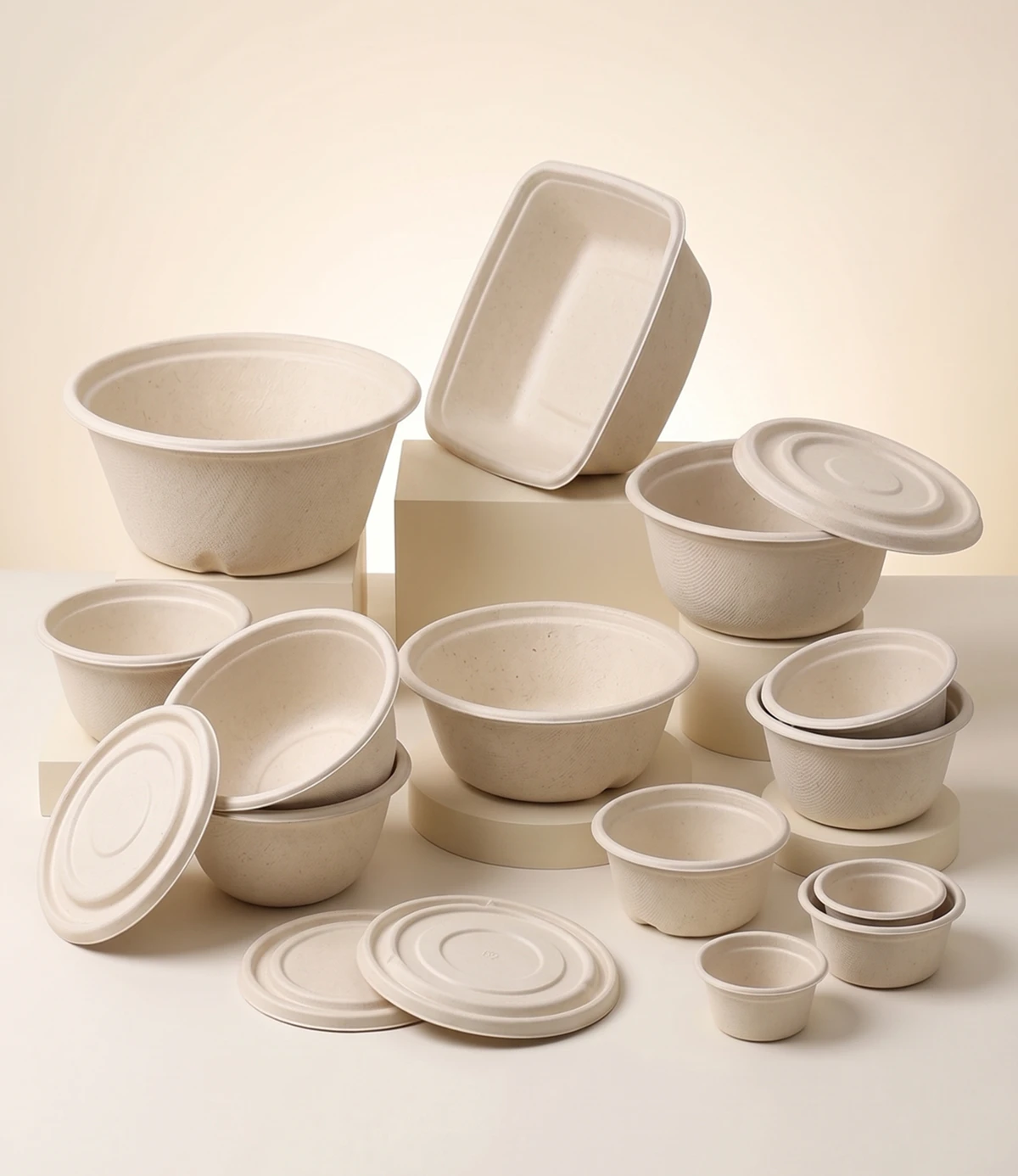
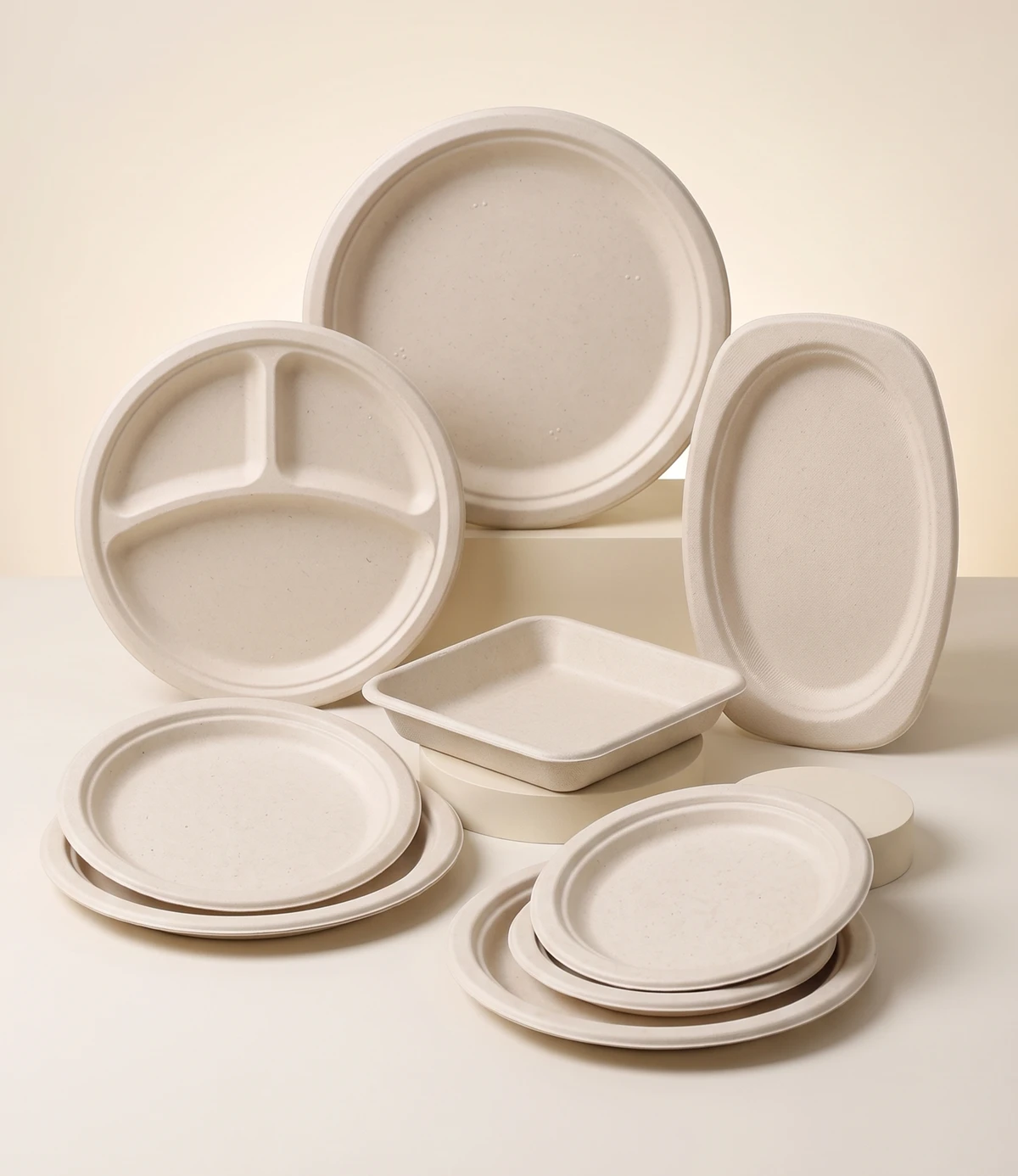
Ekoroll supplies a full bagasse food packaging range: plates, bowls and lids, clamshell boxes, meal trays, containers, cups and lids, and the leak-resistant Anti-Leak Series. All Ekoroll bagasse is home compostable and 100% bagasse (TÜV AUSTRIA OK compost HOME), PFAS-free, microwave- and freezer-safe, water- and oil-resistant, and suitable for hot and cold food. Read our bagasse packaging guide for the whole range.
Send us your menu and market, and we will propose formats, send samples and quote in writing. Request a quote or browse the catalog.
Products in this article
Sources
- Regulation (EU) 2025/40 on packaging and packaging waste (PPWR) — EUR-Lex
- Directive (EU) 2019/904 on the reduction of the impact of certain plastic products on the environment (SUP Directive) — EUR-Lex
- Regulation (EC) No 1935/2004 on materials and articles intended to come into contact with food — EUR-Lex
- Directive (EU) 2024/825 on empowering consumers for the green transition — EUR-Lex