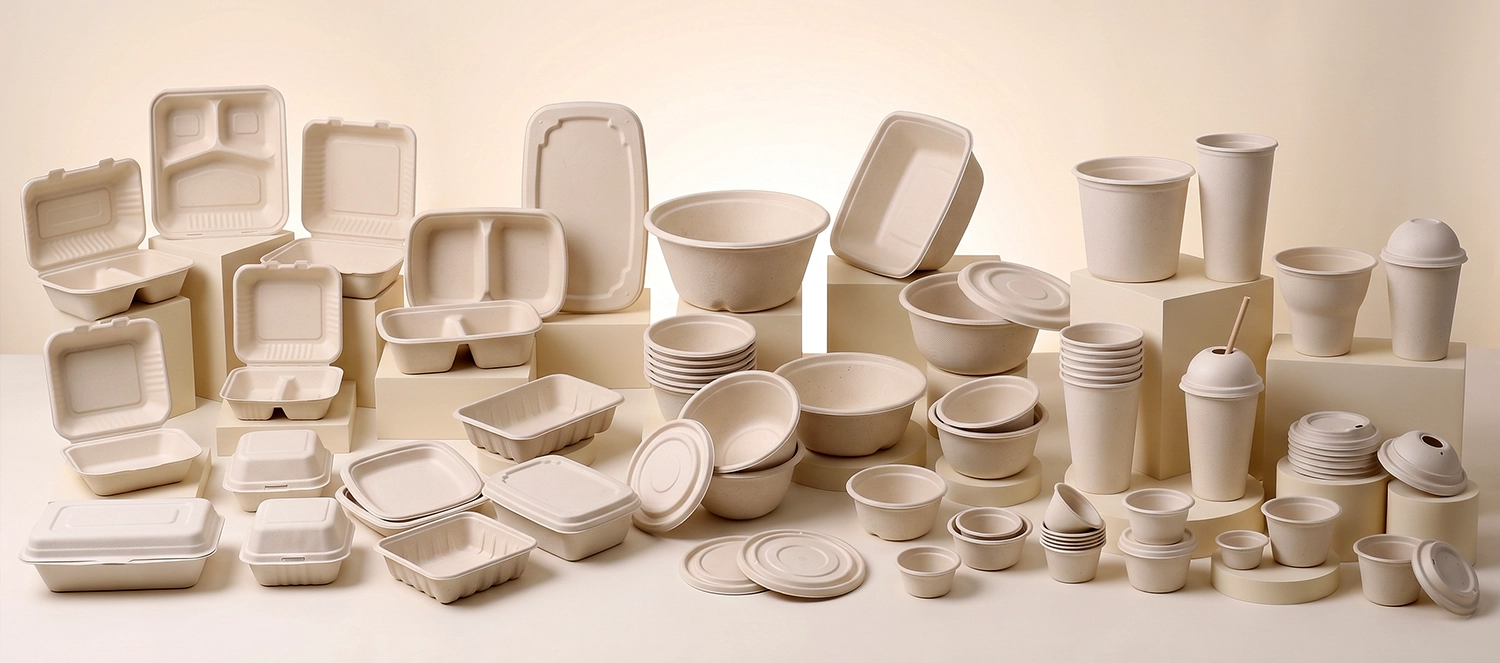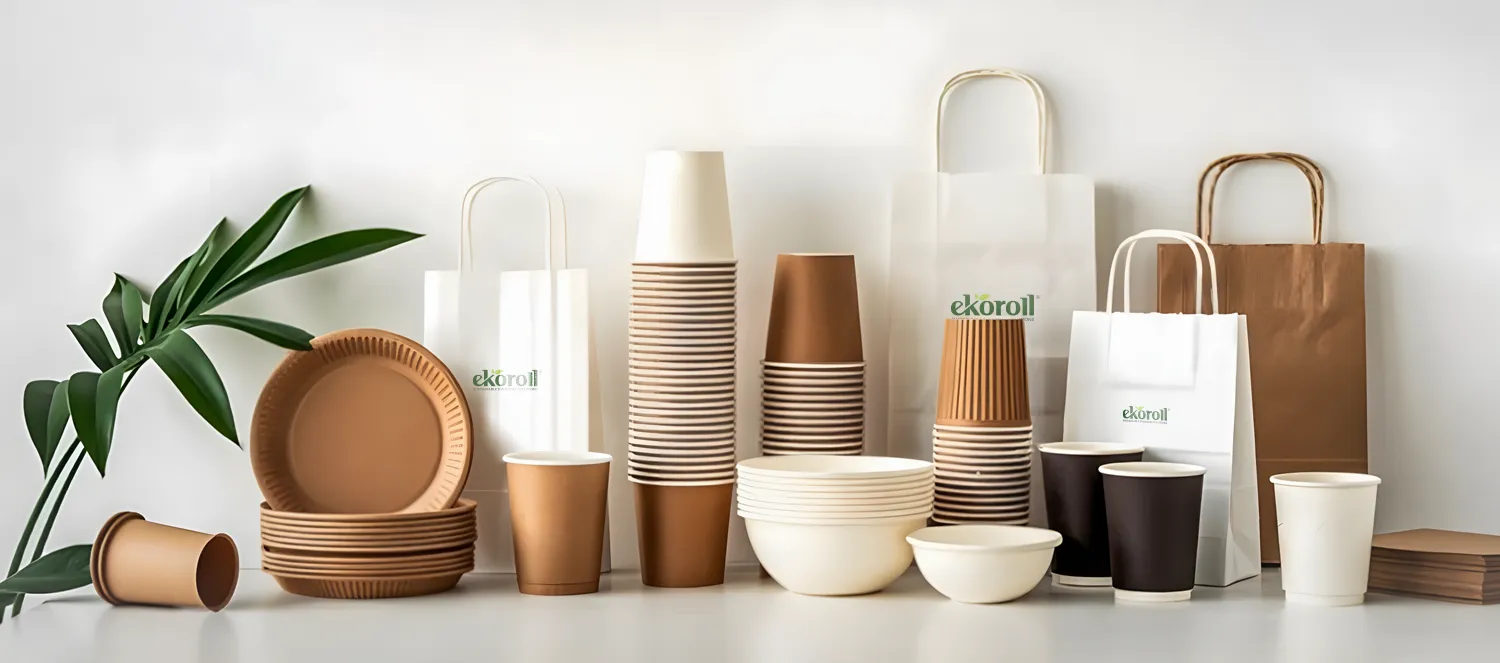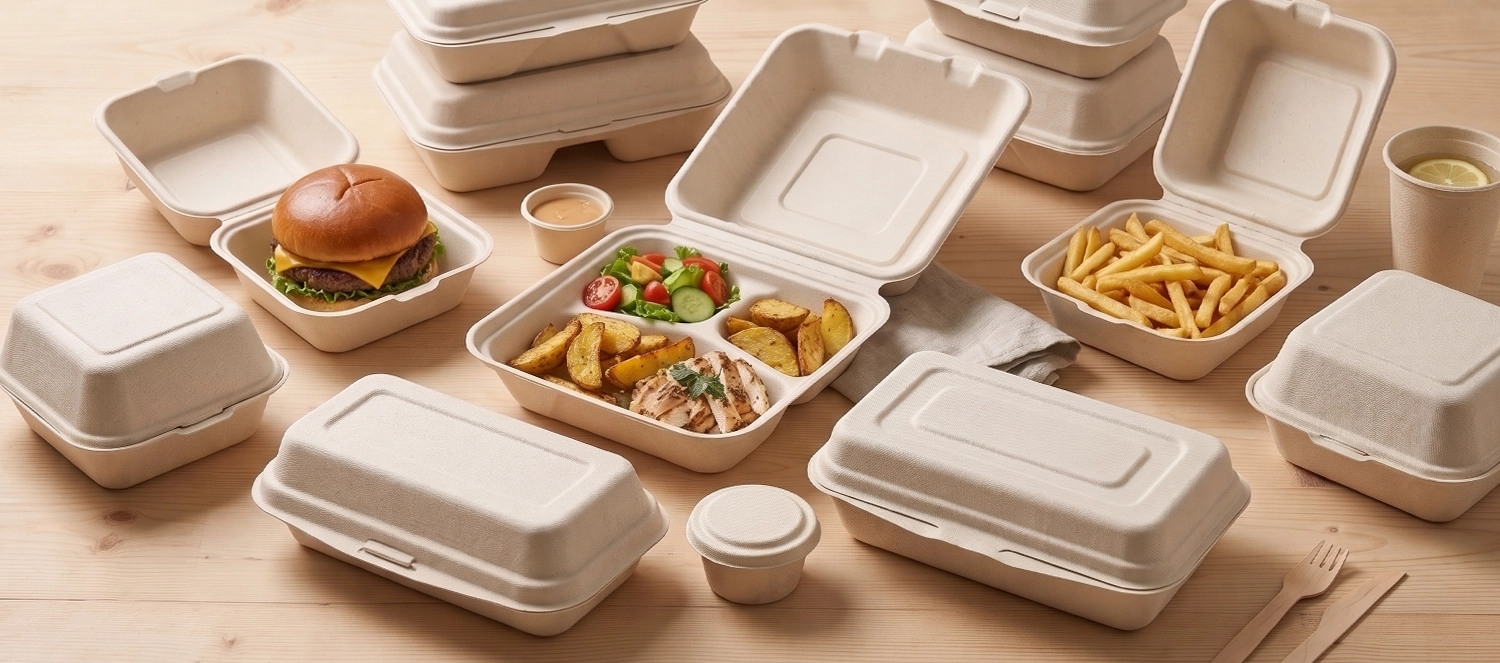
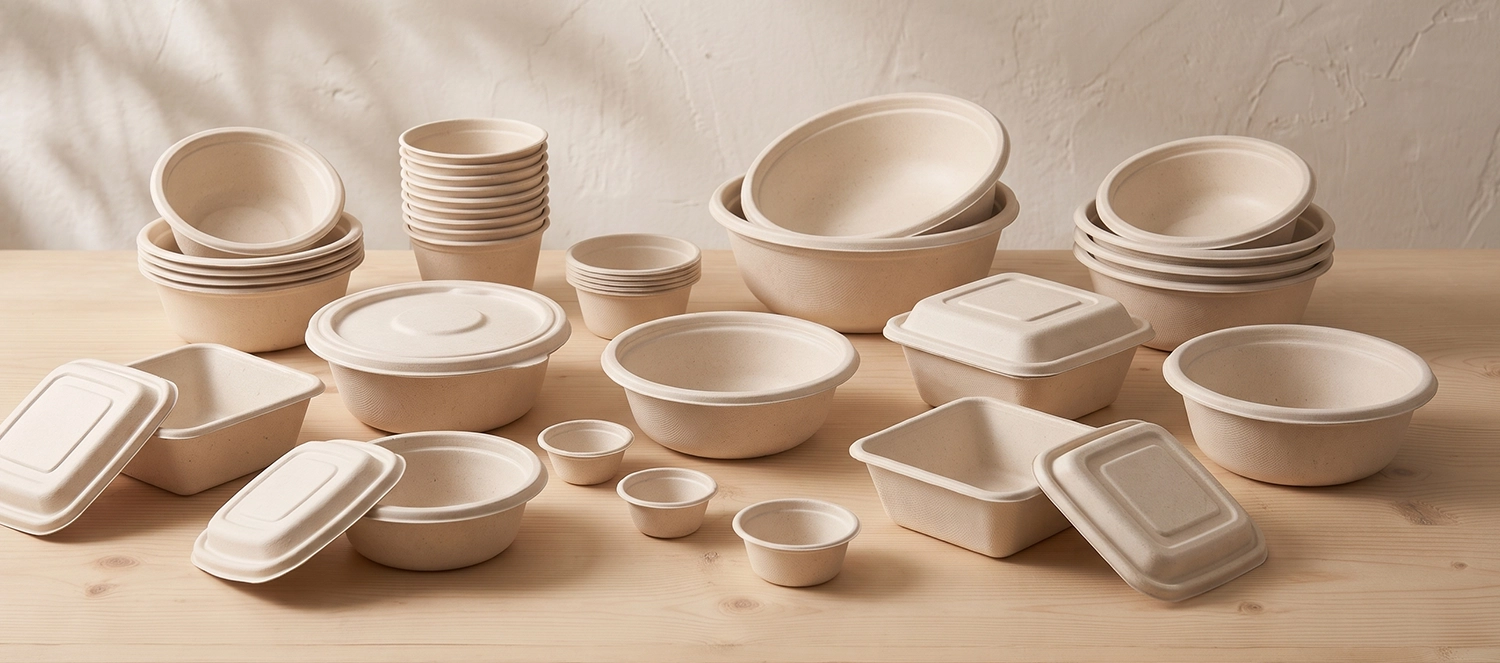
A bagasse bowl is a disposable bowl molded from sugarcane fiber, used for salads, poke, grain bowls, noodles, rice dishes and soups, usually with a matching fiber lid for takeaway. To choose one, start from the dish: pick the shape and capacity for the portion, add a matching lid if the food travels, and use a leak-resistant system for soups and saucy dishes in delivery. Ekoroll bagasse bowls are home compostable and 100% bagasse, PFAS-free, and microwave- and freezer-safe.
This guide covers what bagasse bowls are, which shape and size suits which dish, lids and leak resistance, how bagasse bowls compare with kraft paper bowls, the EU rules that matter, and how to test bowls before ordering.
What Are Bagasse Bowls?
Bagasse is the fiber left after sugarcane stalks are crushed for their juice. The fiber is pulped with water, formed in heated molds under pressure and trimmed into a bowl. The result is rigid, lightweight and has a natural matte surface with no plastic layer. Ekoroll bagasse bowls are 100% bagasse, home compostable (TÜV AUSTRIA OK compost HOME; the certificate is held by the producing mill and a copy is available on request), PFAS-free, microwave- and freezer-safe, water- and oil-resistant and suitable for hot and cold food.
Which Bagasse Bowl for Which Dish?
| Shape | Best for | Notes |
|---|---|---|
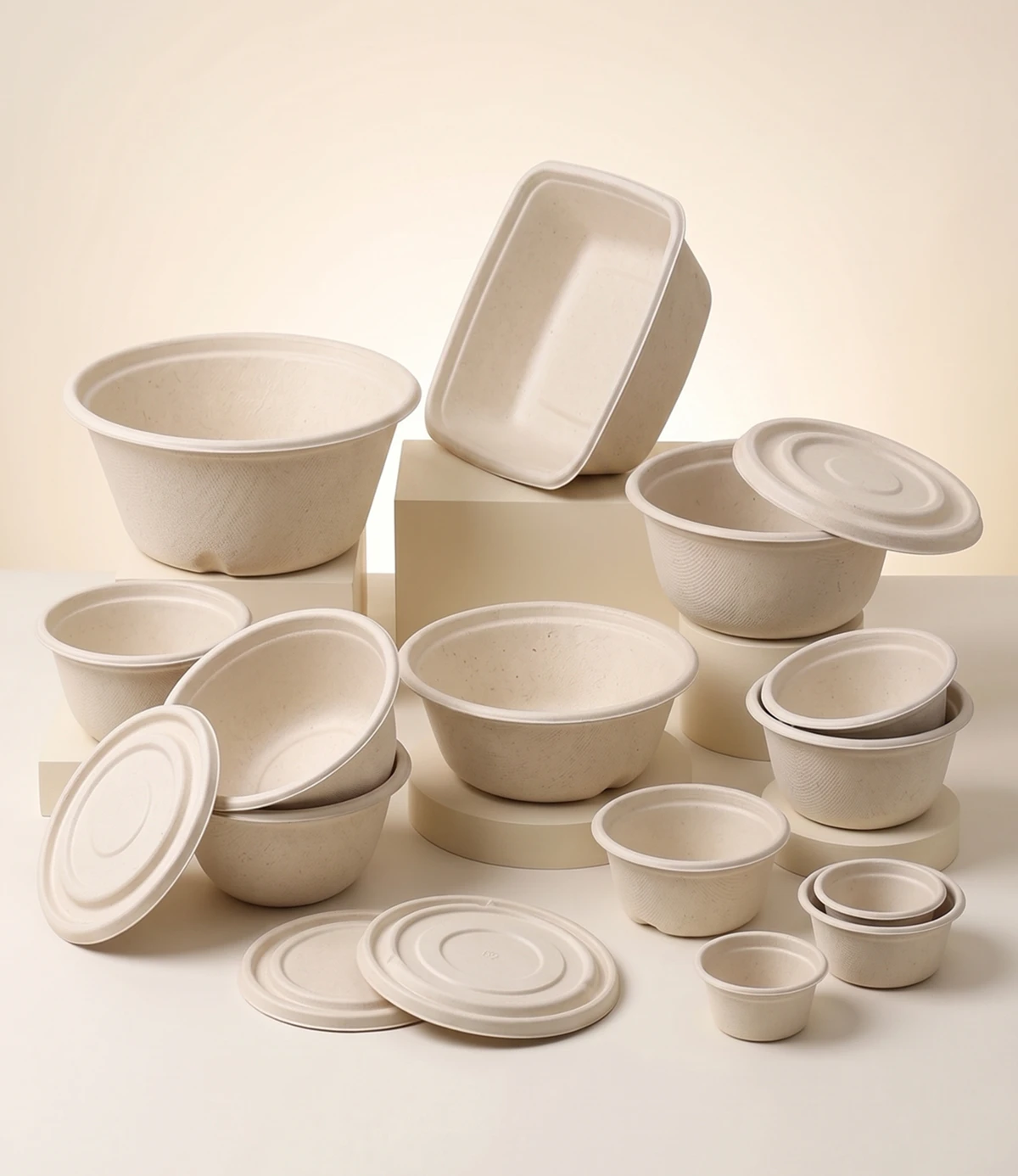
| Round bowl | Soups, noodles, rice, curries, salads; the all-rounder | Widest size range; fiber lids for takeaway |
| Square bowl | Salads, poke, grain bowls | Modern look; stacks neatly; matching lids |
| Oval bowl | Pasta, mains, wide salads | Lower and wider surface for presentation |
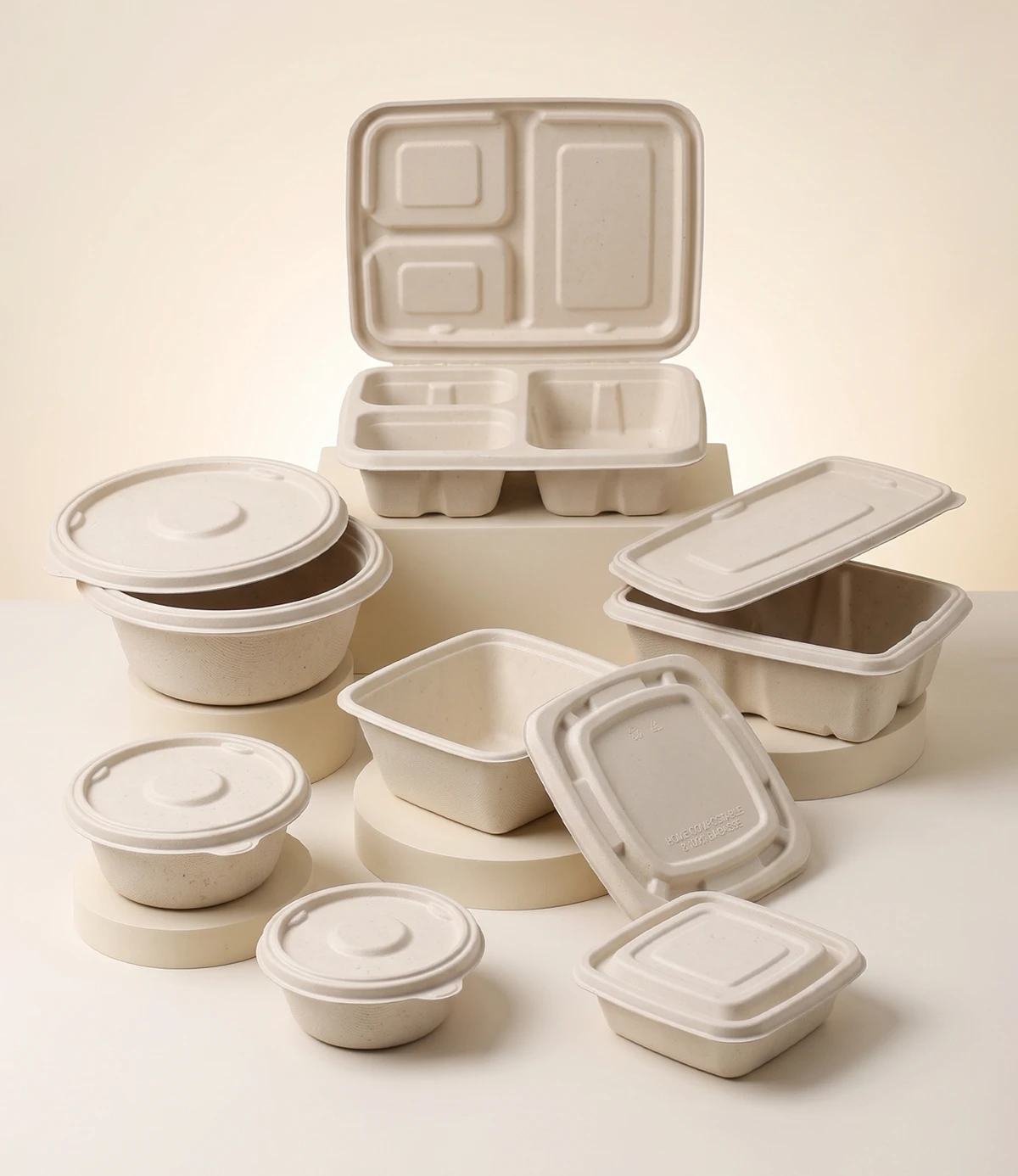
| Bowl with hinged lid | Grab-and-go meals | Lid attached, nothing to lose at the pass |
| Small round cup | Sauces, dips, sides, desserts | Often sold with lids |
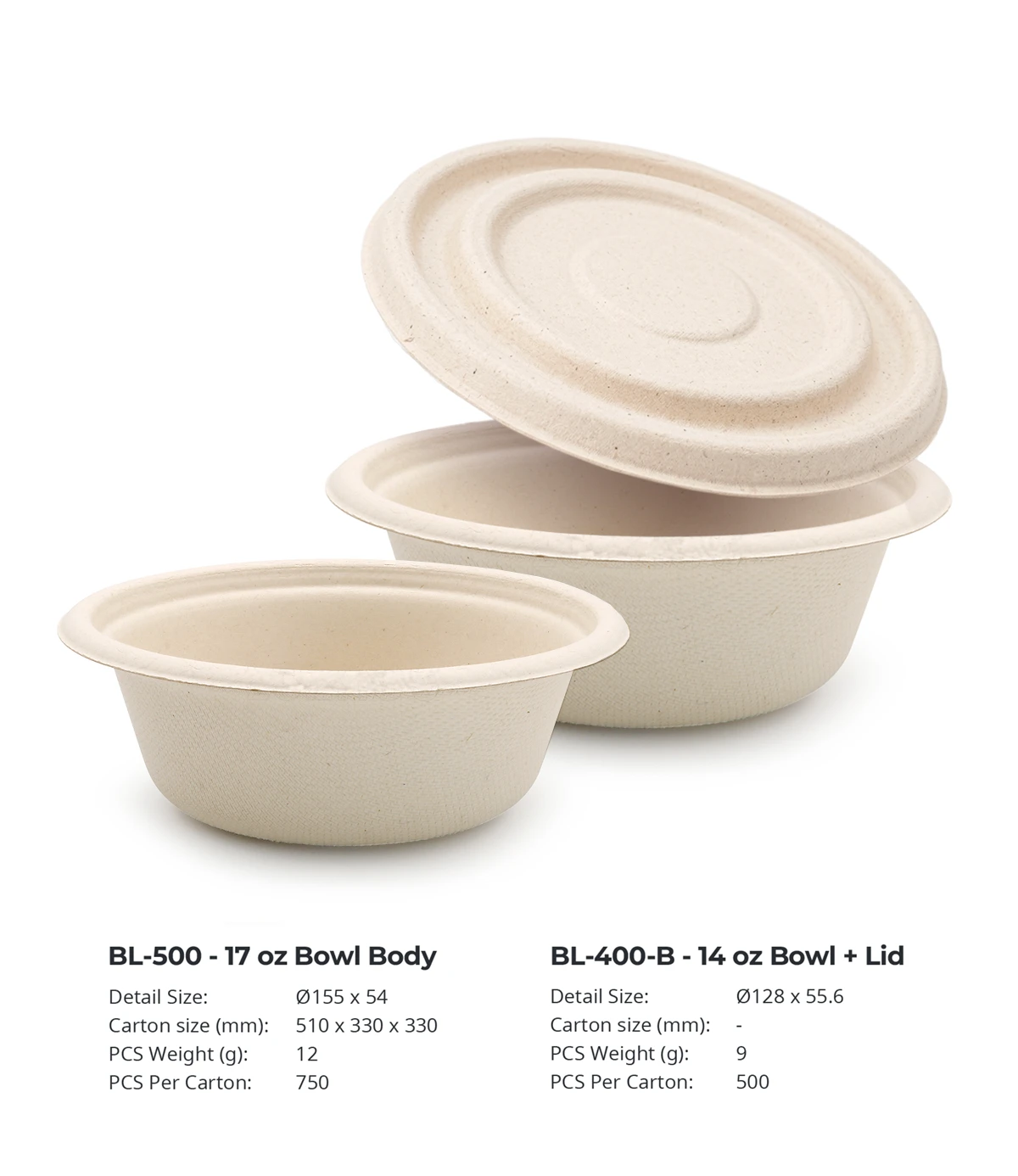
Bagasse Bowl Sizes
Sizes vary by range; the figures below are typical and meant for planning.
| Size | Typical use |
|---|---|
| about 300–350 ml (10–12 oz) | Soup portion, side, dessert |
| about 400–500 ml (14–16 oz) | Large soup, side salad, rice or noodle side |
| about 600–750 ml (20–25 oz) | Main salad, poke, noodles, pasta |
| about 1,000 ml and more (32 oz +) | Large salads, rice bowls, sharing portions |
| Square bowls, about 16–42 oz | Salads, poke, grain bowls in several depths |
| Oval bowls, about 18–26 oz | Pasta, mains, wide salads |
Leave headspace — fill to about 80–90% — so the lid closes without pressing on the food, and keep to two or three sizes per shape to simplify stock.
Lids and Leak Resistance
- Fiber lids made for the bowl keep the pack all-fiber. A lid seals only the bowl it was designed for, so choose the bowl and lid as one system.
- Hinged lids are attached to the bowl and suit grab-and-go service.
- Soups and saucy dishes in delivery need more than a good lid. The Ekoroll Anti-Leak Series adds a precision-formed rim and a matched lid for liquid-rich menus.
- Test before ordering: fill with your wettest dish, close, then hold the bowl upright, tilted and upside down for a minute, and carry it in a delivery bag for a typical trip.
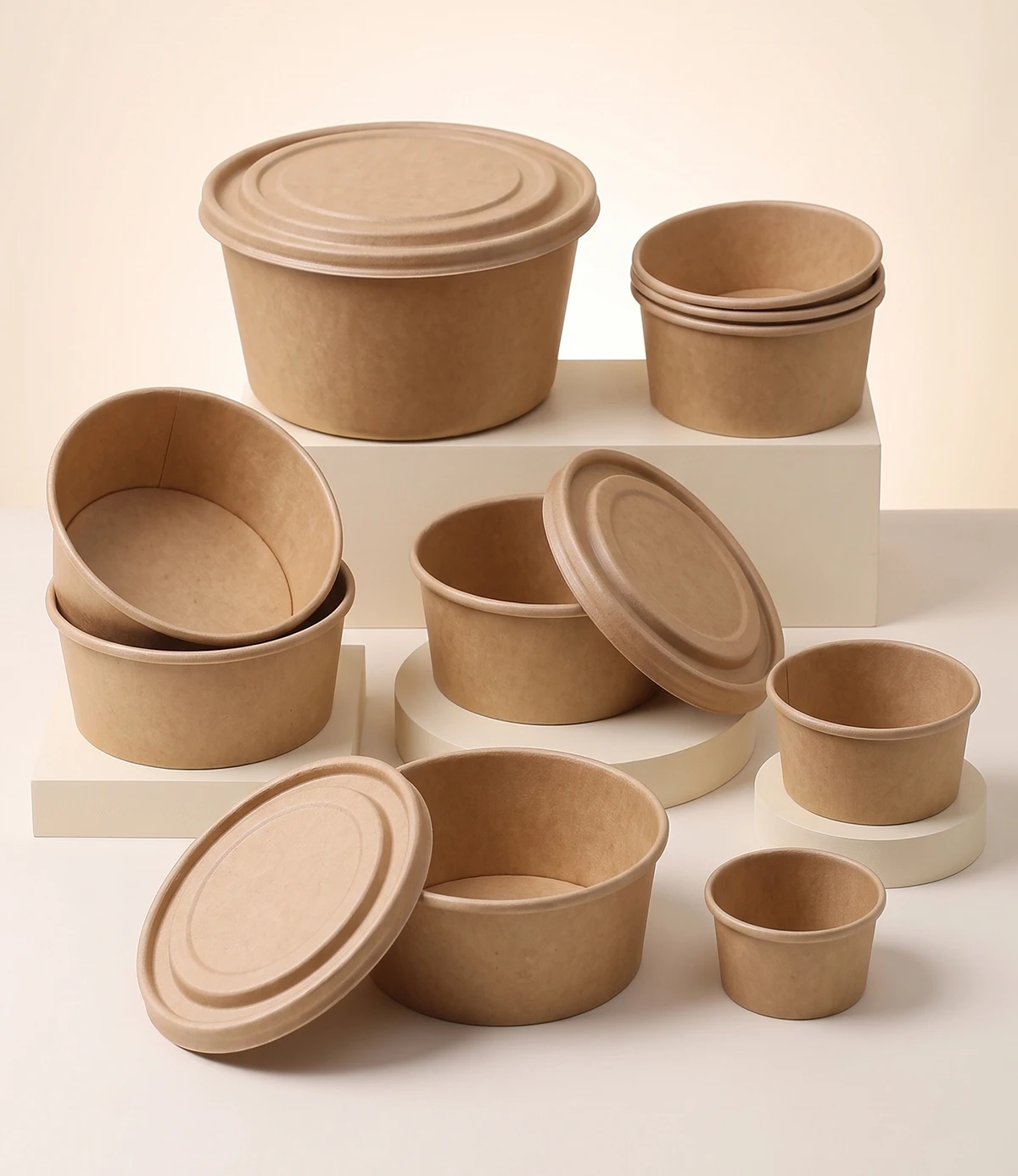
Bagasse Bowls vs Kraft Paper Bowls
| Bagasse bowl | Kraft paper bowl | |
|---|---|---|
| Material | Molded sugarcane fiber, no coating | Paperboard with a barrier coating |
| Rigidity | Rigid; holds heavy, hot portions | Lighter; rigidity depends on board and wall |
| Heat and grease | Holds heat and grease well (Ekoroll bagasse: water- and oil-resistant) | Depends on the coating |
| Microwave | Microwave- and freezer-safe (Ekoroll bagasse) | Depends on the coating and lid |
| Lids | Fiber lids, hinged lids | Paper, CPLA or clear lids |
| Branding | Plain, embossed or custom-shaped with dedicated molds; full-color print is less common | Full-color logo print is easy |
| Look | Natural white or cream fiber | Brown kraft, white or bamboo board |
| EU single-use plastic rules | No plastic layer | Bowls with a plastic lining count as single-use plastic food containers |
| Best for | Hot meals, soups, curries, reheating, saucy dishes | Salads, poke, cold and warm dishes, branded packaging |
Many operators use both: bagasse for hot and saucy dishes, kraft for salads and branded cold bowls. See our guide to kraft paper bowls with lids and bagasse vs paper food containers.
EU Rules That Matter for Bowls
- Single-Use Plastics Directive (EU) 2019/904. Food containers used for food eaten from the container without further preparation are covered when they are made wholly or partly of plastic, and the European Commission’s guidelines treat bio-based plastics such as PLA as plastic. Bowls with a plastic lining fall under the consumption-reduction and extended producer responsibility rules; uncoated fiber bowls have no plastic layer.
- Packaging and Packaging Waste Regulation (EU) 2025/40. Since 12 August 2026, food-contact packaging containing PFAS above the set limits may not be placed on the EU market. Ekoroll bagasse is PFAS-free.
- Food contact. Ask any supplier for a declaration of compliance under Regulation (EC) No 1935/2004 for both the bowl and the lid.
Bagasse Bowls from Ekoroll
Ekoroll supplies bagasse bowls and lids in round, square and oval shapes for salads, poke, noodles, rice, soups and hot meals, with matching fiber lids, and the Anti-Leak Series for liquid-rich menus. Like all Ekoroll bagasse, they are home compostable and 100% bagasse (TÜV AUSTRIA OK compost HOME), PFAS-free, microwave- and freezer-safe, water- and oil-resistant, and suitable for hot and cold food. For branded cold bowls, we also supply kraft paper bowls with lids. See the whole range in our bagasse packaging guide.
Send us your dishes, portion sizes and market, and we will propose shapes and capacities, send samples and quote in writing. Request a quote or browse the catalog.
Products in this article
Sources
- Directive (EU) 2019/904 on the reduction of the impact of certain plastic products on the environment (SUP Directive) — EUR-Lex
- Commission guidelines on single-use plastic products in accordance with Directive (EU) 2019/904, C(2021) 3762 final — European Commission (copy published by Spain's Ministry for the Ecological Transition), 2021-05-31
- Regulation (EU) 2025/40 on packaging and packaging waste (PPWR) — EUR-Lex
- Regulation (EC) No 1935/2004 on materials and articles intended to come into contact with food — EUR-Lex