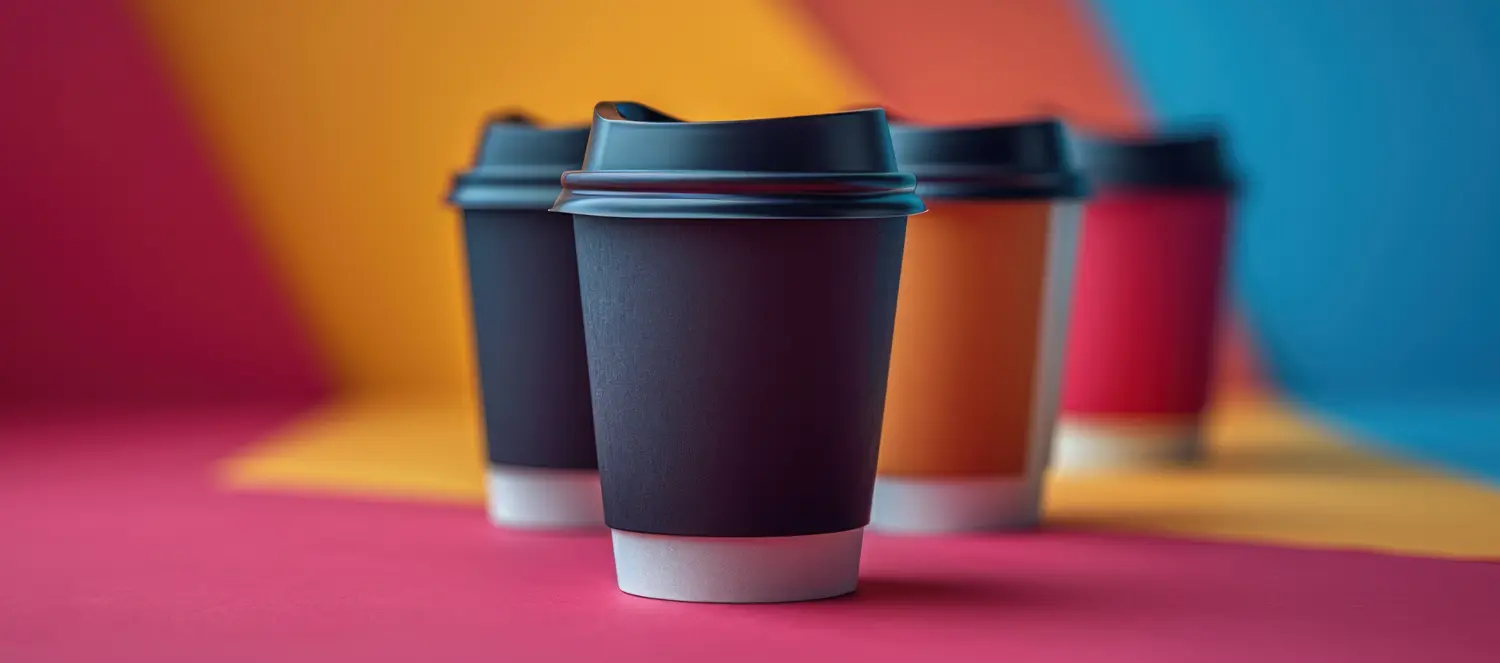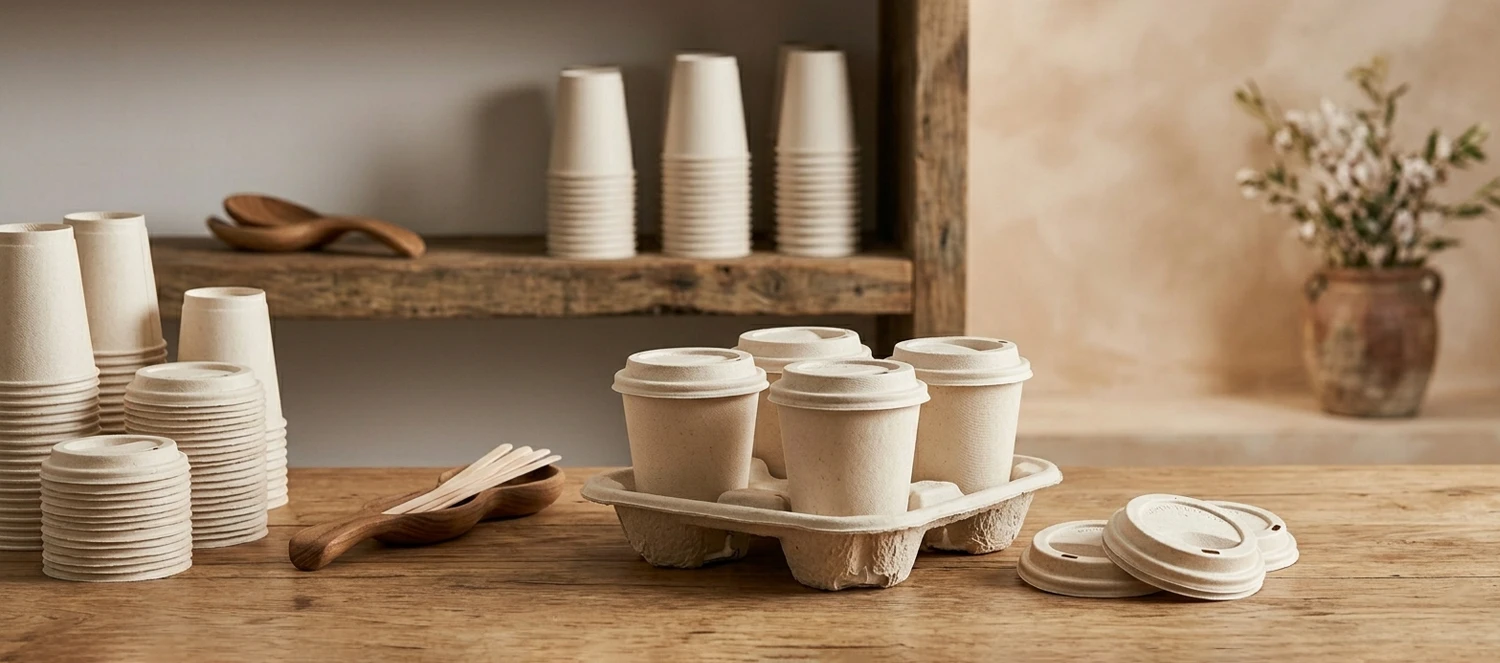
Hot paper cups with lids are a matched pair: a single wall, double wall or ripple paper cup for coffee and tea, closed by a sip-through or dome lid that has to fit the cup’s rim exactly. When you buy coffee cup lids, the cup range decides the lid size, and the lid material decides how the cup system is treated under EU single-use plastics rules.
It is written for café chains, coffee roasters, caterers and distributors who are choosing or re-sourcing a hot cup program. For the broader picture on cup types and coatings, see our disposable paper cups guide.
What types of hot paper cups take a lid?
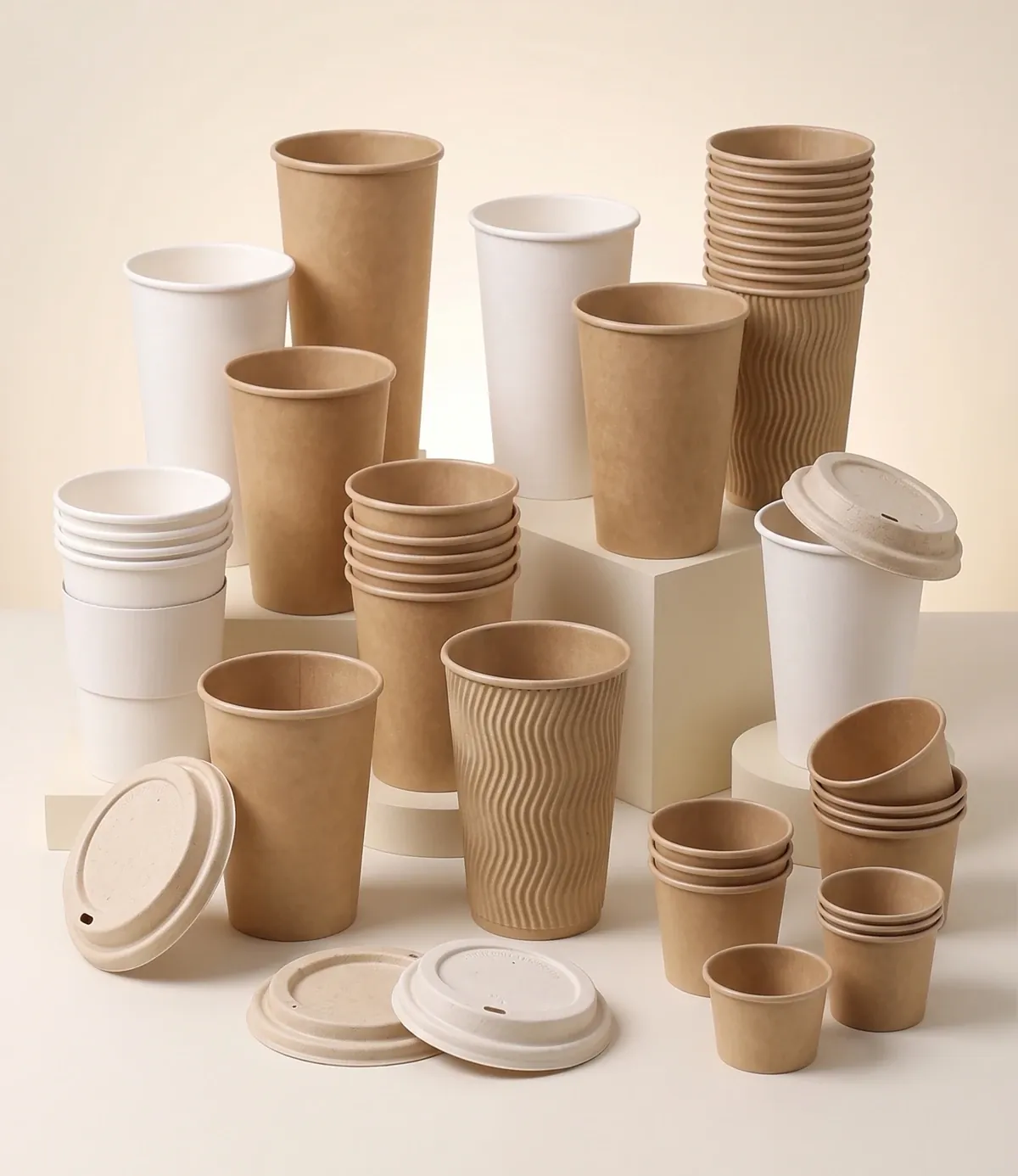
All three main hot cup constructions are designed to be closed with a lid:
- Single wall cups have one layer of coated paperboard. They are the everyday cup for hot drinks served quickly and can be combined with a sleeve for longer holding. See our single wall paper cups.
- Double wall cups add a second paper wall with an air gap for insulation, so most customers do not need a sleeve. See our double wall paper cups.
- Ripple cups have a fluted outer wall for grip and insulation. See our ripple paper cups.
In most double wall and ripple cups the outer wall is attached just below the rolled rim, so the lid closes on the inner cup’s rim, although the thicker body can affect how the lid seats. That is why a double wall cup and a single wall cup from the same range can sometimes share a lid. Check this for each range rather than assuming it.
The inner surface of the cup carries a barrier coating against liquid. Conventional cups use a PE (polyethylene) lining; alternatives include PLA and water-based coatings. The coating does not change lid fit, but it matters for regulation and recycling, as explained below.
Which lid types are used on hot paper cups?
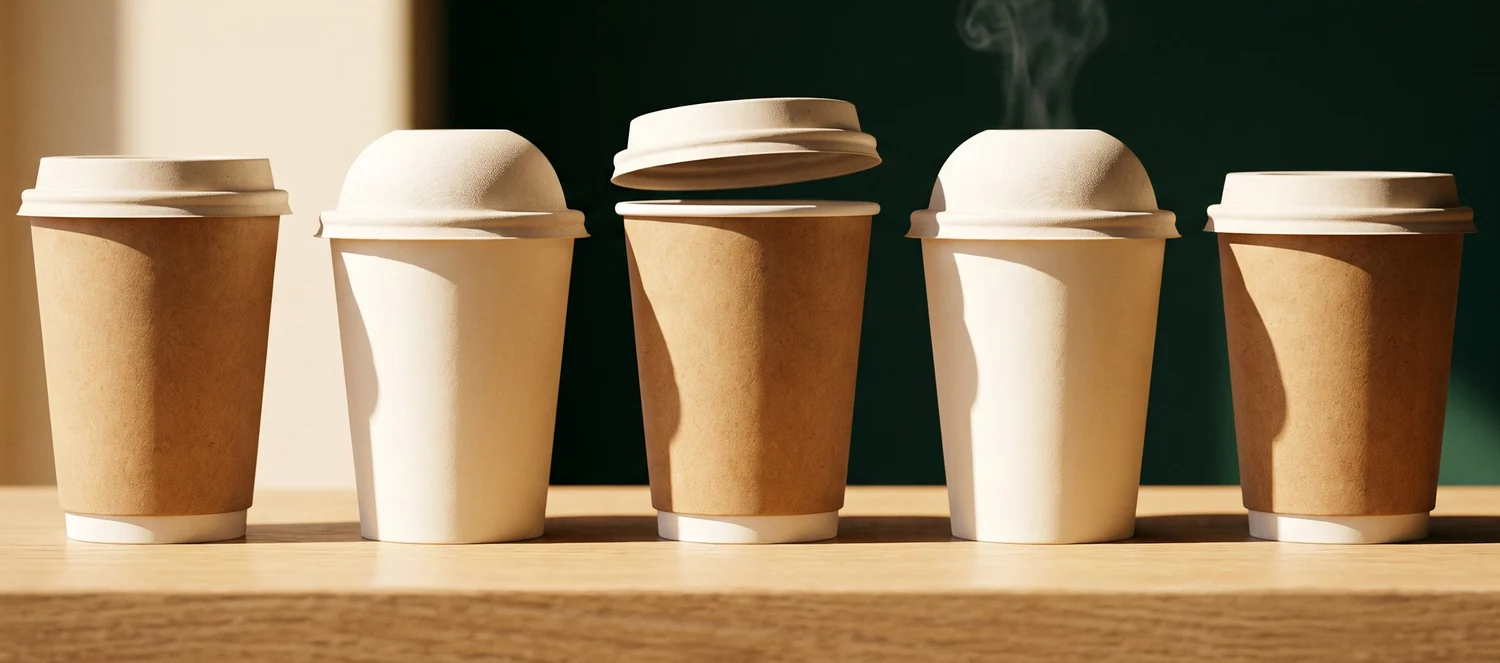
The paper cup lid market offers two main lid shapes and four main materials.
Shapes:
- Flat sip-through lids have a raised drinking opening and a small vent hole. They suit most coffees and teas and stack compactly.
- Dome lids are higher and leave space for milk foam, cream or toppings. They take more storage space.
Materials:
- Conventional plastic lids (polystyrene or polypropylene) are the familiar thermoformed lids.
- CPLA lids are made from crystallized PLA, which has higher heat resistance than standard PLA.
- Paper lids are formed from paperboard and fold or press onto the rim.
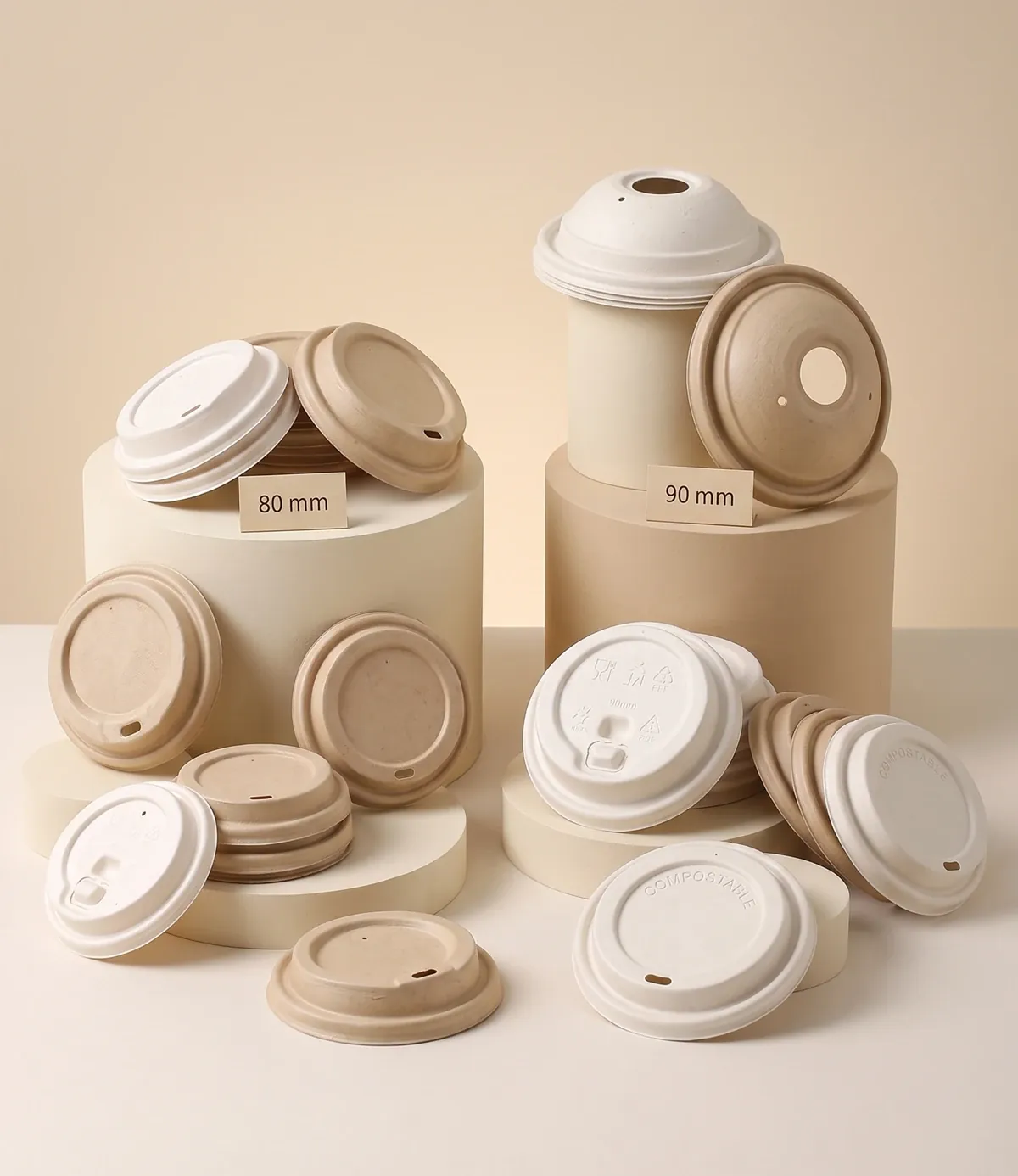
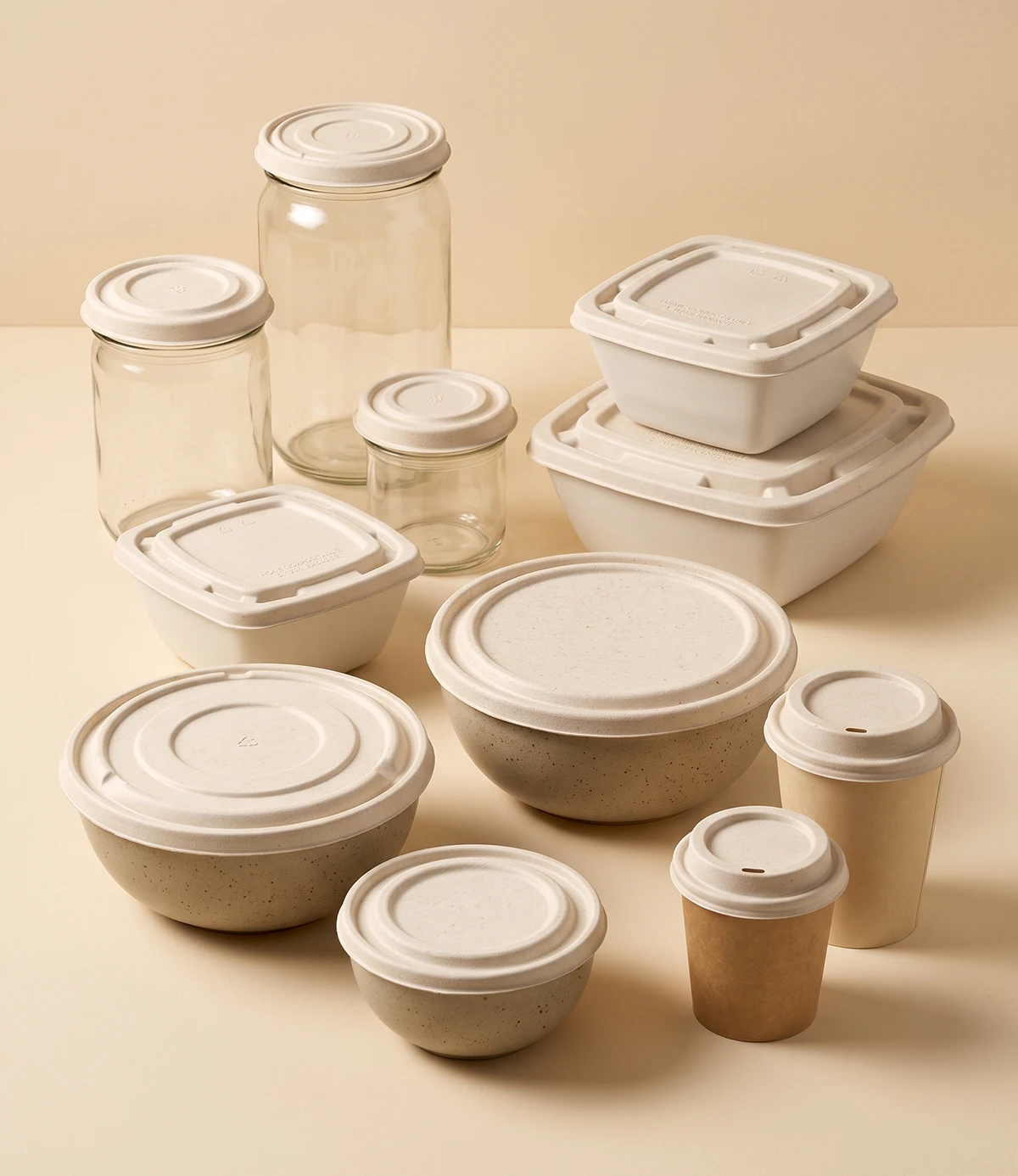
- Molded fiber lids are pressed from wet fiber pulp into a rigid lid. Our molded fiber lids guide covers how they are made and used.
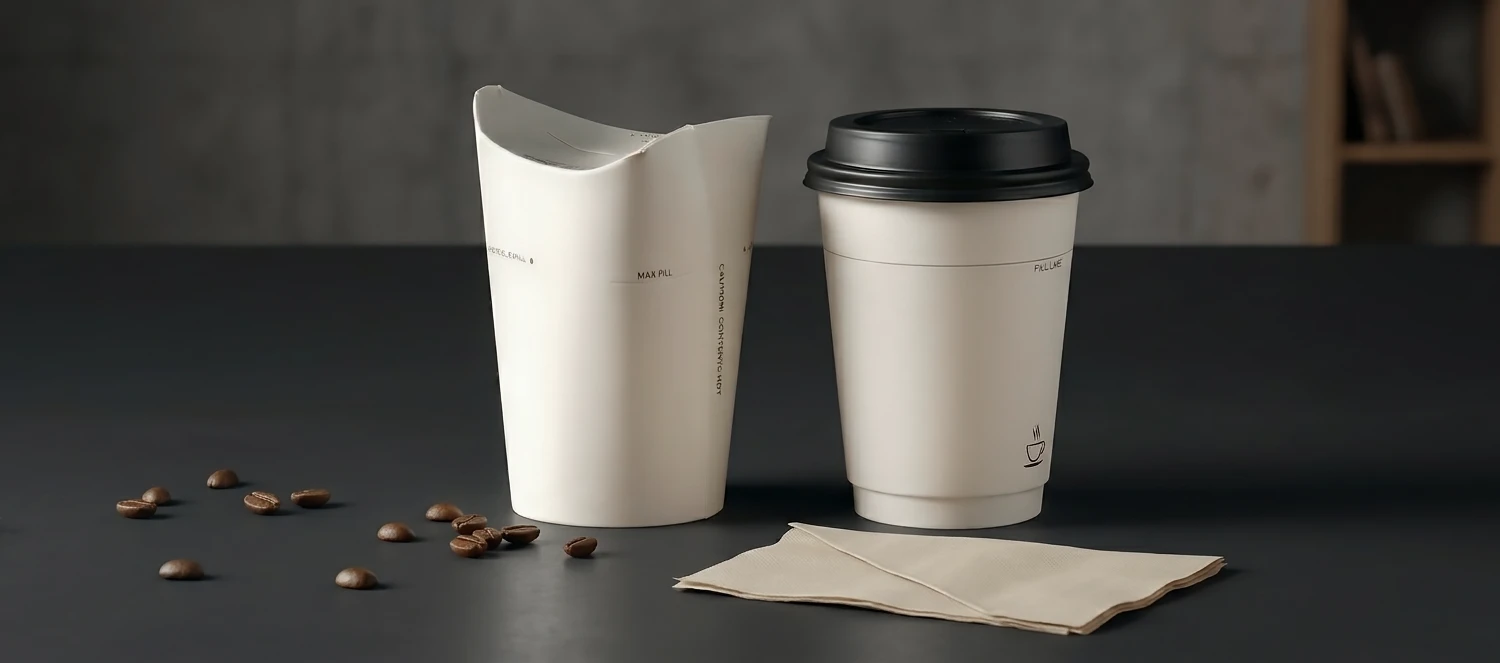
There is also a third option: no separate lid at all. A lid-free cup integrates the closure into the cup wall. We compare the two systems in hot paper cups with lids vs lid-free cups.
How do the lid options compare?
| Lid option | Material | Status under the EU Single-Use Plastics Directive | Fit and handling | Typical use | Cost |
|---|---|---|---|---|---|
| Conventional plastic lid | Polystyrene or polypropylene | Plastic product (cups including covers and lids are listed) | Precise snap fit; flexible | High-volume takeaway coffee | Usually the lowest; quoted per project |
| CPLA lid | Crystallized PLA | Plastic product: bio-based and biodegradable plastics are covered | Snap fit; test on your cup rim | Programs moving away from fossil-based plastic | Higher; quoted per project |
| Paper lid | Paperboard | A paper item without plastic lining or coating is not a single-use plastic product; check the lid’s construction | Folded or pressed onto the rim; test for leaks | Hot drinks, shorter carry times | Quoted per project |
| Molded fiber lid | Fiber pulp | Depends on the material composition; ask for the supplier’s assessment and PFAS status | Rigid; fit depends on precise rim matching | Hot drinks, programs that want a fiber lid | Higher; quoted per project |
| Lid-free cup | Paperboard cup with integrated closure | No separate lid | One item instead of two | Cafés, hotels, onboard service | Quoted per project |
How do cup sizes match lid sizes?
Lids are sized by the rim diameter of the cup, not by its volume. Cups are usually sold by capacity, often named in ounces, but the lid only “sees” the rim.
Three points matter when you plan a range:
- Several cup sizes can share one rim. Ranges are often designed so that two or more capacities use the same rim diameter. One lid then closes several sizes, which cuts the number of lid items you stock.
- Same capacity does not mean same rim. Two 12 oz cups from different ranges can have different rim diameters and rim profiles. A lid from one range may sit loosely or not close on the other.
- Nominal capacity is not the serving volume. Ask whether the stated capacity is brim-full or to a fill line, and leave room under the lid for the drink and any foam.
Our paper cup sizes guide for coffee shops helps you decide how many sizes to stock. The practical rule is simple: choose the cup range first, then the lids designed for it, and order both from the same specification.
How do you test lid fit before ordering?
A lid that leaks, pops off or tears is a service problem and a complaint risk. Test samples with your own drinks, staff and carry routines:
- Closure: the lid snaps or presses on evenly all round the rim without excessive force.
- Leak test: fill to your serving level with hot water, close, then tilt and carry the cup as a customer would.
- Squeeze test: hold the cup firmly around the body; the lid should stay on.
- Drinking comfort: check the opening size, edge and vent with real drinks, including foam drinks for dome lids.
- Stacking and dispensing: lids should separate easily from the stack at the counter, and cups should fit your carriers and trays.
- Delivery: if drinks go out through delivery platforms, test the lidded cup in your delivery bag over a typical route.
Repeat the test whenever you change the cup range, the lid supplier or the lid material.
Before you test the lid, turn the cup over and check the curl. The rolled rim is what the lid seats against, and a badly rolled curl is one of the first places a cup fails.
Which EU rules apply to hot cups and lids?
Single-Use Plastics Directive. Directive (EU) 2019/904 lists “cups for beverages, including their covers and lids” for consumption-reduction measures by Member States and for extended producer responsibility. The Commission’s guidelines state that paper cups with a plastic lining or coating are partly made of plastic and fall within its scope, and that bio-based and biodegradable plastics are covered too. Cups made partly of plastic must carry the printed “PLASTIC IN PRODUCT” marking on the outside of the cup under Implementing Regulation (EU) 2020/2151. The tethered-cap requirement in Article 6 covers the beverage containers listed in Part C of the Annex; the guidelines confirm that beverage cups are a separate category, so it does not apply to cup lids. Whether a cup with a water-based coating is in scope depends on the coating’s composition, so ask your supplier for its assessment.
Packaging and Packaging Waste Regulation (PPWR). Regulation (EU) 2025/40 has applied since 12 August 2026. Three points matter for hot cups, with different start dates:
- PFAS. From 12 August 2026, food-contact packaging may not be placed on the market if it contains PFAS above the limits set in the regulation. This applies to the cup and the lid.
- Bring your own container. From 12 February 2027, take-away businesses must let customers have drinks and food filled into their own container at no extra cost.
- Dine-in from 2030. From 1 January 2030, single-use plastic packaging for food and beverages filled and consumed within HORECA premises is restricted. The Commission’s guidance reads this as covering paper-based packaging that contains 5% or more plastic (guidance is not legally binding).
Food-contact rules. Regulation (EC) No 1935/2004 sets the general safety rules for all food-contact materials. Plastic lids, including CPLA, also fall under Regulation (EU) No 10/2011 and need a declaration of compliance. Where no specific EU measure exists for a material, national rules may apply. Our guide to EU packaging regulations for horeca covers these rules in more depth.
Buyer checklist for hot cups and lids
- Specify the cup range first, then the lids designed for its rim diameter and profile.
- Ask which cup sizes each lid fits, and confirm it with samples.
- Run the closure, leak, squeeze, drinking and stacking tests with your own drinks.
- Get written confirmation of the coating type of the cup (PE, PLA or water-based) and the material of the lid.
- Ask for declarations of compliance for food contact for the cup and the lid, and written PFAS status for both.
- Check how your national SUP rules, plastic taxes and EPR fees treat the cup and the lid you choose.
- Plan stock so cups and lids are reordered together; a lid shortage stops service as surely as a cup shortage.
- Consider whether a lid-free cup fits your service and removes the separate lid item.
Hot paper cups and lids from Ekoroll
Ekoroll is a manufacturer-direct supply partner for paper cup programs. We supply disposable paper cups in single wall, double wall and ripple formats with water-based, PFAS-free, PE-free coatings, and paper cup lids in paper, CPLA and molded fiber. Cup and lid are specified together and matched to the rim, and fit is confirmed with samples before production. For service without a separate lid, the Ekoroll lid-free hot cup integrates the closure into the cup.
Prices, minimum order quantities and lead times are quoted per project. Food-contact documentation is provided according to the final product specification and production route. Browse the packaging catalog or send us your cup and lid brief to request samples and a quote.
Products in this article
Sources
- Directive (EU) 2019/904 on the reduction of the impact of certain plastic products on the environment (SUP Directive) — EUR-Lex
- Commission guidelines on single-use plastic products in accordance with Directive (EU) 2019/904, C(2021) 3762 final — European Commission (copy published by Spain's Ministry for the Ecological Transition), 2021-05-31
- Commission Implementing Regulation (EU) 2020/2151 on harmonised marking specifications for single-use plastic products — EUR-Lex
- Regulation (EU) 2025/40 on packaging and packaging waste (PPWR) — EUR-Lex
- Guidance document for Regulation (EU) 2025/40 on packaging and packaging waste (Commission Notice C/2026/3084) — EUR-Lex, 2026-06-10
- Packaging waste — European Commission, DG Environment
- Food contact materials legislation — European Commission, DG Health and Food Safety