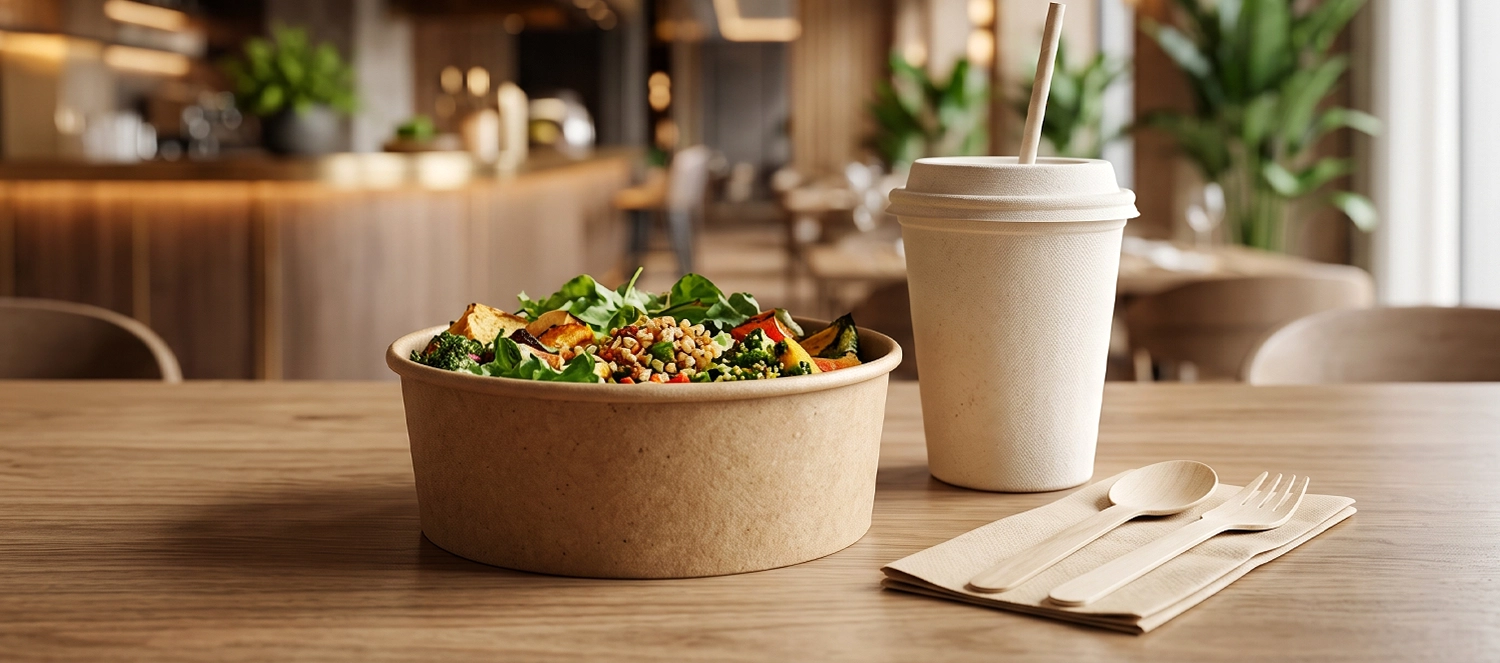
A kraft paper bowl with a lid is a paperboard food container with a barrier coating inside and a matching lid, used for salads, poke, noodles, soups and hot meals to go. To choose one, start from the dish: pick the bowl size by the portion, the lid by how the food is served and transported, and the coating by the food’s grease, moisture and heat. Then test the bowl and lid together with your own food before ordering in bulk.
This guide covers the sizes in ml and oz and what each one is used for, the lid types and how to match them to the bowl, coatings and the EU rules that apply to them, how to test a bowl before ordering, and what to ask a supplier when buying wholesale.
What Is a Kraft Paper Bowl with a Lid?
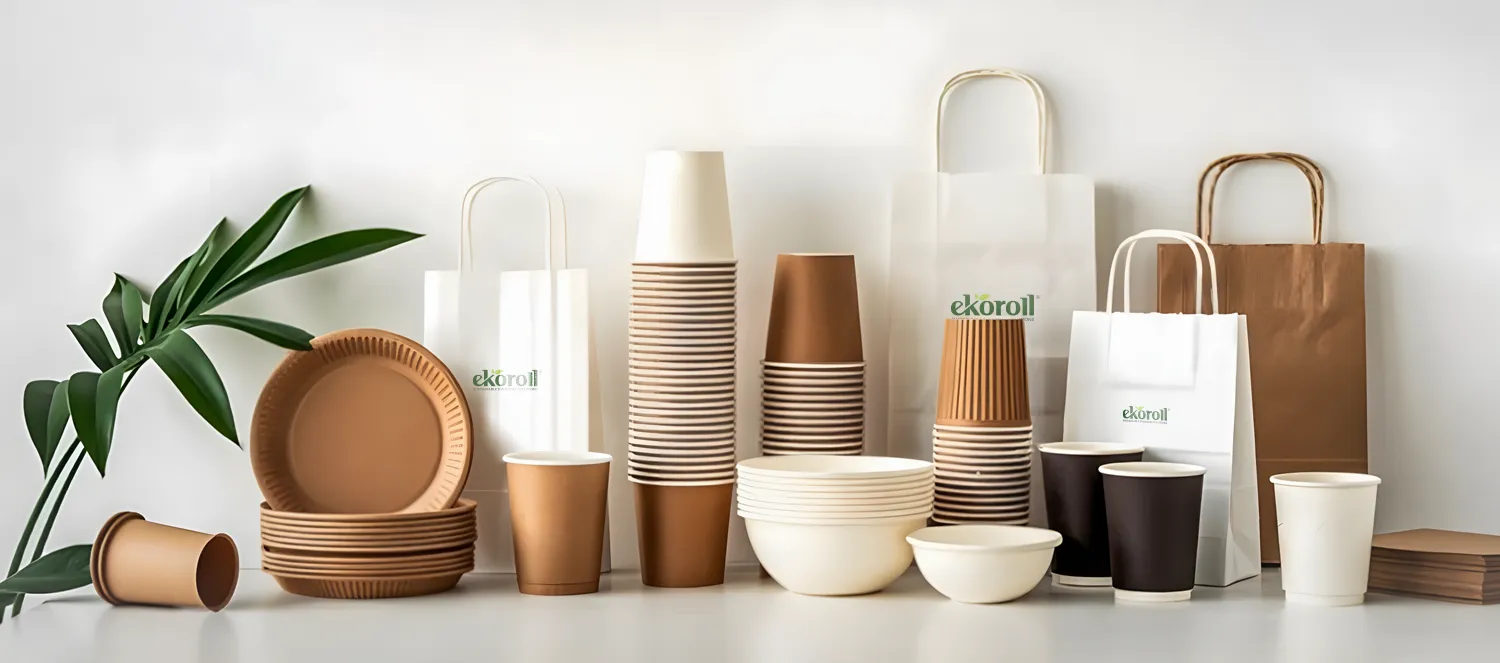
A kraft paper bowl is a round, square or rectangular container formed from food-grade paperboard. “Kraft” refers to the brown, unbleached look of the outer paper; white and bamboo-fiber boards are also common. Because paperboard alone absorbs grease and liquids, the inside carries a barrier: a PE or PLA lining, or a water-based (aqueous) coating.
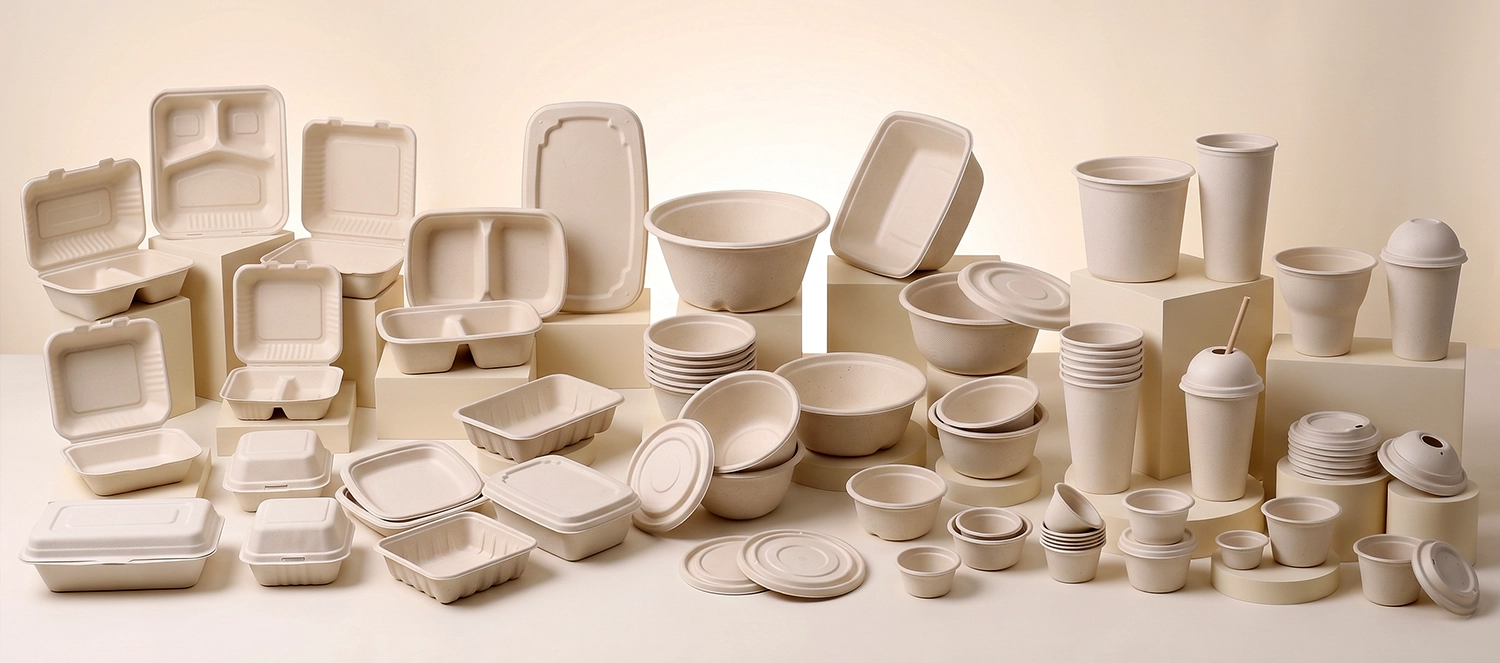
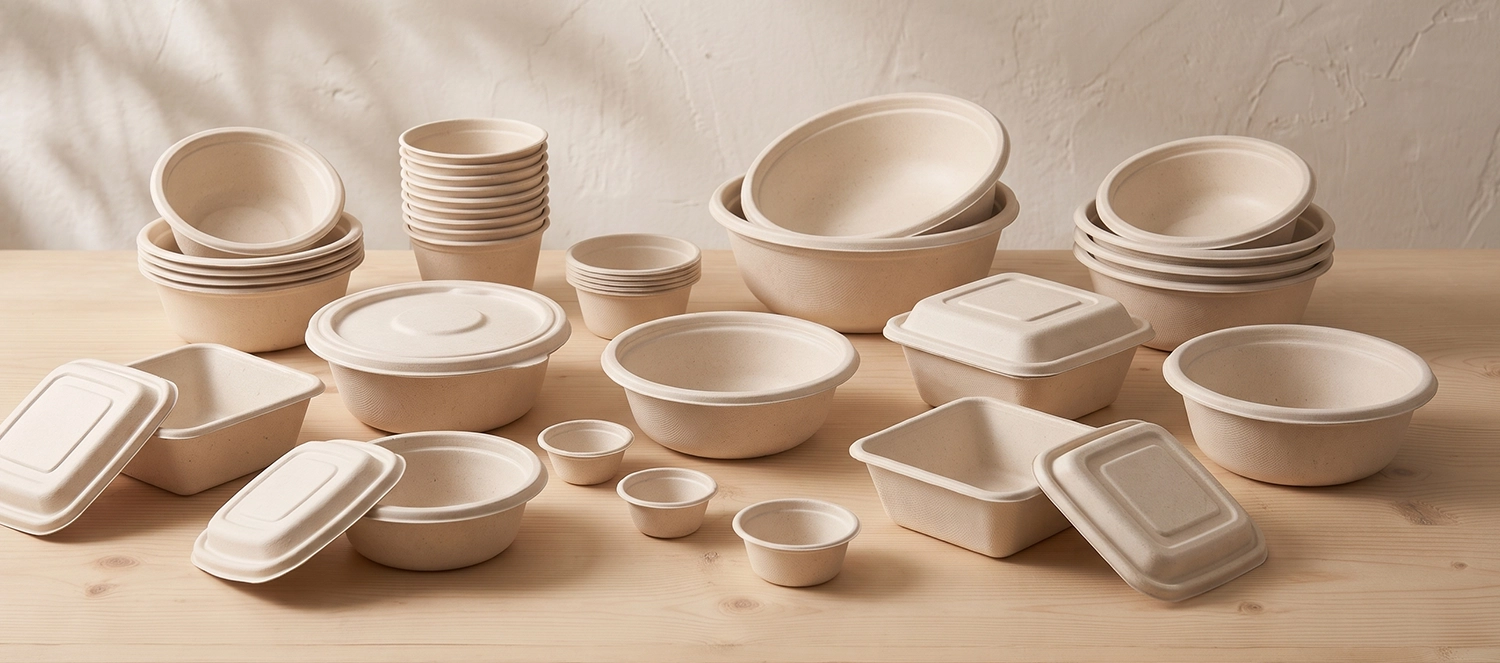
The lid is a separate part made to fit the bowl’s rim. It can be paper, clear PET, PP or molded fiber. The bowl and the lid are designed as a pair, which is why buyers should always specify them together.
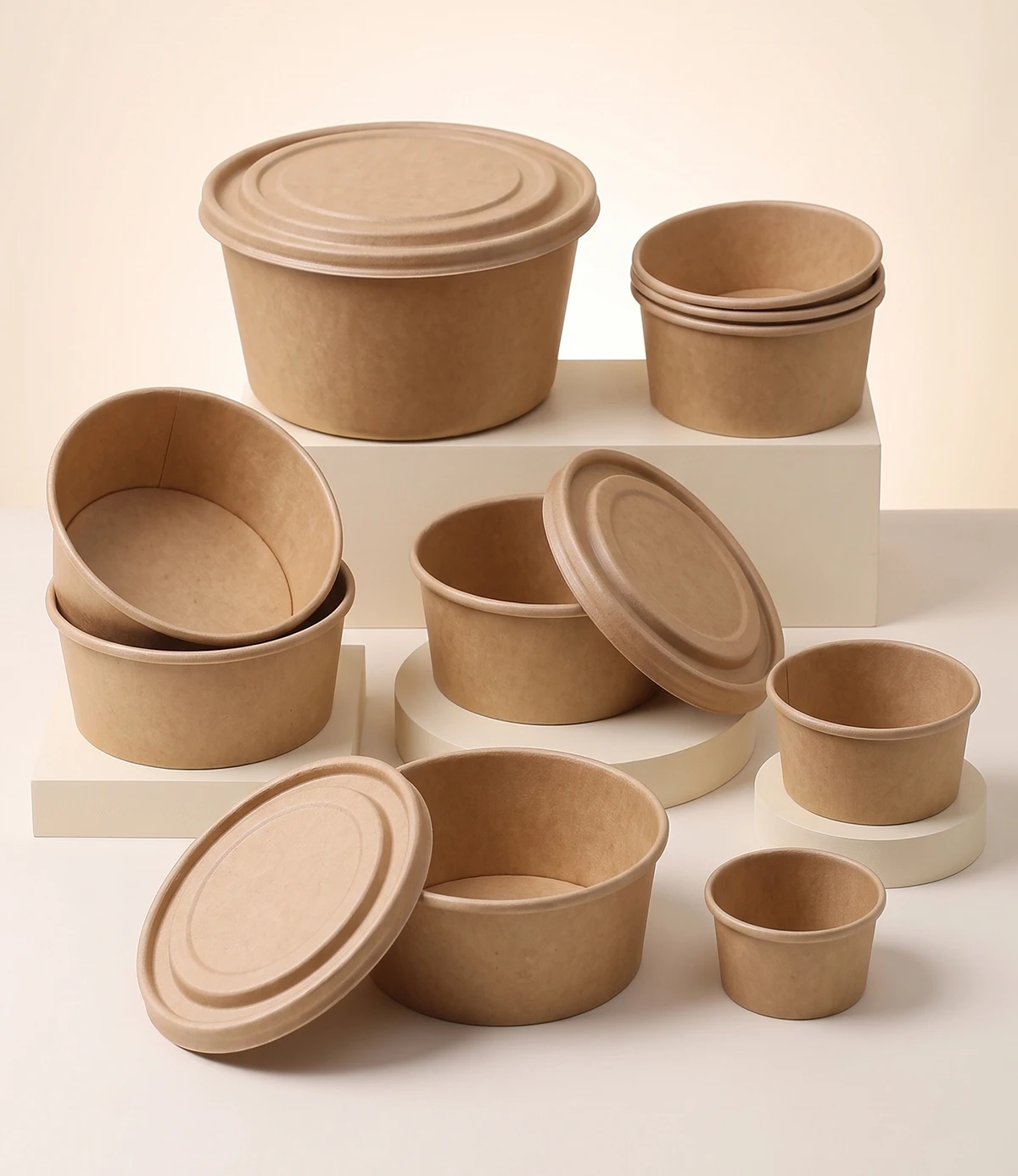
Which Size Paper Bowl for Which Dish?
Paper bowls are sized in milliliters (ml or cc) or fluid ounces (oz). The sizes below are the ones food businesses use most; exact capacities vary slightly by range.
| Size | Approx. oz | Typical use |
|---|---|---|
| 240–360 ml | 8–12 oz | Soup portion, side dish, dessert, sauce |
| 480–500 ml | 16 oz | Large soup, side salad, rice or noodle side |
| 750 ml | 25 oz | Main salad, poke bowl, pasta, noodles |
| 1000 ml | 32–34 oz | Large salad or poke, rice bowl with toppings |
| 1100–1300 ml | 37–44 oz | Large salads, sharing portions, family meals |
Three practical rules help when you build a range:
- Leave headspace. Fill to about 80–90% of capacity, so toppings and dressing fit and the lid closes without pressing on the food.
- Keep the range short. Two or three sizes on one rim diameter often cover a whole menu and let one lid close all of them, which simplifies stock.
- Size by weight for salads, by volume for soups. Leafy salads are light for their volume; soups and stews are the opposite.
Which Lid Should You Use?
| Lid type | Best for | What to check |
|---|---|---|
| Flat paper lid (coated) | Hot food, soups, delivery bags | Tight fit on the rim, stacking, no condensation drip |
| Clear PET dome or flat lid | Cold salads, poke, display fridges | Clarity, anti-fog, fit after chilling |
| PP lid | Hot food that may be reheated | Heat behavior, fit, venting |
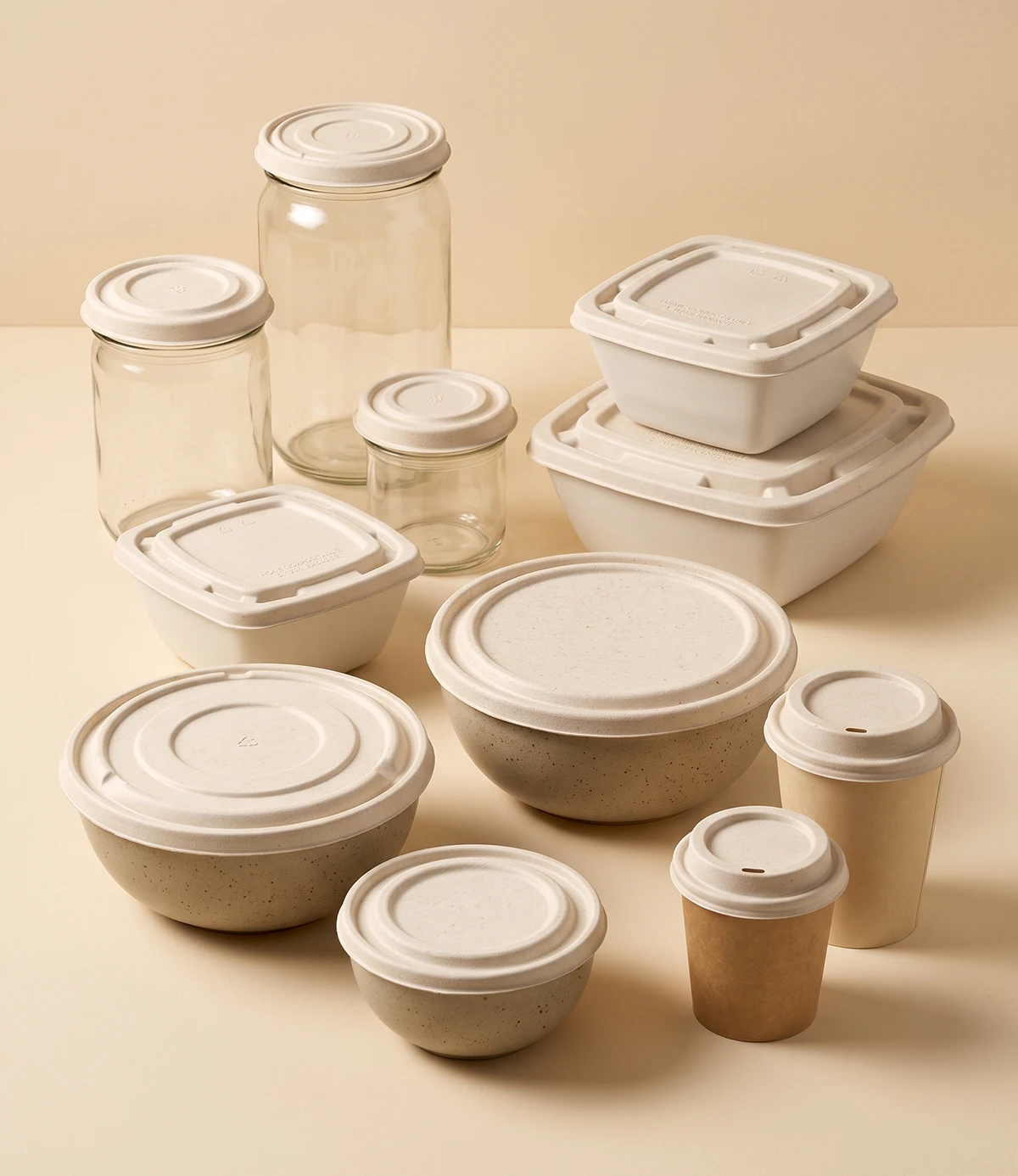
| Molded fiber lid | Reducing plastic in the pack | Fit, moisture resistance, stacking |
| CPLA lid | Hot food where a bio-based plastic lid is wanted | It is still plastic under EU rules |
A lid fits only a bowl with the same rim diameter and rim profile. Two 750 ml bowls from different ranges can have different rims, so never mix bowls and lids from different suppliers without testing. For a fiber lid, see our molded fiber lids.
Coatings: PE, PLA or Water-Based?
The coating decides how the bowl handles grease, liquids and heat, and how it is treated under EU rules.
- PE lining: a thin polyethylene layer. Reliable barrier, but the bowl counts as a single-use plastic product.
- PLA lining: a bio-based plastic. The European Commission’s guidelines on the Single-Use Plastics Directive treat bio-based and biodegradable plastics as plastic, so PLA-lined bowls are also single-use plastic products.
- Water-based (aqueous) coating: a dispersion coating applied in a thin layer. Water-based, PFAS-free and PE-free options are available; the barrier performance depends on the food and must be tested.
Two EU rules matter here:
- Single-Use Plastics Directive (EU) 2019/904. Food containers used for food that is eaten from the container without further preparation, such as take-away meals, are covered when they are made wholly or partly of plastic. Member States must reduce their consumption, and extended producer responsibility applies.
- Packaging and Packaging Waste Regulation (EU) 2025/40. Since 12 August 2026, food-contact packaging containing PFAS above the set limits may not be placed on the EU market. Ask for the PFAS status of both the bowl and the lid in writing.
For a deeper comparison of coatings, see water-based coating vs PE coating.
How to Test Paper Bowls Before a Bulk Order
Ask for samples of the exact bowl and lid, then test them with your own food and your own service:
- Leak test: fill with your wettest dish, close the lid, and hold it upright, tilted and upside down for a minute.
- Heat and steam: fill with your hottest dish, close the lid, and check for softening, condensation and lid lift after 20–30 minutes.
- Grease: leave an oily dish in the bowl for the time it usually waits before eating and check the outside for marks.
- Delivery: put a filled, closed bowl in a delivery bag with other items and carry it for the length of a typical trip.
- Stacking and storage: check that empty bowls nest and separate easily, and that lids stack without sticking.
For how paper bowls compare with plastic and bagasse, see kraft paper bowls vs plastic containers and bagasse vs paper food containers.
Buying Paper Bowls Wholesale: What to Ask a Supplier
- Coating type in writing: PE, PLA or water-based, and the PFAS status of the bowl and the lid.
- Declaration of compliance for food contact under Regulation (EC) No 1935/2004, plus the specific measure for plastic lids.
- Rim diameter and lid compatibility: which bowl sizes each lid fits.
- Board type and weight: kraft, white or bamboo board, single or double wall.
- Printing: number of colors, print area and whether the lid can be printed.
- Packing: units per sleeve and per carton, and carton dimensions for your storage.
- Lead time and minimum order: both depend on stock or custom print and are confirmed in the quote.
Kraft Paper Bowls with Lids from Ekoroll
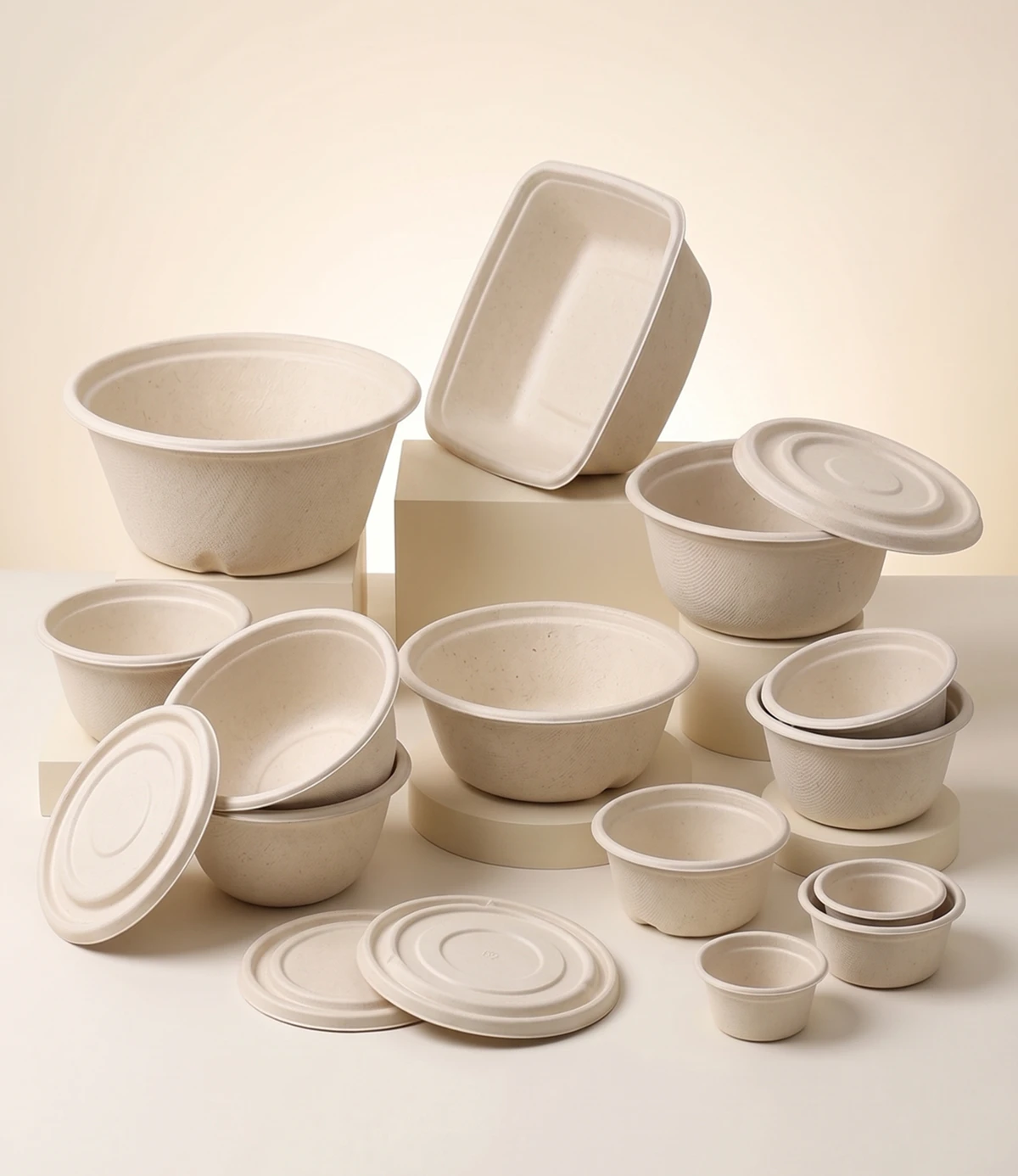
Ekoroll supplies paper bowls and lids in kraft, white and bamboo paper — round, rectangular, square, double wall and compartment bowls — with paper or CPLA lids matched to each bowl, molded fiber lids for a plastic-reduced pack, and a water-based coating as the main barrier option. For hot, wet dishes held for longer, bagasse bowls are an alternative. We supply manufacturer-direct from Türkiye to food businesses in Türkiye, Europe, the Middle East and Africa, with custom print and samples before the first order.
Send us your dishes, portion sizes and market, and we will propose a size range and lid, send samples and quote in writing. Request a quote or browse the catalog. For the full picture of switching a menu to paper and fiber, see eco-friendly food packaging for restaurants.
Products in this article
Sources
- Directive (EU) 2019/904 on the reduction of the impact of certain plastic products on the environment (SUP Directive) — EUR-Lex
- Commission guidelines on single-use plastic products in accordance with Directive (EU) 2019/904, C(2021) 3762 final — European Commission (copy published by Spain's Ministry for the Ecological Transition), 2021-05-31
- Regulation (EU) 2025/40 on packaging and packaging waste (PPWR) — EUR-Lex
- Regulation (EC) No 1935/2004 on materials and articles intended to come into contact with food — EUR-Lex