A coffee spills in delivery when the drink finds an open path out of the cup while the cup is moving. In practice that path is almost always the lid: an open drinking hole, a lid that is not fully seated on the rim, or a cup filled so high that the drink reaches the lid at the first brake. The fix is a lid whose drinking opening stays closed until the customer opens it, fitted to the right rim, plus a short packing routine.
This guide is for cafés, coffee chains, bakeries and delivery kitchens that send hot and cold drinks out with riders, through the drive-through or to the office. It explains why drinks spill, compares the lid types by how well they hold a drink in transit, and ends with a checklist you can give to the counter team.
Why do coffee and drinks spill in delivery?
A full cup on a counter is stable. In a delivery bag, on a scooter or in a car’s cup holder it is tilted, braked, accelerated and knocked against other items for ten to thirty minutes. Four things decide whether the drink stays inside:
- The drinking opening. A sip hole or an open dome is a permanent hole in the top of the cup. Every tilt pushes drink toward it. This is the most common cause of a wet bag.
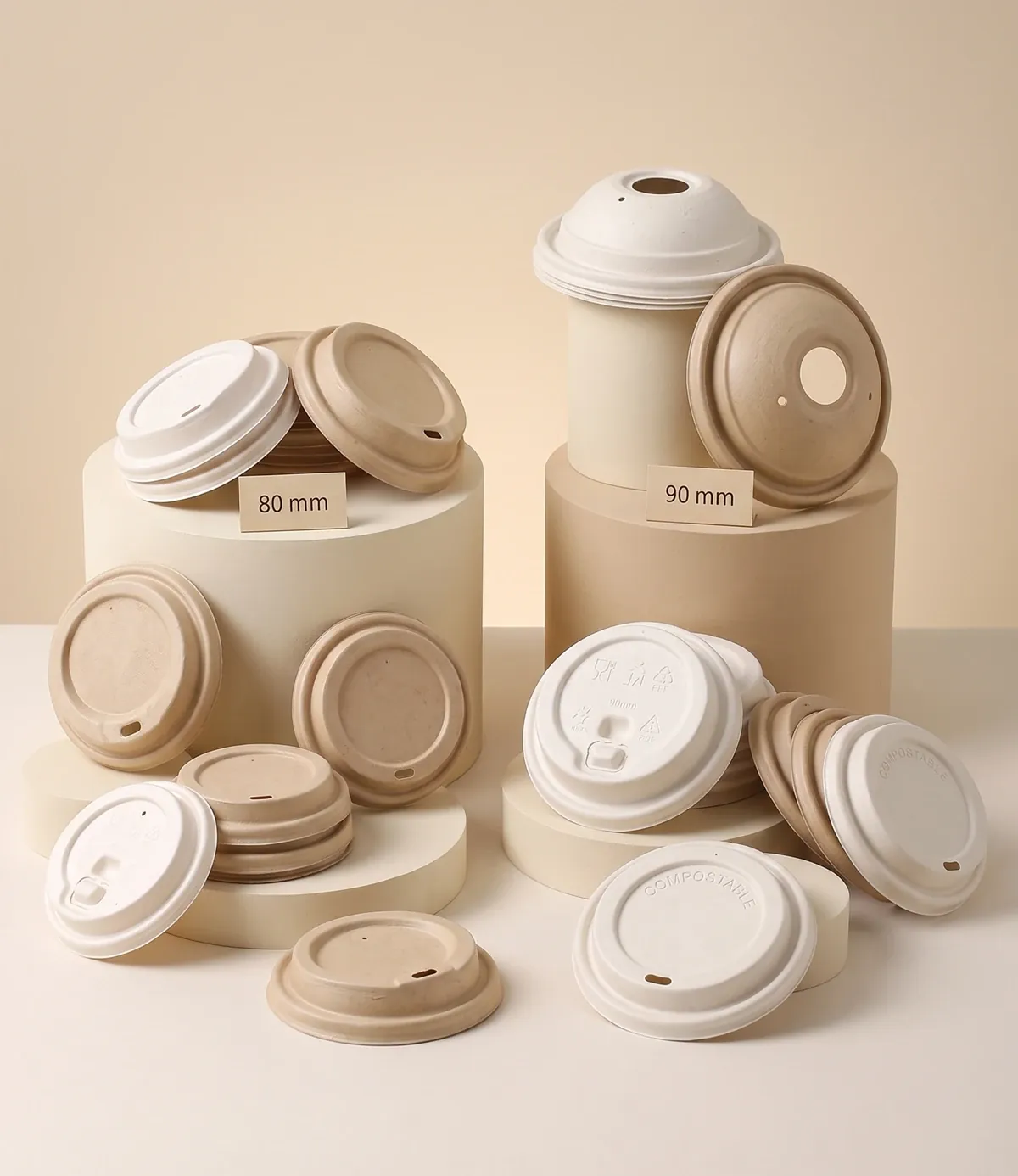
- The seal at the rim. A lid that is not pressed down all the way round, or that does not match the cup’s rim, leaks at the edge as soon as the cup leans. Standard paper cups use two rim sizes, 80 mm and 90 mm, so check that the lid size matches the cup.
- The fill level. A cup filled to the brim leaves no space between the drink and the lid. When the cup moves, the drink hits the lid and finds the opening or the edge.
- How the cup travels. A cup lying on its side in a bag, or standing loose next to hot food boxes, will test any lid. A cup carrier or a holder keeps it upright.
The cup body itself rarely fails in a short delivery. The lid, the fill level and the way the cup is carried do.
Which coffee cup lid holds a drink best in transit?
Lid types differ less in material than in one question: is the drinking opening open or closed while the cup travels?
| Lid type | Drinking opening in transit | Best for | Delivery risk |
|---|---|---|---|
| Sip lid (flat with a drinking hole) | Open | Coffee and tea to drink at once or carried by hand | Spills when the cup tilts |
| Open dome lid | Large opening | Foam, cream and toppings; straw drinks | Highest; the opening is the widest |
| Closed dome lid | Closed until the opening is pushed through | Foam drinks and iced coffee for delivery | Low while closed |
| Closed flat lid | Closed until the opening is pushed through | Delivery, catering trays, stacked carriers | Low while closed |
| Self-opener lid | Closed tab, opens with light pressure | Delivery, drive-through, coffee in the car | Low while closed |
For delivery the choice is simple: use a lid that is closed in transit. Keep open sip and open dome lids for drinks that are handed over the counter and drunk straight away.
How does a self-opener lid work?
On a self-opener lid the drinking opening is a pre-cut tab that is part of the lid. In transit the tab stays in place and the drinking hole is closed. When the customer is ready to drink, light pressure on the tab frees it and it folds back into the recess behind it, which opens the hole. Some customers push it inward instead; it opens either way.
Three points matter for how you use it:
- It is made to be opened once. On the Ekoroll bagasse lid the tab can be pushed back after opening, but it no longer seals as tightly as before first opening. Tell staff and customers to open it at the moment of drinking, not at the counter.
- It has a small vent hole. Like most hot cup lids it has a pinhole that lets steam out and helps the drink flow evenly. The drinking opening is what stays closed, so the cup still travels upright.
- It replaces the splash stick. With the opening closed until use, there is no need for a separate plastic stopper or splash stick that staff have to remember to insert.
Closed dome and closed flat lids
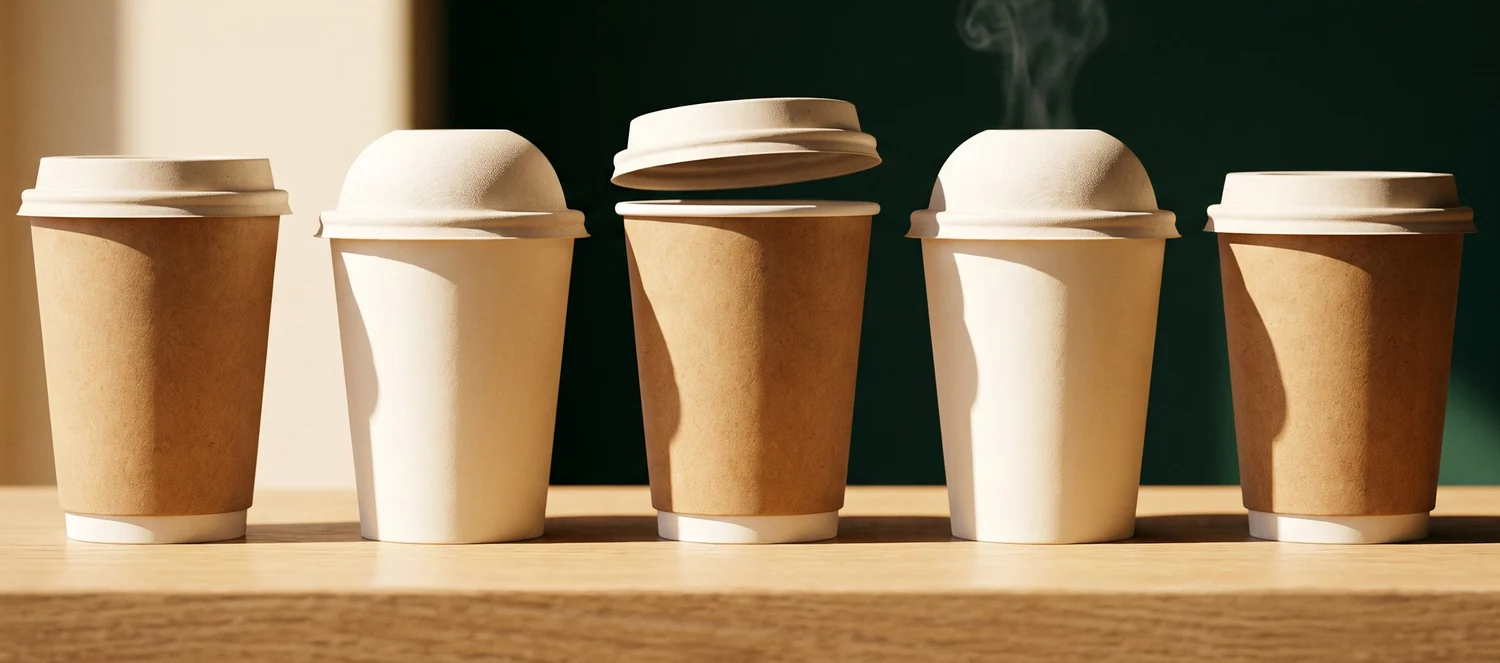
When a drink has foam, cream or a topping, a closed dome lid keeps the space above the rim and stays closed until the opening is pushed through. A closed flat lid does the same with a low profile that stacks well in trays and four-cup carriers, which suits office and catering orders. Both work on the same principle as the self-opener: nothing can leave the cup through the top until the customer opens it.
Match the lid to the cup
A lid only seals if it matches the rim size of the cup. This is where many spills that look like a “bad lid” actually start. Paper cups are made in two standard rim sizes, and Ekoroll’s lids are made to both.
| Lid rim | Fits standard paper cups |
|---|---|
| 80 mm | 6 oz and 8 oz |
| 90 mm | 12 oz, 16 oz and 20 oz |
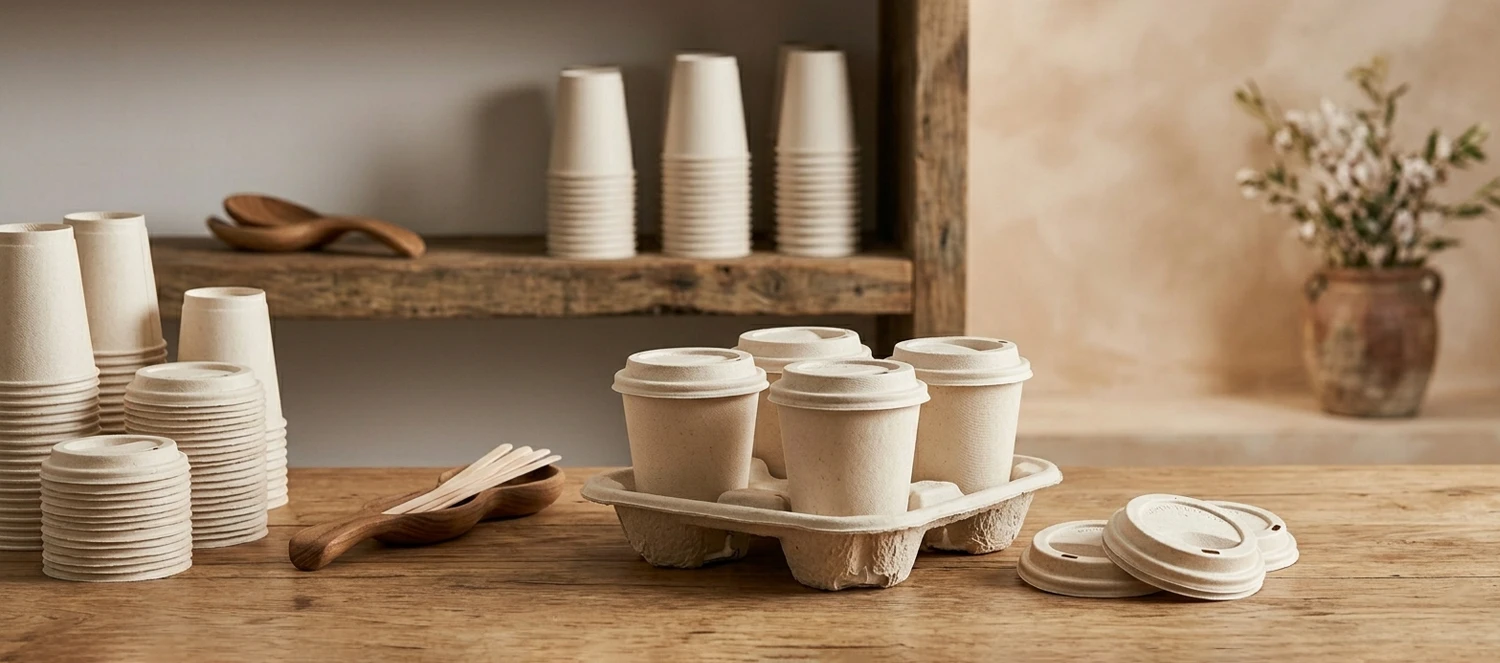
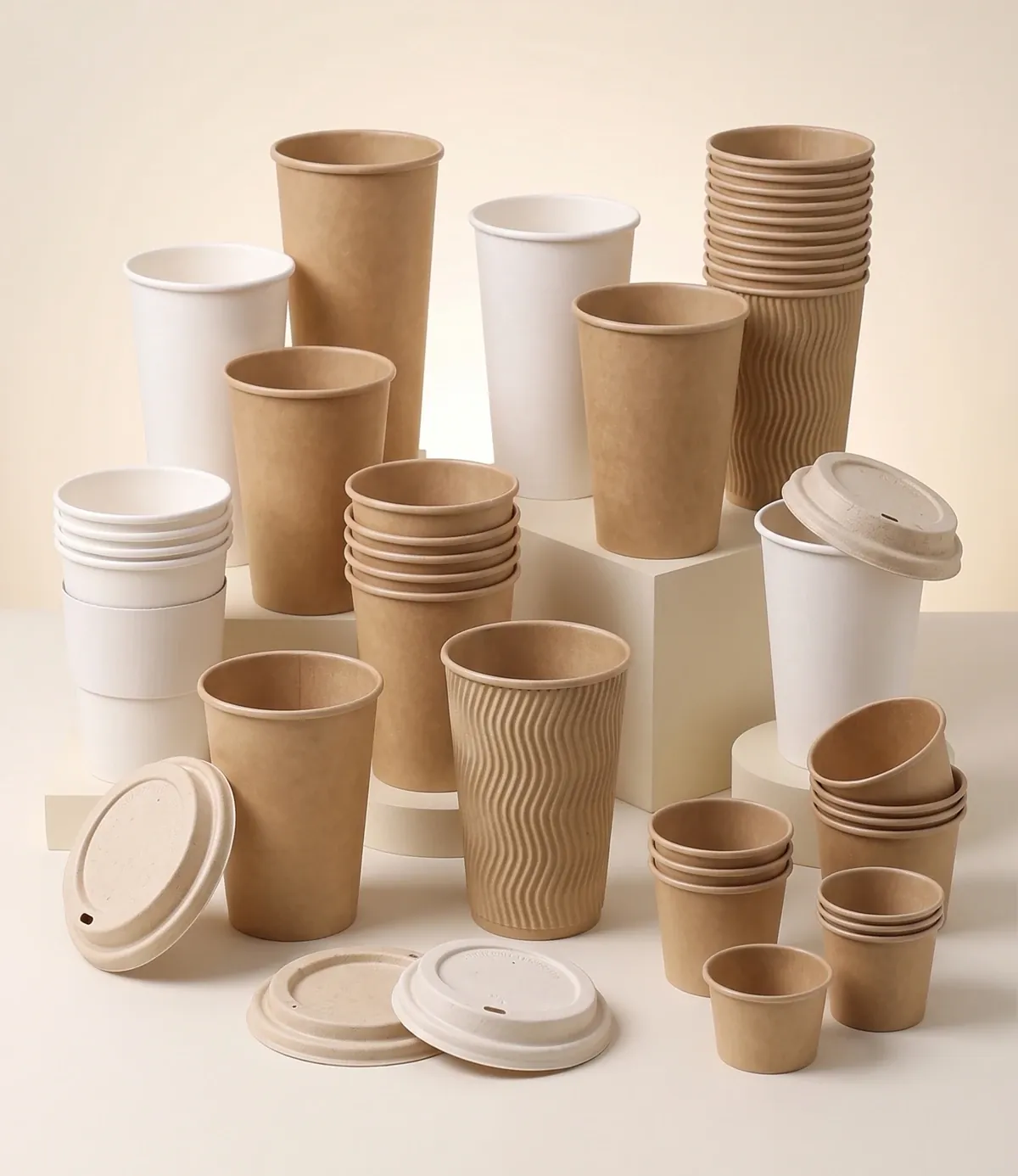
Because they are made to the standard rim sizes, Ekoroll’s lids fit standard single wall, double wall and ripple paper cups, whether the cups come from Ekoroll or from another supplier, so one lid range covers the whole drinks menu. Whatever the cup, check the fit once on your own drinks: press the lid on, fill the cup, tilt it and look for drips at the edge. For more on matching cups and lids, see our guide to hot paper cups with lids.
A packing routine that gets drinks there full
The right lid does most of the work. These habits do the rest:
- Leave headroom. Fill to the cup’s fill line, not to the brim, so the drink does not touch the lid when the cup moves.
- Seat the lid all the way round. Press along the whole rim until it clicks on evenly; a lid that is down on one side only will leak there.
- Use a closed lid for every delivery drink. Self-opener, closed dome or closed flat lid; keep open lids for the counter.
- Keep the tab closed. Do not open the self-opener tab at the counter or to check the drink.
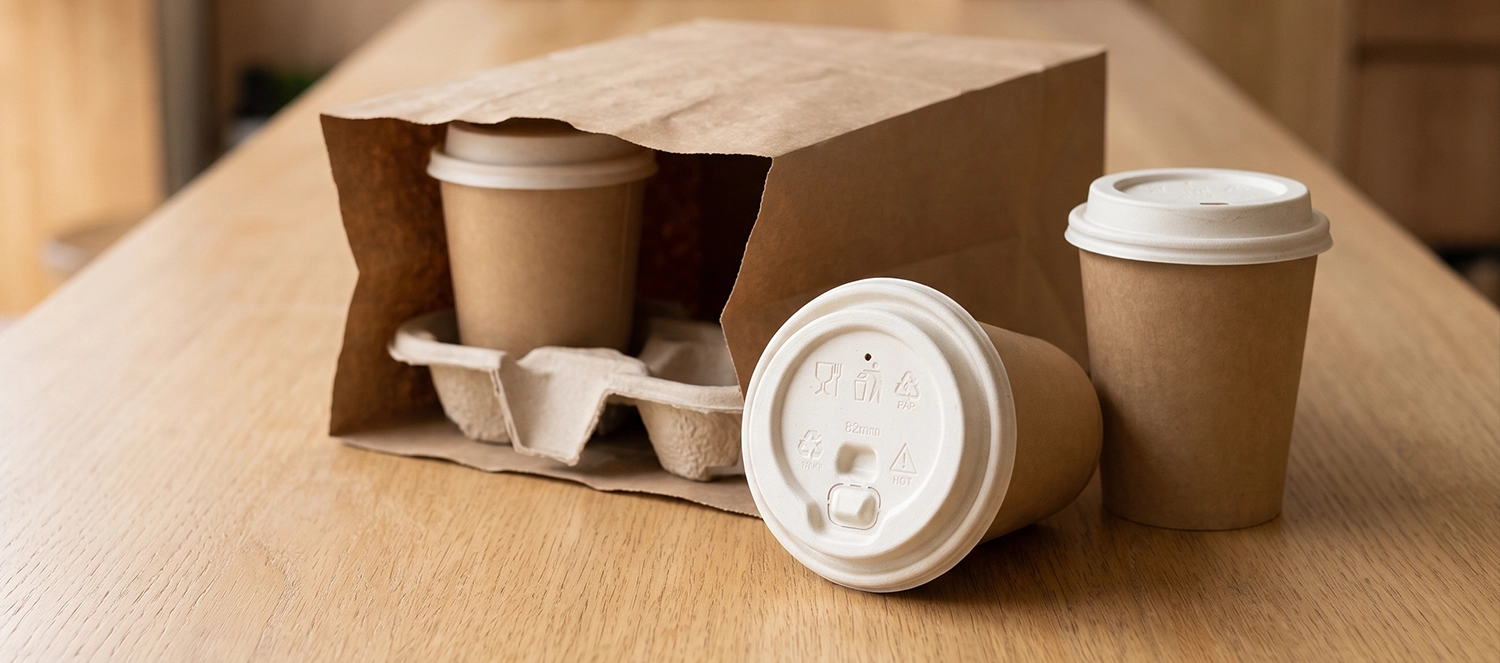
- Carry upright. Use a cup carrier or a holder in the bag; never lay a cup on its side or wedge it between food boxes.
- Separate drinks from hot food. A drink next to a hot box warms up and the bag gets wet from condensation.
- Seal the bag, not the cup. A tamper sticker on the bag shows the order was not opened, without taping the lid.
Many delivery problems are packaging problems; our food delivery packaging mistakes guide covers the rest of the order.
Why use bagasse lids instead of plastic lids?
Plastic cup lids, in polystyrene or polypropylene, are covered by the EU Single-Use Plastics Directive: member states must take measures to reduce the consumption of “cups for beverages, including their covers and lids”, and producers of plastic lids carry extended producer responsibility. Bio-based plastics such as PLA count as plastic under the directive. The tethered-cap rule does not apply to cups; it covers caps and lids of beverage containers such as bottles and cartons.
A lid molded from 100% natural fiber without a plastic coating is outside the directive’s definition of plastic. Ekoroll’s cup lids are molded from 100% bagasse, the sugarcane fiber left after sugar extraction. They are home compostable (TÜV AUSTRIA OK compost HOME) and PFAS-free, and the fiber keeps its shape on hot coffee and stays comfortable to touch. Molding also allows the shapes delivery needs: the self-opener tab, the closed dome and the closed flat lid. For a full comparison of fiber and plastic lids, see our molded fiber lids guide and plastic lid alternatives for coffee cups.
Buyer checklist for spill-resistant cup lids
- Drinking opening closed in transit (self-opener, closed dome or closed flat lid) for every delivery drink
- Lid size matched to the cup’s rim (80 or 90 mm) and pressed on all round
- Small vent for hot drinks; drinking opening closed separately
- Clear instruction for staff: open at the moment of drinking
- Standard rim sizes that fit the cups you already use, to keep stock simple
- Material and documents: fiber or plastic, food-contact declaration, PFAS status, and the compostability certificate if compostability is claimed
Leak-resistant bagasse cup lids from Ekoroll
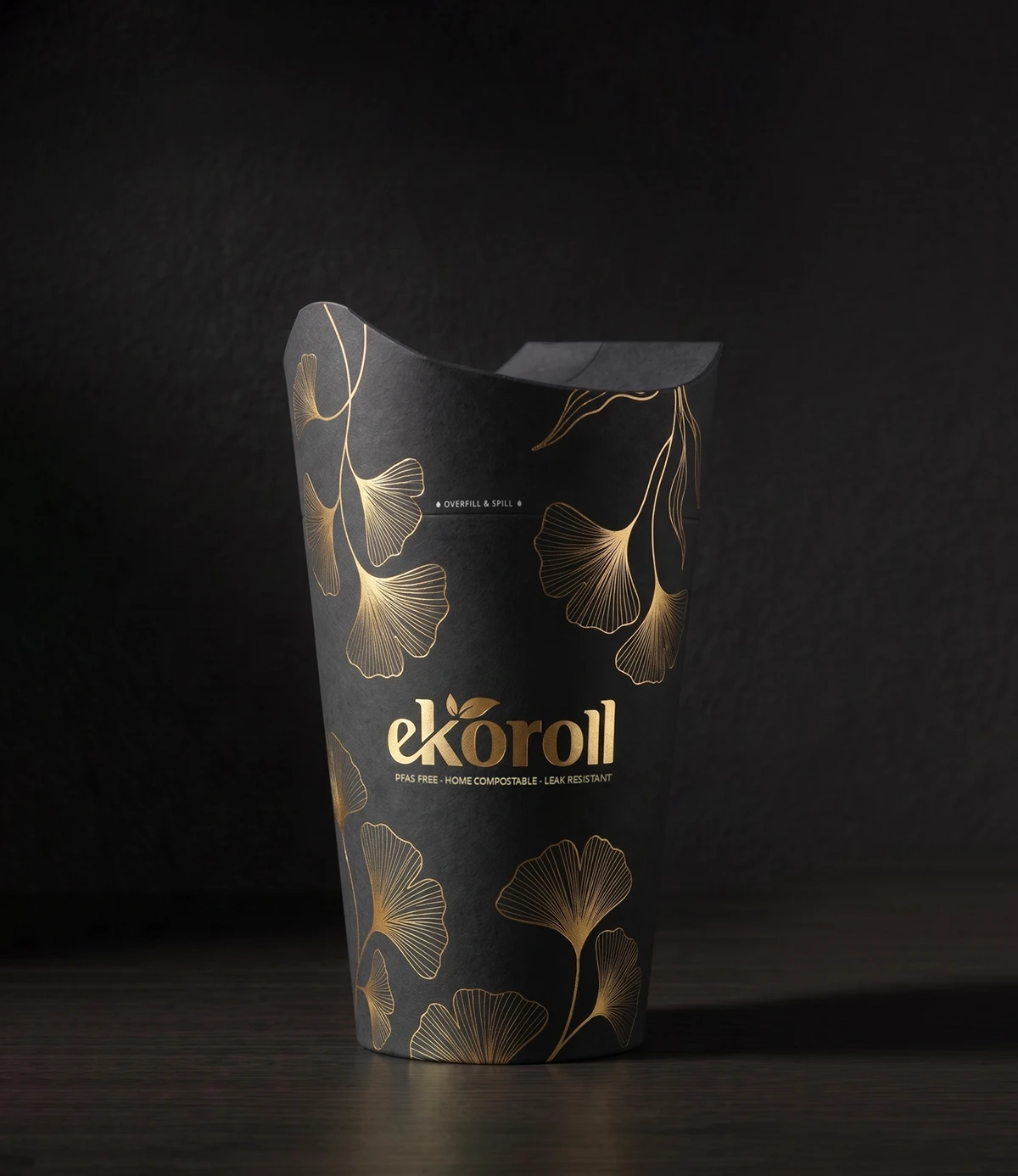
Ekoroll supplies bagasse cup lids to cafés, coffee chains, delivery operators and distributors: the self-opener lid, closed and open dome lids, closed flat lids and sip lids, in the standard 80 mm and 90 mm rim sizes. They fit standard paper cups, including our own paper cups in single wall, double wall and ripple, so you can order lids on their own for the cups you already use or together with our cups. For service without a separate lid at all, the Ekoroll lid-free hot cup folds closed at the top.
Prices, minimum order quantities and lead times are quoted per project. Send us your cup sizes and how your drinks travel and we will send matching lid samples to test on your own route.
Products in this article
Sources
- Directive (EU) 2019/904 on the reduction of the impact of certain plastic products on the environment (SUP Directive) — EUR-Lex
- Commission guidelines on single-use plastic products in accordance with Directive (EU) 2019/904, C(2021) 3762 final — European Commission (copy published by Spain's Ministry for the Ecological Transition), 2021-05-31
- Regulation (EU) 2025/40 on packaging and packaging waste (PPWR) — EUR-Lex