A bagasse plate is a disposable plate molded from sugarcane fiber; a paper plate is pressed from paperboard, usually with a coating that stops grease and moisture soaking through. For hot, heavy and saucy food, bagasse plates are thicker, more rigid and resist grease without a plastic coating. Paper plates remain a light, simple choice for dry snacks and cake. In the EU, paper plates with a plastic coating are treated as banned single-use plastic plates, which is one reason caterers are moving to bagasse.
This guide compares bagasse and paper plates on material, strength, heat and microwave use, compostability and EU rules, then covers plate sizes and formats, how to test plates for your menu and what to ask a supplier.
What Are Bagasse Plates and Paper Plates Made Of?
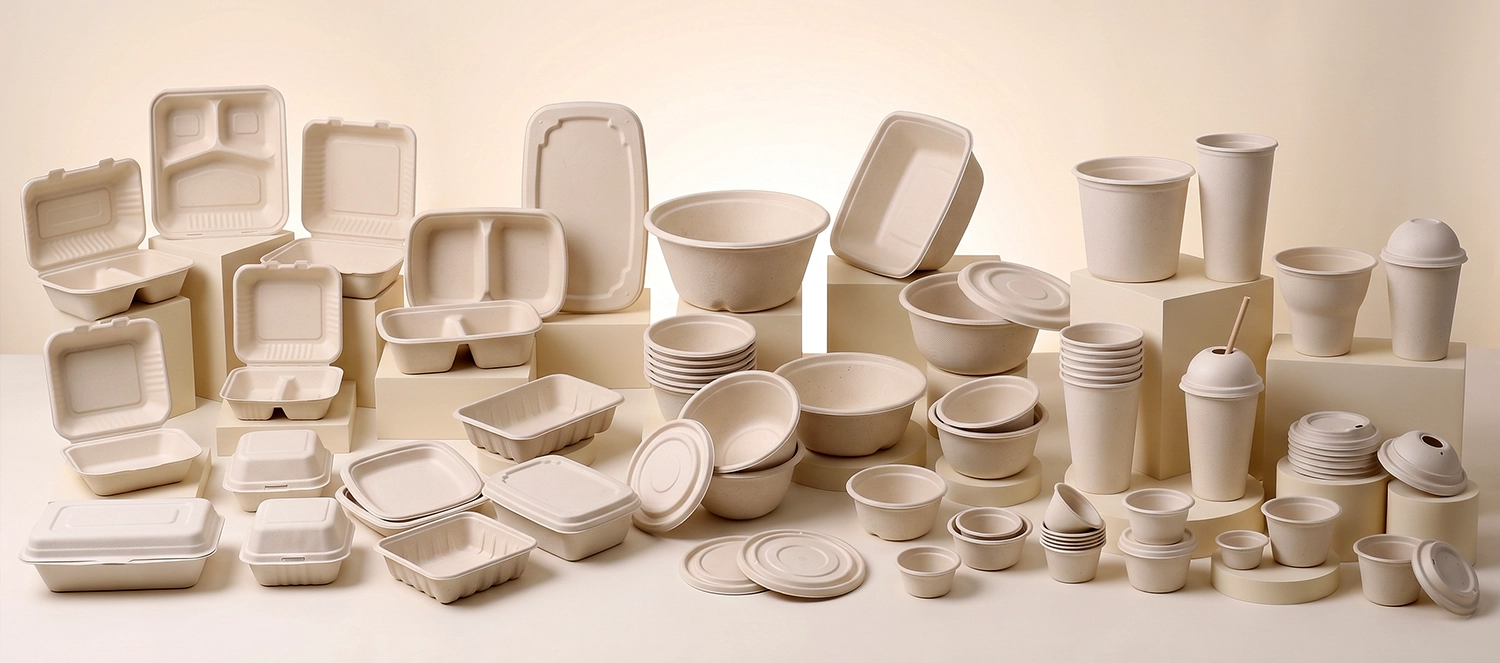
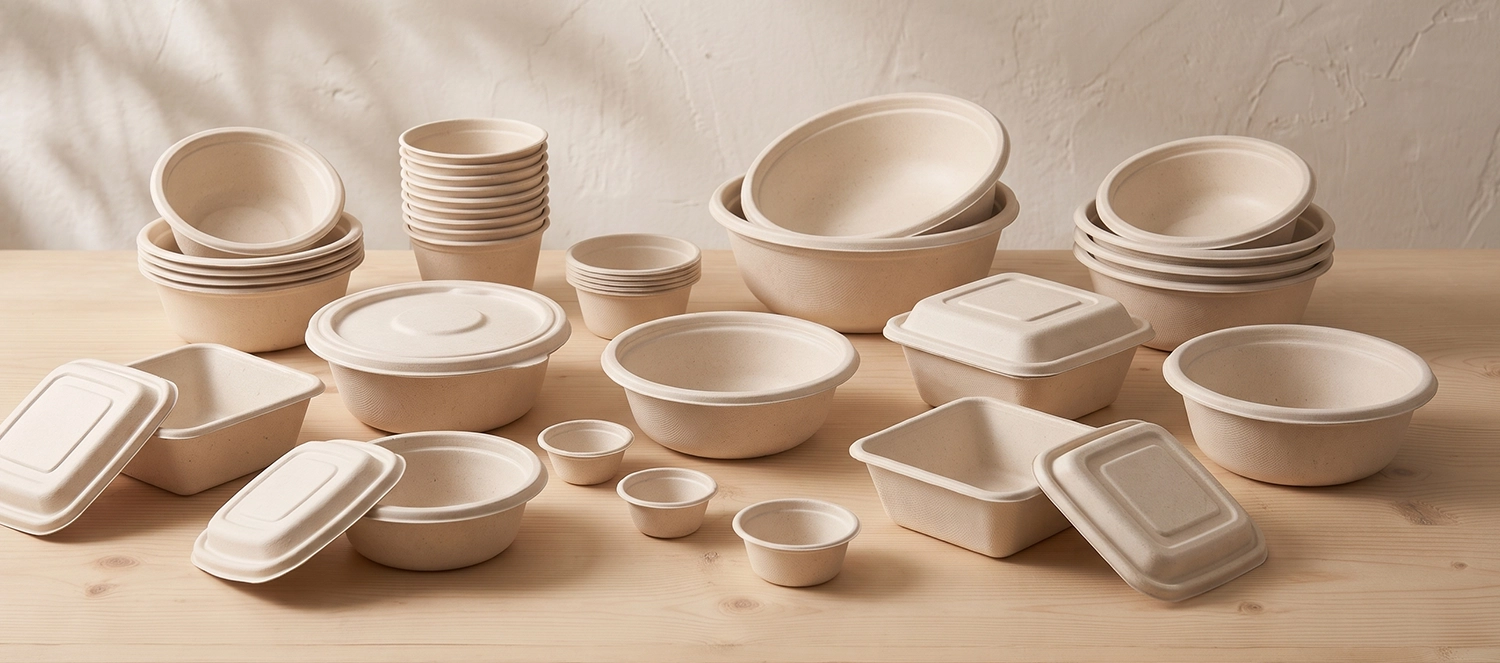
Bagasse plates. Bagasse is the fiber left after sugarcane stalks are crushed for their juice. The fiber is pulped with water, formed in heated molds under pressure and trimmed into a plate. The result is a rigid, lightweight plate with a natural matte surface and no plastic layer. Ekoroll bagasse plates are 100% bagasse.
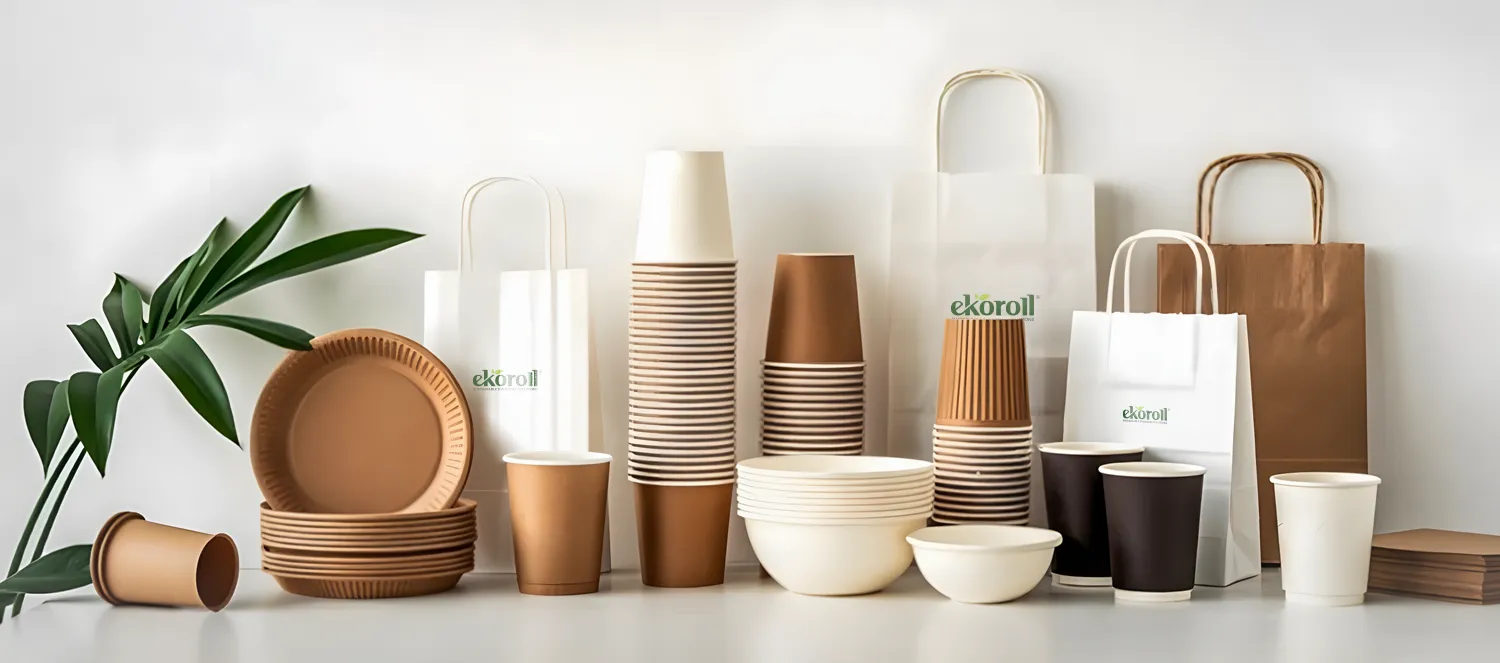
Paper plates. Paper plates are pressed or folded from paperboard. Because paperboard absorbs grease and moisture, most paper plates for food carry a coating: a plastic (PE) coating, a clay or mineral coating, or a water-based barrier. Uncoated paper plates are best kept for dry food.
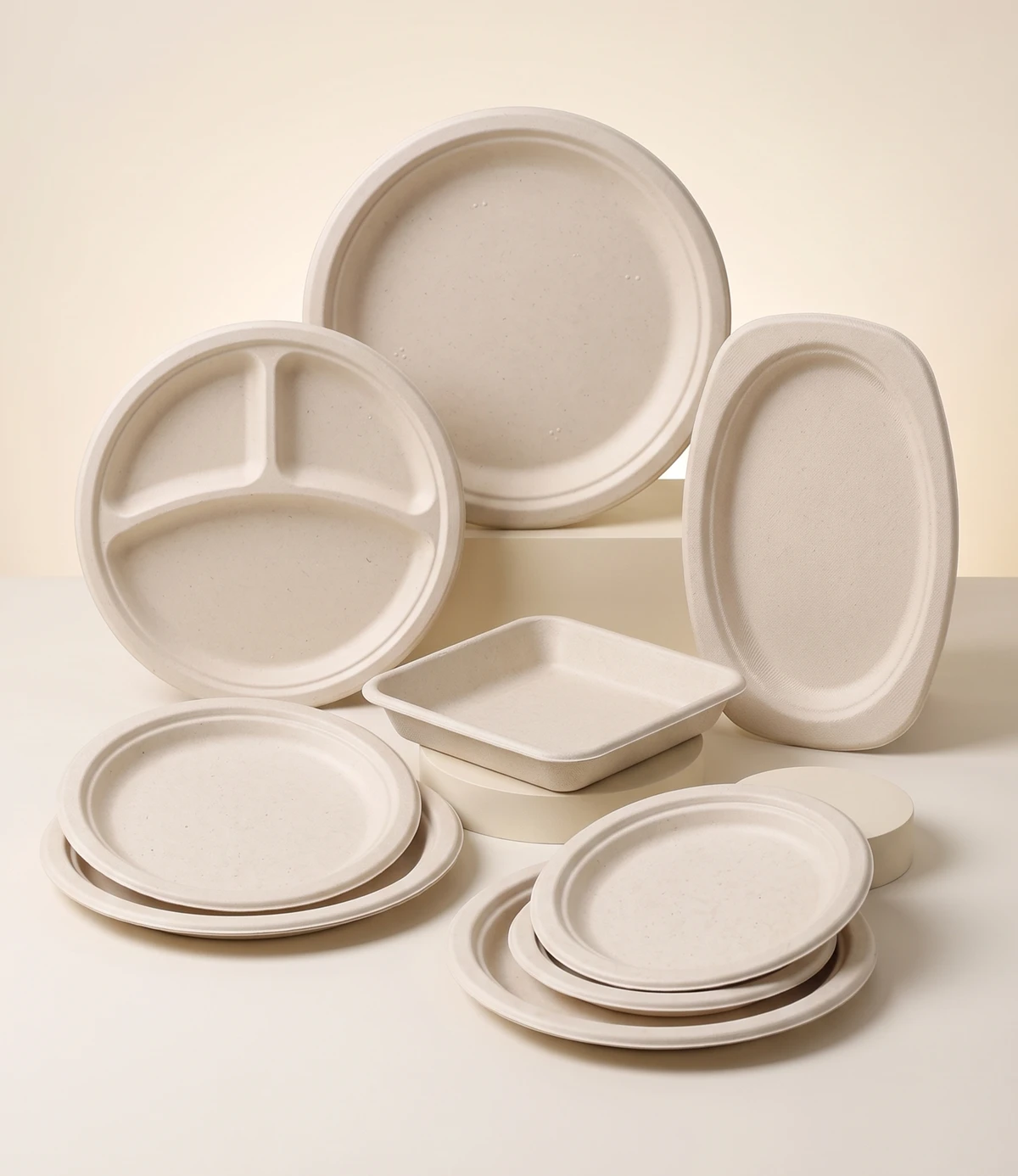
Bagasse Plates vs Paper Plates: Side-by-Side
| Bagasse plates | Paper plates | |
|---|---|---|
| Material | Molded sugarcane fiber | Paperboard, usually coated |
| Rigidity | Thick and rigid; holds a full, heavy portion | Thinner; can bend with heavy or wet food |
| Grease and moisture | Water- and oil-resistant fiber (Ekoroll bagasse) | Depends on the coating; uncoated plates soak through |
| Hot food | Hot and cold food | Hot food depends on the coating and board |
| Microwave | Microwave- and freezer-safe (Ekoroll bagasse) | Depends on the coating; check with the supplier |
| Cutting with a knife | Holds up to cutting | Can tear or score |
| End of life | Home compostable (Ekoroll bagasse, TÜV AUSTRIA OK compost HOME) | Depends on the coating and local collection |
| EU single-use plastic rules | No plastic layer | Plastic-coated paper plates are treated as plastic plates |
| Best for | Catering, hot meals, grills, saucy dishes, events | Dry snacks, cake, short service |
Are Bagasse Plates Strong Enough for Hot, Saucy Food?
Yes. Molded fiber is denser than pressed paperboard, so bagasse plates keep their shape under hot rice dishes, grills and saucy mains, and can be cut on. Two things help with very saucy food:
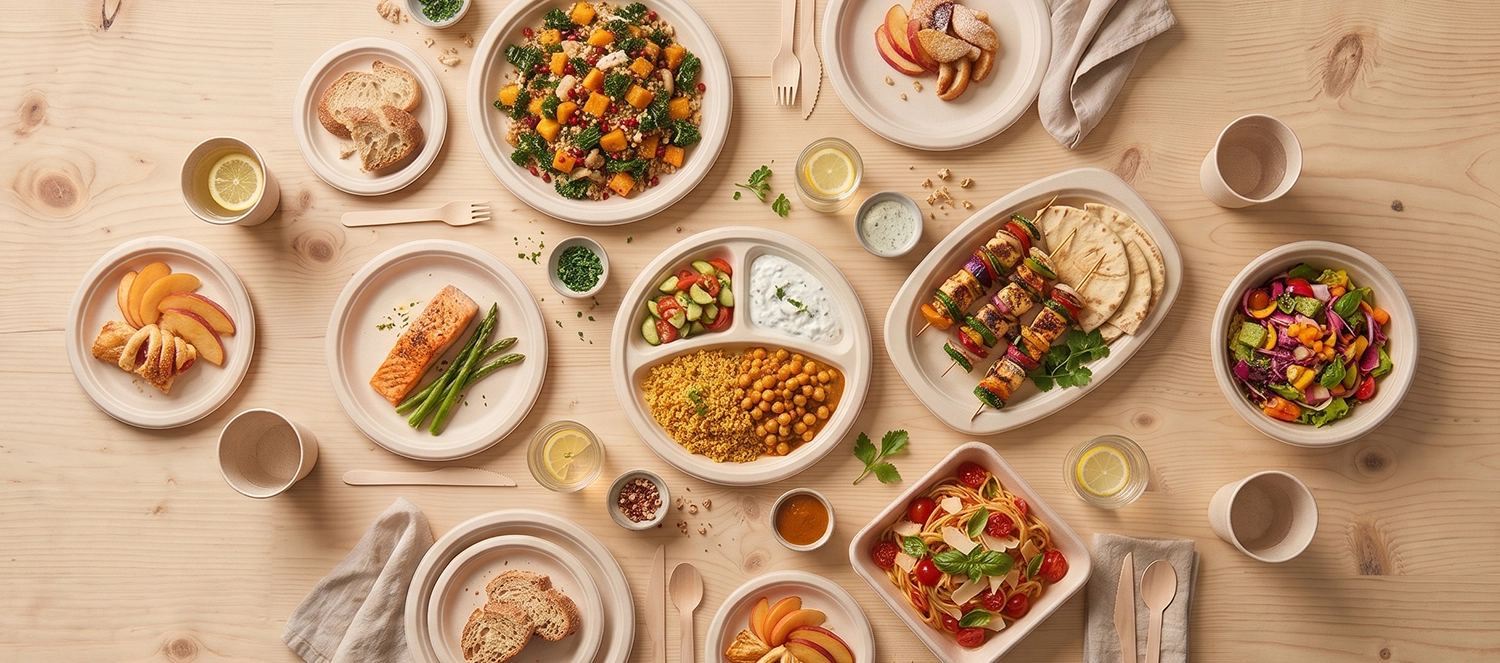
- Choose the shape for the dish. Deep plates and compartment plates contain sauces and keep sides apart; flat plates suit grills, bread and dry dishes.
- Size up rather than overfill. A full 25–26 cm plate travels better than an overloaded 22 cm plate.
Microwave, Freezer and Temperature
Ekoroll bagasse plates are microwave- and freezer-safe and suitable for hot and cold food. As with any disposable plate, reheat for a short time; do not use bagasse plates in a conventional oven, under a grill or on a hob. For paper plates, microwave use depends on the coating, so ask the supplier for the exact plate.
Compostable, Biodegradable and PFAS-Free: What Do the Claims Mean?
- Home compostable means the product is certified to break down in a home compost heap under the conditions of the certification scheme, such as TÜV AUSTRIA’s OK compost HOME. Ekoroll bagasse plates are home compostable and 100% bagasse; the certificate is held by the producing mill and a copy is available on request.
- Industrially compostable means the product breaks down in an industrial composting facility, which runs hotter than a home heap.
- Biodegradable on its own says little: it gives no time frame or conditions, and Directive (EU) 2024/825 restricts generic environmental claims that cannot be substantiated.
- PFAS-free. Some molded fiber products used PFAS for grease resistance in the past. Since 12 August 2026, the EU Packaging and Packaging Waste Regulation bars food-contact packaging that contains PFAS above set limits. Ekoroll bagasse is PFAS-free.
EU Rules for Disposable Plates
Single-use plastic plates are banned from the EU market under Article 5 of the Single-Use Plastics Directive (EU) 2019/904. The European Commission’s guidelines on the directive treat plates made of paper with a plastic coating or lining as plastic plates, and treat bio-based plastics such as PLA as plastic too. Plates made of uncoated fiber, such as bagasse, are outside that ban. For food-contact compliance, ask any supplier for a declaration of compliance under Regulation (EC) No 1935/2004.
For the full regulatory picture, see the EU packaging regulations guide for HoReCa and bagasse vs plastic food containers.
Bagasse Plate Sizes and Formats
| Format | Typical size | Typical use |
|---|---|---|
| Small round plate | about 15 cm (6 in) | Sides, bread, desserts, cake |
| Medium round plate | about 18 cm (7 in) | Starters, snacks, desserts |
| Large round plate | about 22–23 cm (9 in) | Light meals, salads, breakfast |
| Dinner plate | about 25–26 cm (10 in) | Main meals, buffets |
| Compartment plate | about 25–26 cm (10 in), three compartments | Mains with sides, institutions, events |
| Square plate or dish | various | Modern presentation, buffets |
| Oval platter | about 30–35 cm (12–14 in) | Grills, sharing, buffet trays |
Exact sizes vary by range and are updated with demand, so ask for the current size list before planning your service.
How to Choose Plates for Your Menu
- List the dishes and mark which are hot, heavy, saucy or eaten standing up.
- Pick the shapes: flat plates for grills and dry dishes, deep plates for sauces and salads, compartment plates for mains with sides.
- Pick two or three sizes to keep stock simple.
- Test with your own food: serve your heaviest and saucy dish, wait for the normal eating time, then cut on the plate and check the base.
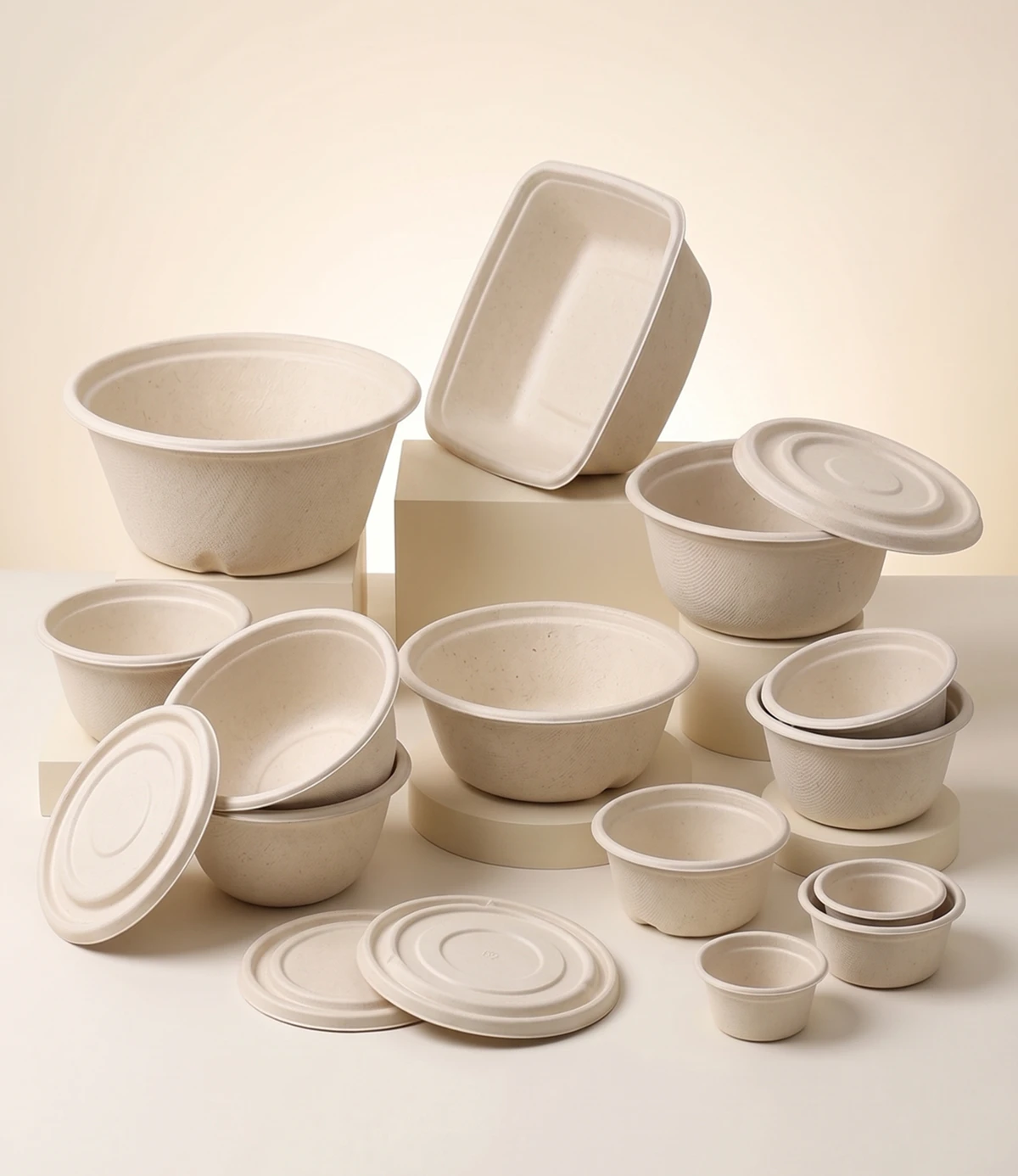
- Complete the set with bowls, cups and cutlery from the same range so the look and quality match.
Bagasse Plates from Ekoroll
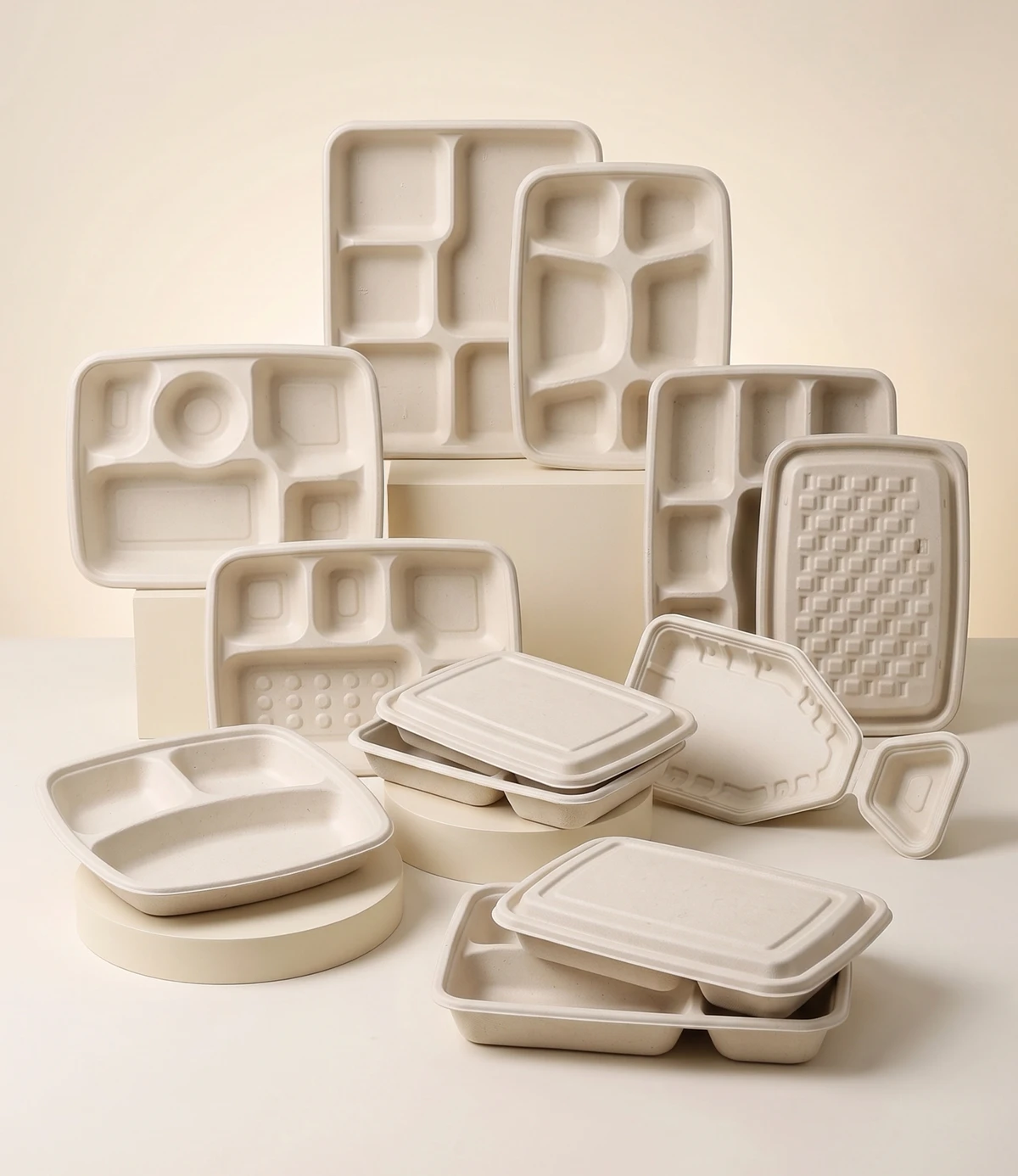
Ekoroll supplies bagasse plates in round, square, deep, compartment and oval formats for catering, buffets, events, takeaway and institutions. Like all Ekoroll bagasse, they are home compostable and 100% bagasse (TÜV AUSTRIA OK compost HOME), PFAS-free, microwave- and freezer-safe, water- and oil-resistant, and suitable for hot and cold food. Complete the set with bagasse bowls, bagasse meal trays and bagasse cups and lids, and read our bagasse packaging guide for the whole range.
Send us your menu, service model and market, and we will propose formats and sizes, send samples and quote in writing. Request a quote or browse the catalog.
Products in this article
Sources
- Directive (EU) 2019/904 on the reduction of the impact of certain plastic products on the environment (SUP Directive) — EUR-Lex
- Commission guidelines on single-use plastic products in accordance with Directive (EU) 2019/904, C(2021) 3762 final — European Commission (copy published by Spain's Ministry for the Ecological Transition), 2021-05-31
- Regulation (EU) 2025/40 on packaging and packaging waste (PPWR) — EUR-Lex
- Regulation (EC) No 1935/2004 on materials and articles intended to come into contact with food — EUR-Lex
- Directive (EU) 2024/825 on empowering consumers for the green transition — EUR-Lex