Food truck packaging and disposables are the containers, wraps, cups, lids, cutlery, napkins, sauce portions and bags a mobile kitchen hands over with every order. Because a truck has little storage and serves fast, the best kit is small: one or two containers per dish type, a wrap for handheld food, cups that share a lid size, and formats that nest or ship flat. In the EU, check that nothing in the kit is a banned single-use plastic item and plan for the takeaway reuse rules coming in 2027 and 2028.
This guide gives a stock list by menu type, explains how to size and store the kit on a truck, summarizes the EU rules that apply to food trucks, and ends with a checklist for choosing a supplier.
What Disposables Does a Food Truck Need?
Start from the menu, not from a catalog. Every dish needs a primary container or wrap; drinks need a cup and lid; and almost every order needs cutlery, a napkin and often a sauce portion.
| Item | What it does | Typical options |
|---|---|---|
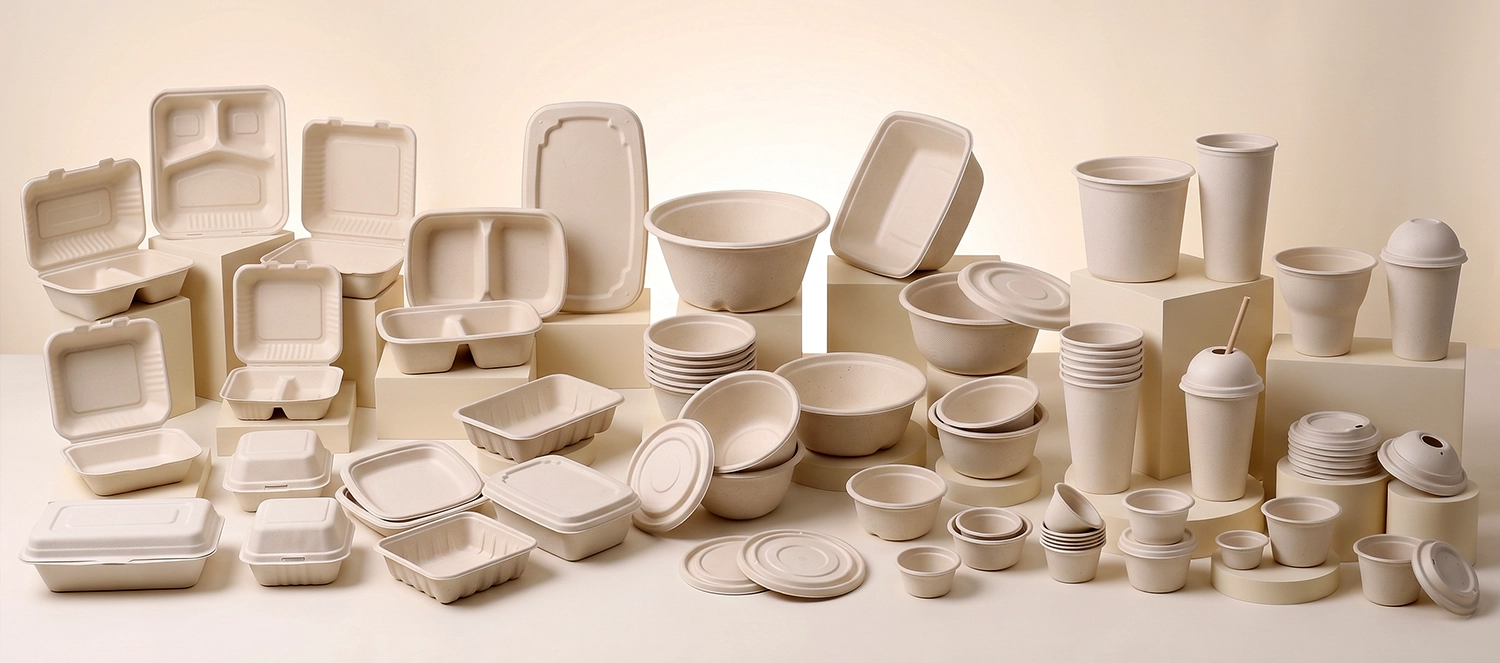
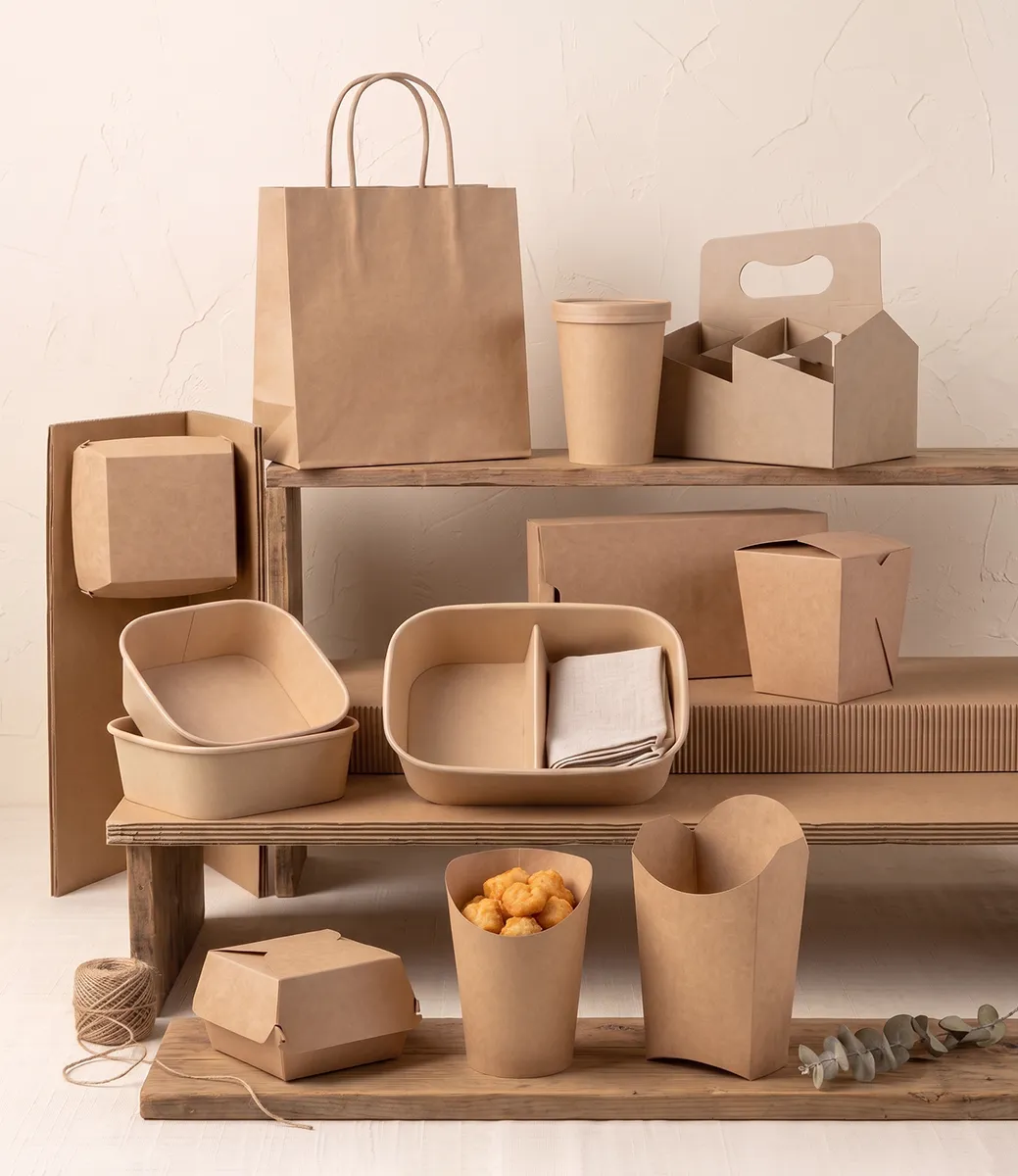
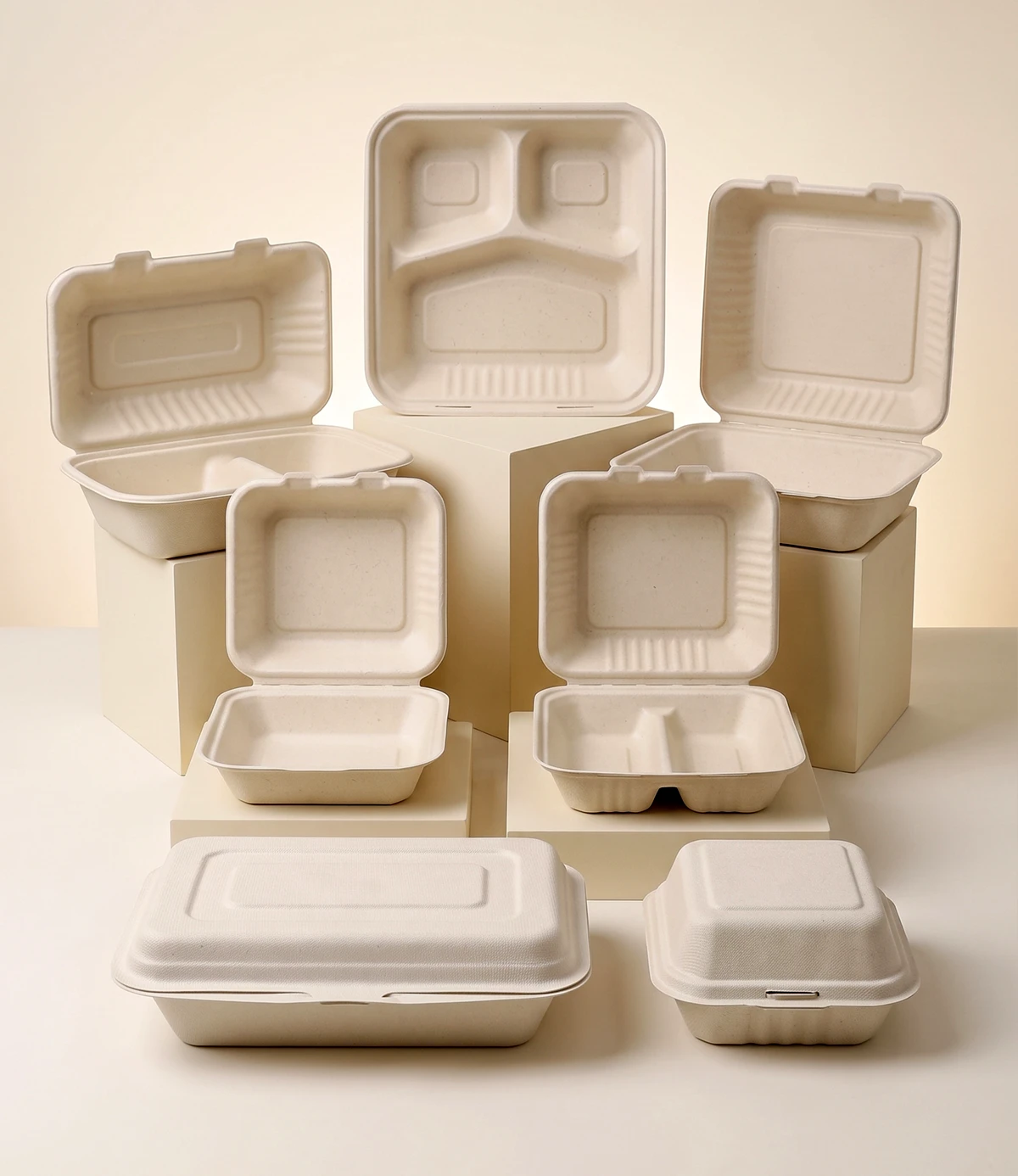
| Main container | Holds a full portion, closes for walking or delivery | Paper takeaway boxes, bagasse clamshells, kraft bowls with lids, bagasse meal trays |
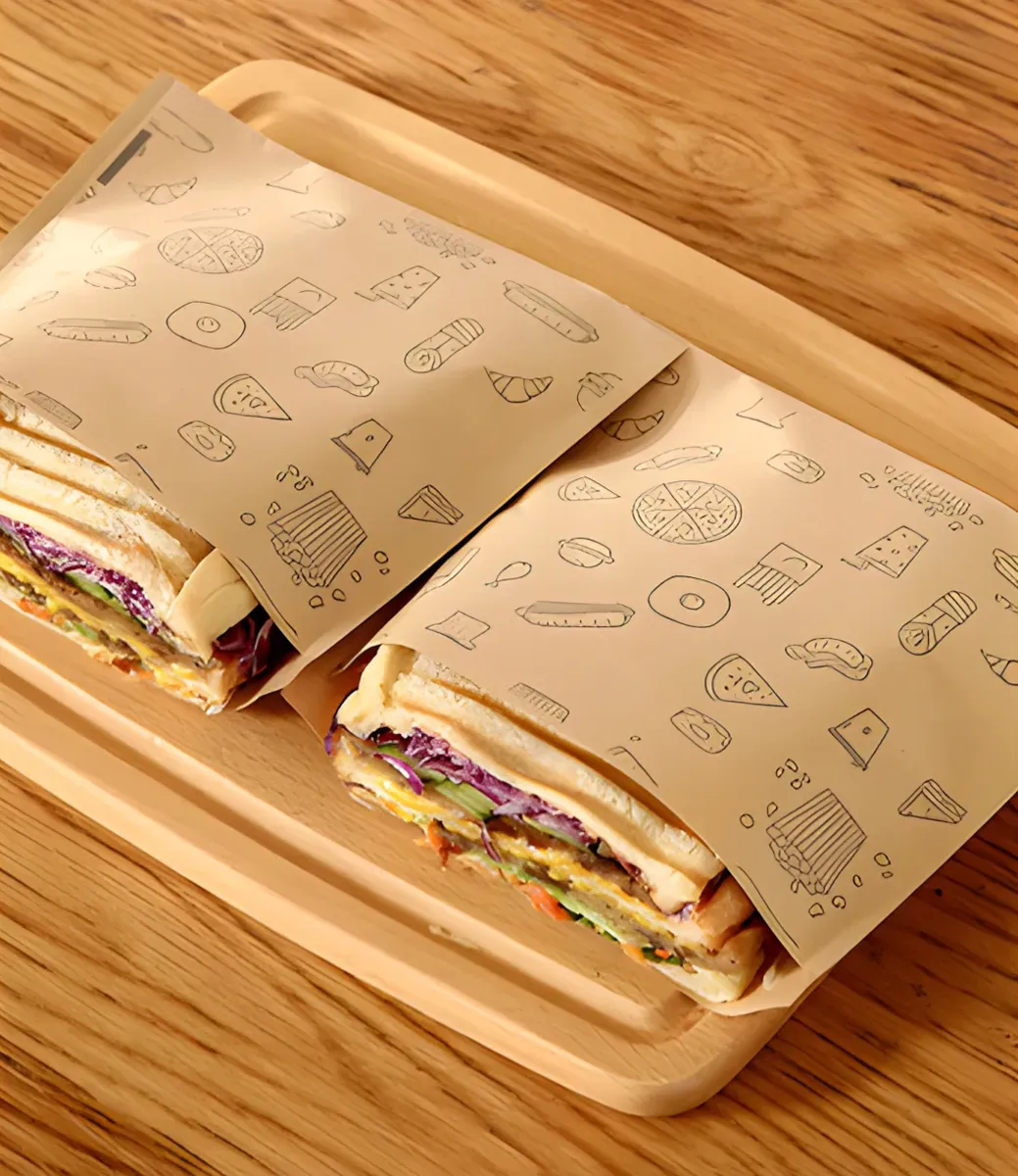
| Wrap or sleeve | Holds handheld food, keeps hands clean | Greaseproof paper wraps, paper bags, sleeves |
| Open boat or scoop | Fries, snacks, sides eaten on the spot | Paper fries boxes and scoops, small trays |
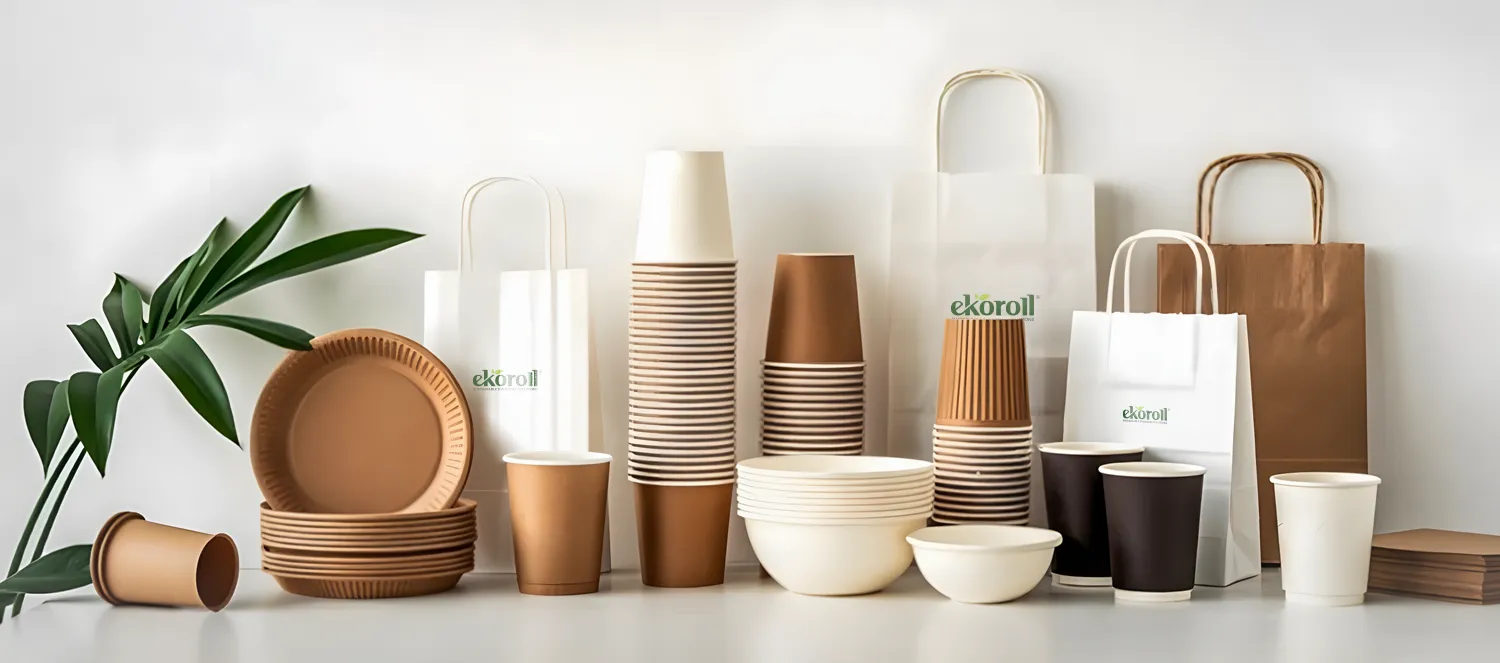
| Cups and lids | Hot and cold drinks, soups | Paper cups with lids, lid-free paper cups, cold cups with straws |
| Cutlery | Eating on the street or at a stand-up table | Wooden or bamboo forks, knives and spoons |
| Sauce portions | Ketchup, mayo, dressings, sugar | Sachets and sticks, small portion cups |
| Napkins and wipes | Greasy hands, quick clean-up | Napkins, individually wrapped wet wipes |
| Carry solution | Group orders, several drinks | Paper bags, cup carriers, food trays |
| Hygiene supplies | Food safety at the hatch | Disposable gloves, cleaning supplies |
For a fuller overview of materials for food service, see our guide to eco-friendly packaging for restaurants.
Which Packaging Fits Which Food Truck Menu?
The dish decides the format. A few common menu types:
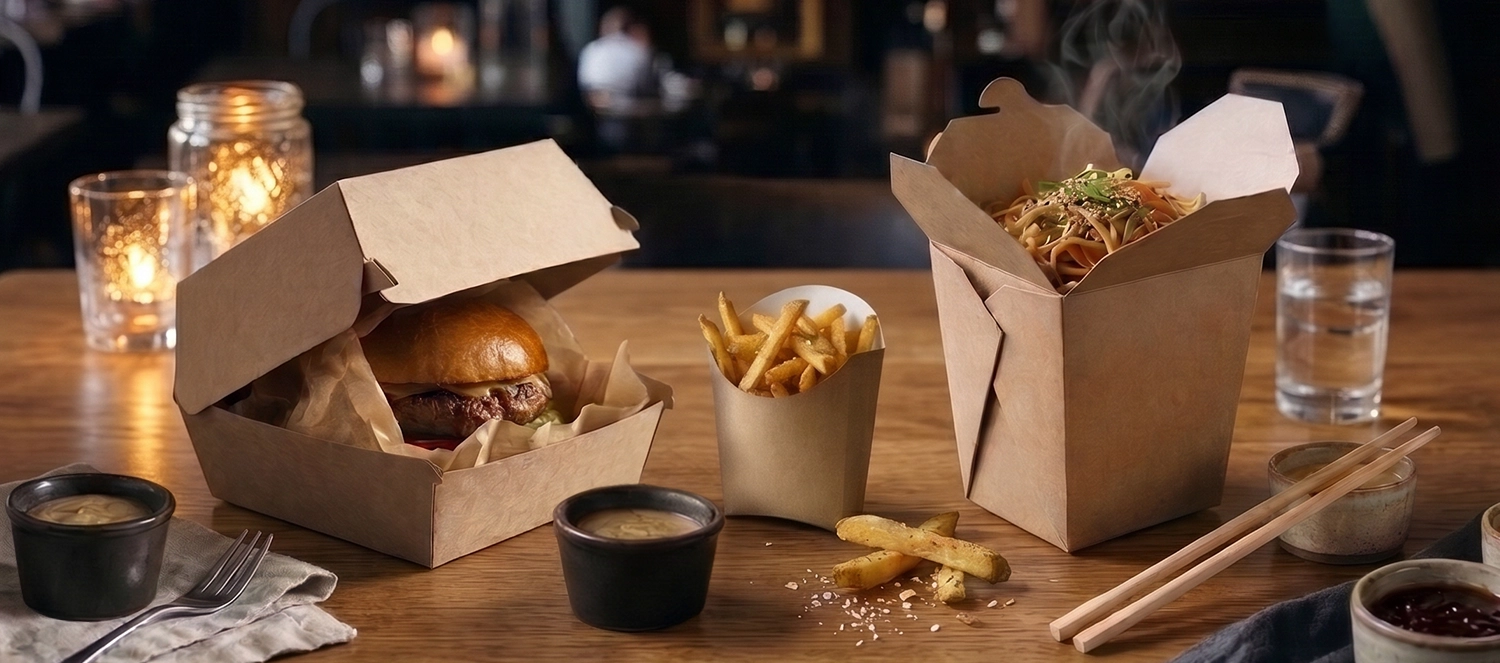
- Burgers and sandwiches: a greaseproof paper wrap for eating on the spot, or a bagasse clamshell for orders that travel. See bagasse burger boxes and clamshells for sizes.
- Fries, nuggets and snacks: an open scoop, cone or vented box from the burger, taco and fries boxes range, so steam escapes and food stays crisp.
- Tacos, wraps and kebabs: a wrap or sleeve, or a taco or doner box when the filling is wet.
- Noodles, rice and curries: a noodle box or a kraft bowl with a lid that closes tightly for sauces.
- Mains with sides: a compartment format such as a bagasse meal tray, so sauces and salads stay apart.
- Coffee, tea and soft drinks: paper cups with matching lids, or a lid-free paper cup that closes without a separate lid.
- Desserts and ice cream: small dessert cups or pails with spoons.
How to Size and Store Packaging on a Truck
Space is the real limit on a food truck. Four habits keep the kit manageable:
- Fewer formats, more uses. One clamshell size that fits a burger and a loaded fries portion, or one bowl that takes salads and noodles, saves a whole cupboard.
- Share lid sizes. Cup ranges built on a standard rim diameter let several cup sizes take the same lid (for example, 12, 16 and 20 oz cups on a 90 mm lid), so you carry one or two lid types instead of one per cup size.
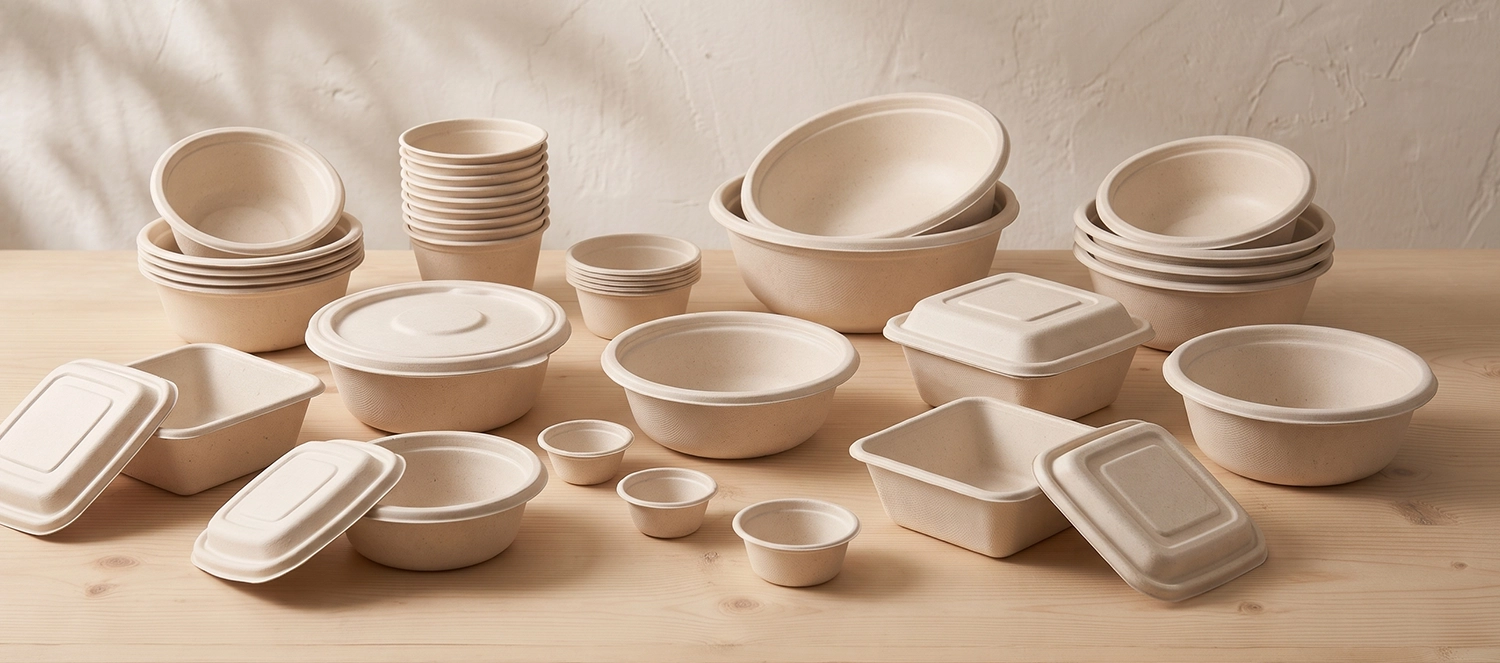
- Prefer nesting and flat-packed formats. Stacked bowls, nested trays and flat-packed boxes take much less space than pre-formed boxes.
- Count by service, not by carton. Work out how many units a busy service uses, carry that plus a margin, and keep the rest in a dry, clean store off the truck.
Keep the packaging close to the hatch but away from raw food, cleaning chemicals and splashes, and keep sleeves in their wrapping until you need them.
Which EU Rules Apply to Food Truck Packaging?
Single-use plastics
Under the EU Single-Use Plastics Directive (EU) 2019/904, single-use plastic cutlery, plates, straws and beverage stirrers, food and beverage containers and cups made of expanded polystyrene, and all products made of oxo-degradable plastic may no longer be placed on the EU market. Other single-use plastic food containers and cups are still allowed, but EU countries must reduce their consumption, producers pay for collection and clean-up through extended producer responsibility, and cups containing plastic carry a standard marking. National rules often add obligations for businesses. Ask your supplier whether each paper item has a plastic layer, because that decides whether these rules apply to it.
The PPWR: takeaway reuse from 2027
The Packaging and Packaging Waste Regulation (EU) 2025/40 has applied since 12 August 2026. Three provisions matter for food trucks that sell takeaway drinks or ready-prepared food:
- PFAS: since 12 August 2026, food-contact packaging containing PFAS at or above the set limits may not be placed on the EU market. Ask for the PFAS status of every food-contact item in writing.
- Customers’ own containers (Article 32): from 12 February 2027, final distributors in the HORECA sector that sell takeaway drinks or ready-prepared food must let customers bring their own container to be filled, at no higher price and on no less favorable terms, and inform them with clearly visible signs. Businesses may tell customers which containers are suitable and which hygiene rules apply, and are not responsible for hygiene problems caused by a customer’s own container.
- Reusable option (Article 33): from 12 February 2028, the same businesses must offer takeaway in reusable packaging within a re-use system and, from 2030, strive to offer 10% of these products in reusable packaging. Micro-enterprises are exempt from this offer.
The regulation does not mention food trucks by name, so check national guidance on how mobile vendors are treated. From 1 January 2030, Annex V also restricts single-use plastic packaging for food and drinks filled and consumed within HORECA premises and single-use plastic portion packs served on site; if your truck runs its own seating area, ask how this applies to you. For the full timeline, see the PPWR explained.
Some countries already go further. Since 1 January 2023, Germany has required a reusable alternative for takeaway food in single-use plastic containers and for drinks in single-use cups; businesses with no more than five employees and no more than 80 m² of sales area are exempt but must actively offer to fill customers’ own containers. Both criteria must be met, the whole company counts, and kitchens, counters and storage are not part of the sales area.
Food hygiene and food-contact rules
EU food hygiene law (Regulation (EC) No 852/2004, Annex II) has a chapter for movable and temporary premises such as mobile sales vehicles, and a chapter on wrapping and packaging: packaging must not be a source of contamination and must be stored so that it is not exposed to contamination. Food-contact materials also fall under Regulation (EC) No 1935/2004, so ask the supplier for a declaration of compliance for each item.
Paper, Bagasse or Plastic for a Food Truck?
| Paper with water-based coating | Bagasse (molded fiber) | Single-use plastic | |
|---|---|---|---|
| Typical items | Boxes, bowls, cups, wraps, fries scoops | Clamshells, plates, bowls, meal trays | Containers, cups, lids |
| Hot and wet food | Good with the right barrier; check soups and sauces | Good for hot and cold food; oil resistance varies by product type | Good for liquids |
| Storage on the truck | Many formats ship flat or nest | Nests compactly; formed items take more space than flat boxes | Nests compactly |
| EU rules | Ask whether the barrier contains plastic | 100% fiber with no plastic layer; ask for the material declaration in writing | Covered by the SUP Directive; some items banned |
| Customer perception | Familiar natural look | Natural fiber look | Seen as plastic |
For a closer look at the trade-offs, see bagasse vs paper food containers.
Food Truck Packaging Checklist: What to Ask a Supplier
- Range coverage: can one supplier cover containers, wraps, cups, lids, cutlery and accessories, so print and quality stay consistent?
- Lid fit: which lids fit which cups and bowls, and can several sizes share one lid?
- Pack sizes: units per sleeve and per carton, and whether a carton fits your truck’s storage.
- Barrier: water-based coating, PLA or PE lining, in writing, and the PFAS status.
- Documents: a declaration of compliance for food contact for every item.
- Samples: your own food, held for your usual time, carried the way customers carry it.
- Print: whether you can brand cups, boxes or wraps, and how the proof is approved.
- Minimum order and lead time: both depend on stock or custom print and should be confirmed in the quote.
For the wider procurement picture, read paper takeaway boxes wholesale and how to choose a food packaging supplier.
Food Truck Packaging from Ekoroll
Ekoroll supplies food truck packaging manufacturer-direct, so one supply partner can cover the whole kit: disposable food containers and paper takeaway boxes, bagasse clamshells and meal trays, greaseproof paper wraps, kraft bowls with lids, paper cups with water-based, PFAS-free, PE-free coating, paper straws, wooden and bamboo cutlery, paper bags and cup carriers, sauce sachets, wet wipes and disposable gloves. Bagasse items are 100% fiber and suit hot and cold food. Food-contact and compostability documentation is provided according to the final product specification and production route.
Prices, minimum orders and lead times are quoted per project. Send us your menu, your busiest service and your storage space, and we will propose a compact kit, send samples and quote in writing. Request a quote or browse the catalog.
Products in this article
Sources
- Single-use plastics: banned products, consumption reduction, EPR and marking — European Union, Your Europe
- Single-use plastics — European Commission, Directorate-General for Environment
- Regulation (EU) 2025/40 on packaging and packaging waste (PPWR) — EUR-Lex
- Packaging and packaging waste: summary of the final act (2022/0396(COD)) — European Parliament, Legislative Observatory
- PPWR Article 32: refill obligation for the take-away sector (German text) — lxgesetze.de
- PPWR Article 33: re-use offer obligation for the take-away sector (German text) — lxgesetze.de
- Vente à emporter : dès 2027, l'Horeca doit accepter les contenants de sa clientèle — Brussels Environment
- Regulation (EC) No 852/2004 on the hygiene of foodstuffs, Annex II (Chapter III: movable and temporary premises; Chapter X: wrapping and packaging) — legislation.gov.uk (EU text as at 31 December 2020)
- Food contact materials: EU legislation — European Commission, Food Safety
- Mehrwegangebotspflicht für Restaurants, Bistros und Cafés — Bavarian State Office for the Environment (Abfallratgeber Bayern)