Most compostable takeout containers do well with dry and saucy food. Soups, curries, broths and dishes with a lot of sauce in delivery are where they fail — and the leak almost always starts at the lid, not through the container. To choose containers that hold liquid, look for a matched pair (a precision-formed rim and a lid formed for it), pick the format for the dish, and test it with your own menu, fill levels and delivery times.
This guide explains why fiber containers leak, what a leak-resistant bagasse container does differently, which formats suit which dishes, how to pack for delivery and how to test before you switch.
Why Takeout Containers Leak
| Cause | What happens | Fix |
|---|---|---|
| Lid not matched to the rim | The lid sits on the rim instead of closing on it | Use a container and lid formed as a pair |
| Overfilling | Liquid reaches the rim and wicks out under the lid | Leave headspace below the rim |
| Sauce on the rim | The lid cannot sit flat | Wipe the rim before closing |
| Steam and condensation | Pressure lifts a loose lid; water collects at the edge | Let very hot food settle briefly before closing |
| Tilted or crushed bags | Liquid reaches the closure; lids are pressed open | Upright bags, flat bases, no heavy items on top |
| Long holding time | Any fiber softens with prolonged heat and moisture | Test your real holding and delivery times |
The container wall is rarely the problem: Ekoroll bagasse is water- and oil-resistant. The weak point is the closure.
What Makes a Bagasse Container Leak-Resistant
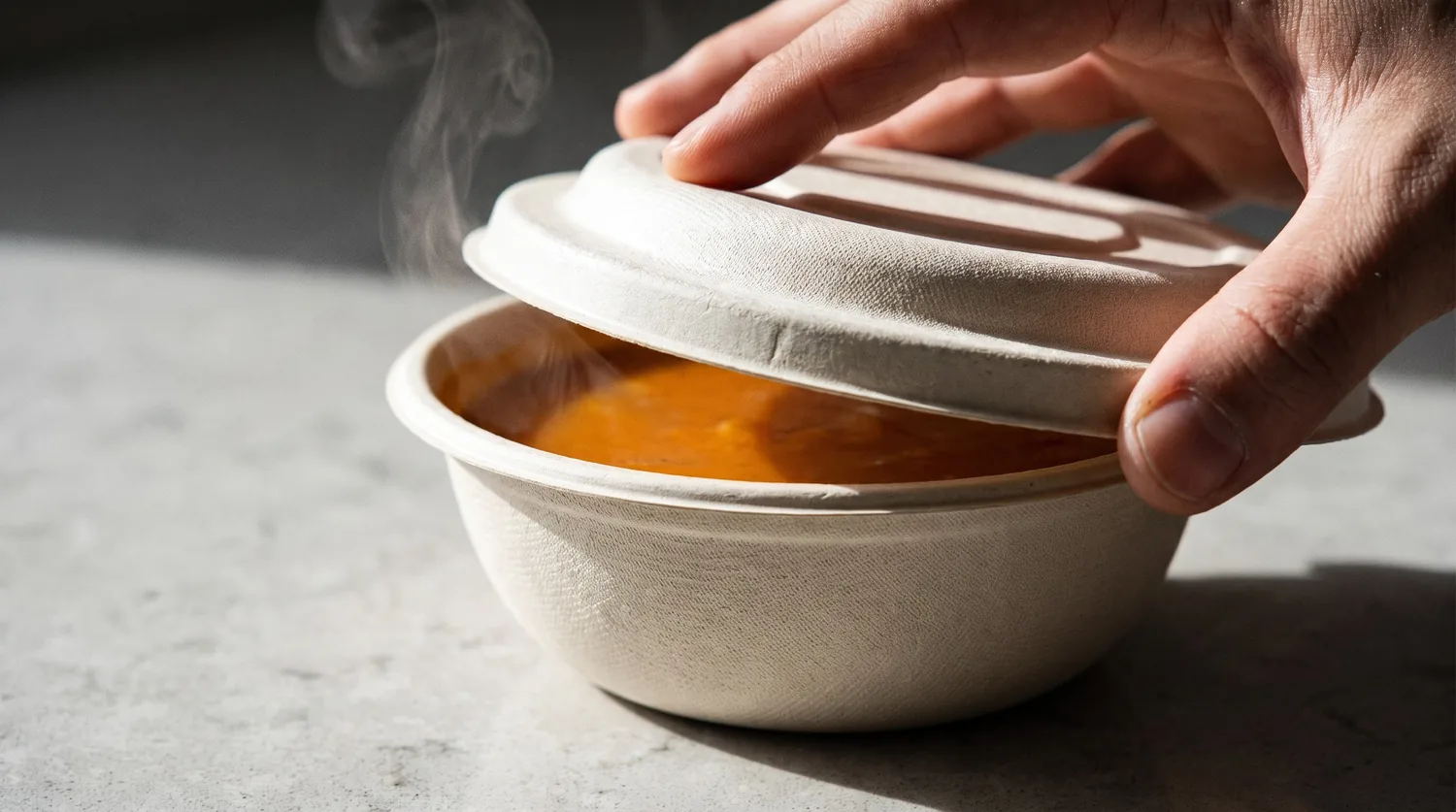
- Precision-formed rim. The rim is molded to a defined geometry so the lid has something exact to close on.
- Matched lid. The lid is formed for that rim, not shared across many bowls, so it closes tightly instead of resting loosely.
- Body and lid tested together. The pair is designed to stay closed through stacking, transport and delivery.
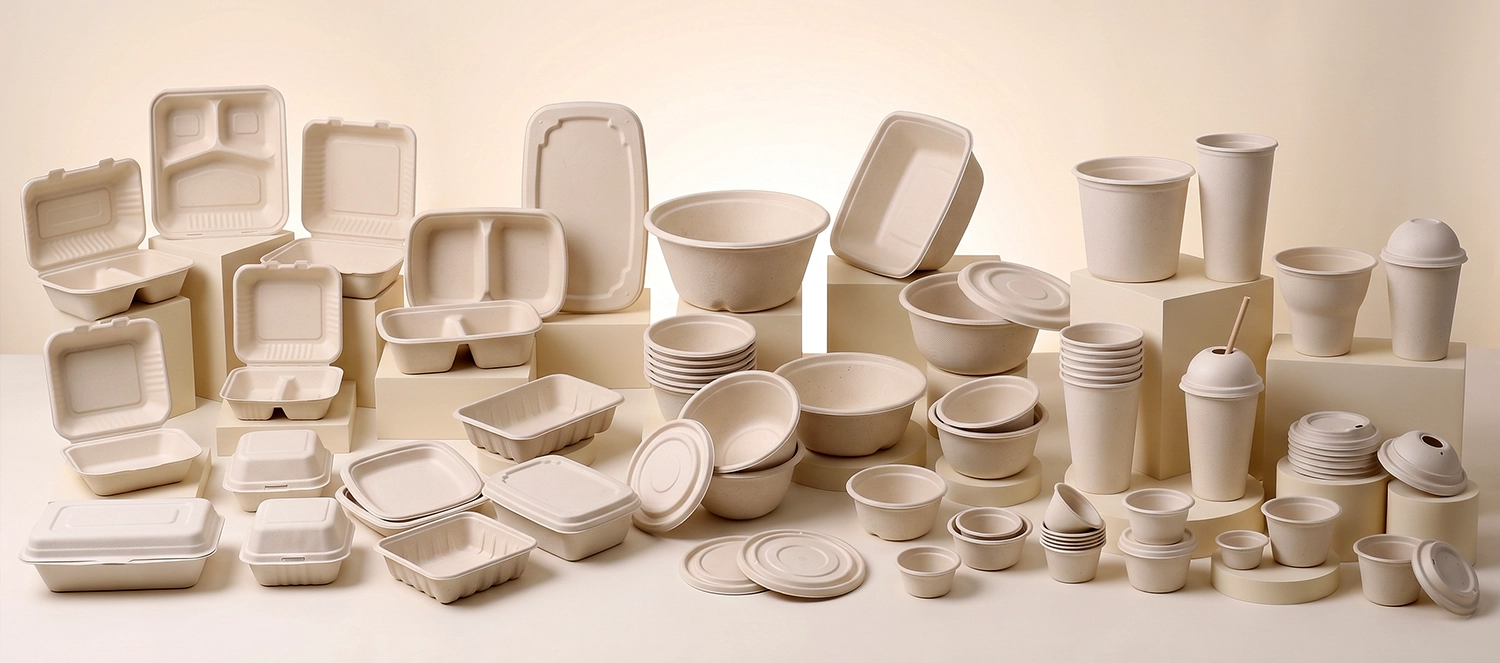
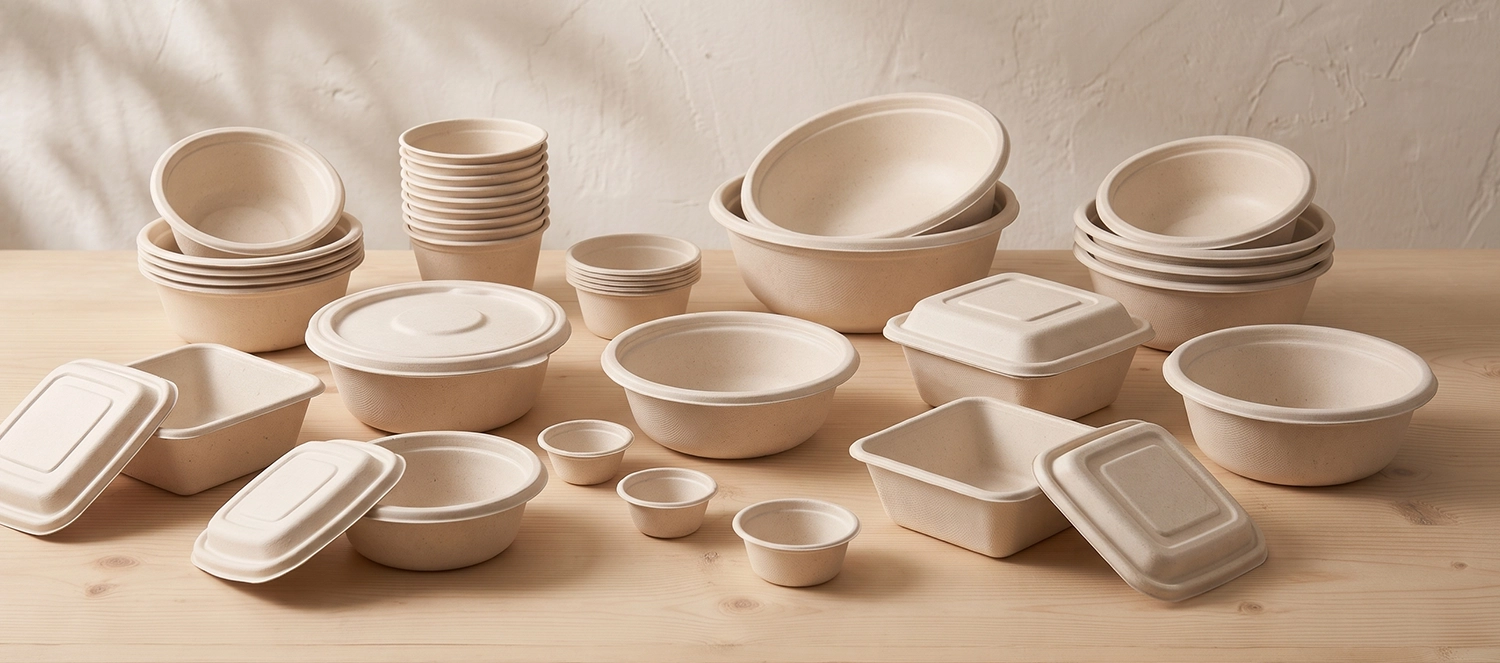
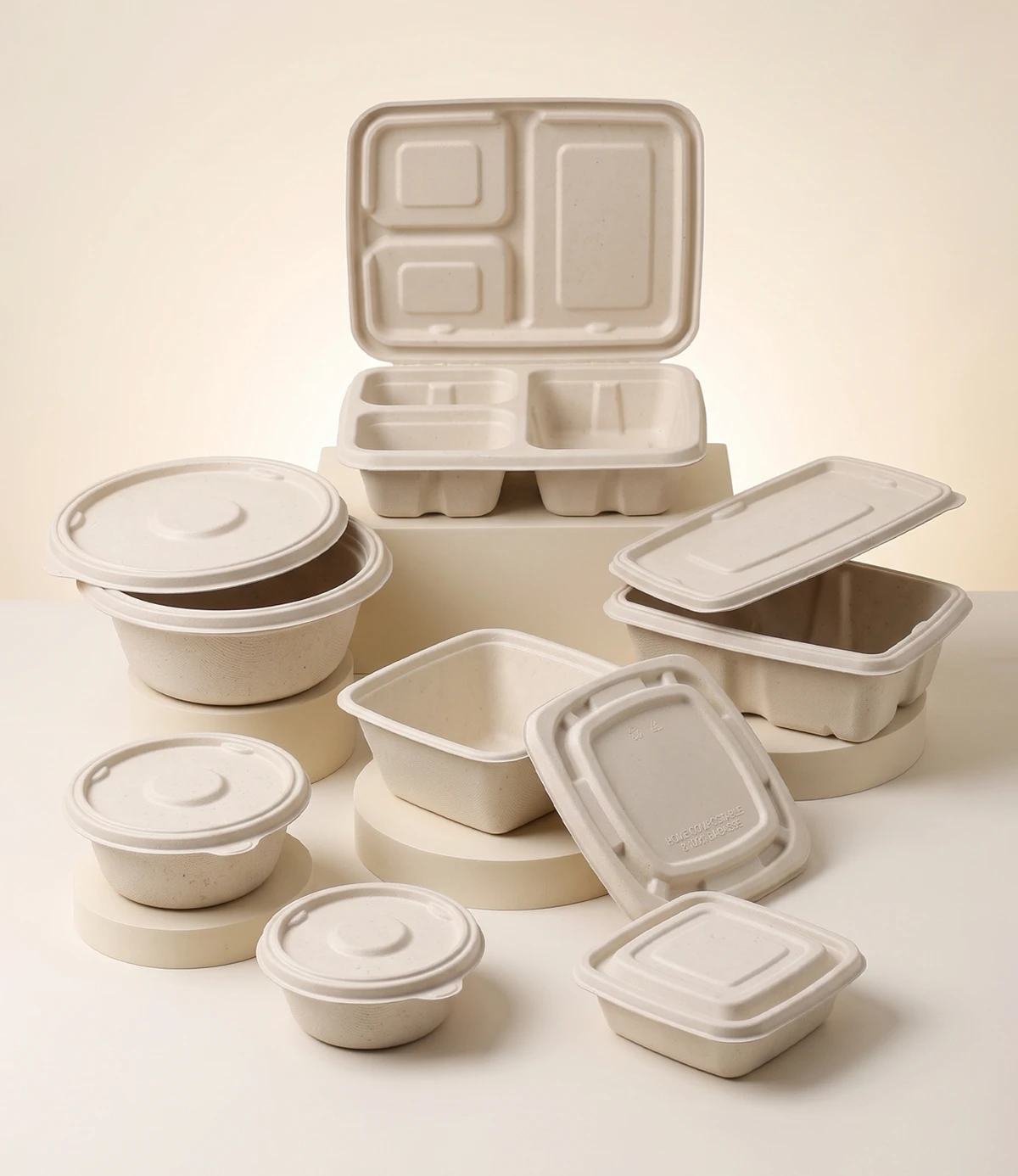
That is the idea behind Ekoroll’s Anti-Leak Series: round bowls, rectangular containers and compartment meal trays, each with its own lid, developed for liquid-rich meals. Performance still depends on the food, fill level, temperature and handling, so we send samples to test with your menu.
Which Format for Which Dish
| Dish | Format | Why |
|---|---|---|
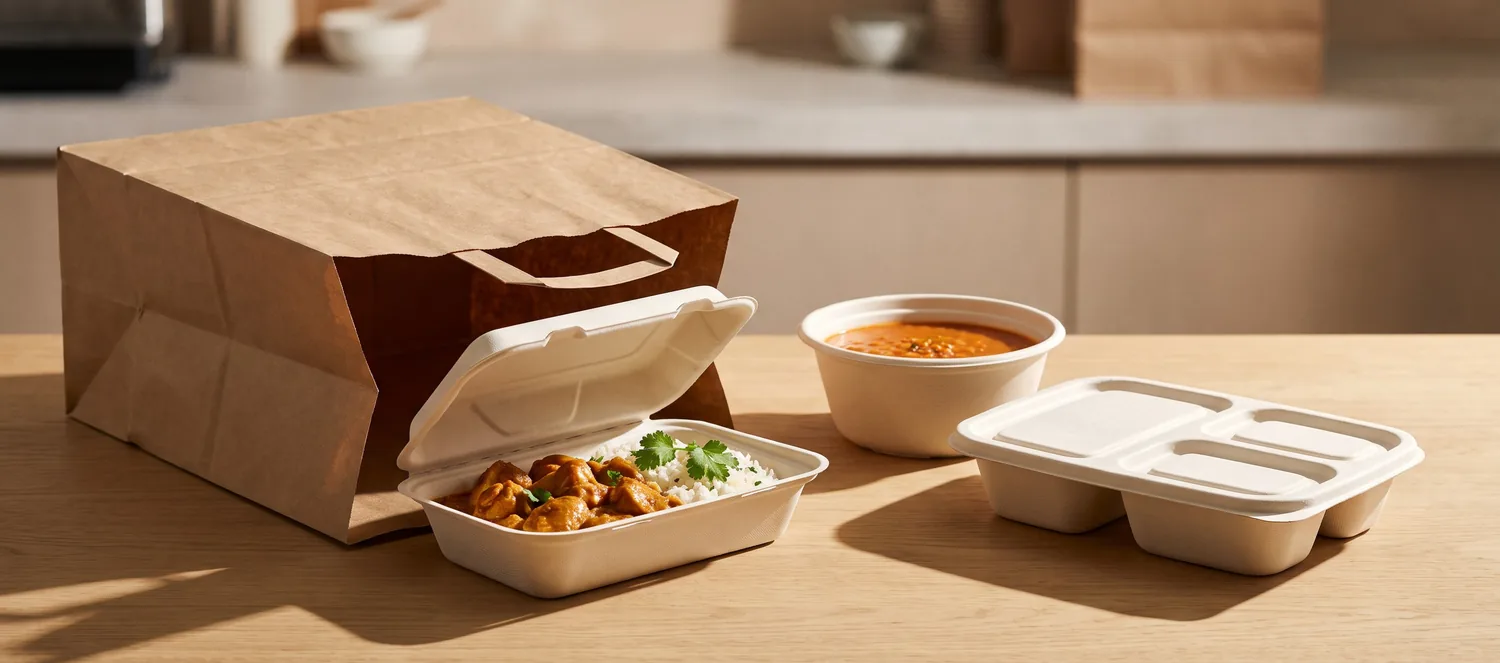
| Soups, broths, ramen | Round anti-leak bowl | Even rim all the way round; easiest to close evenly |
| Curries, stews, saucy mains | Rectangular anti-leak container | Packs flat in bags; sits stable |
| Rice + curry, main + side | Two-compartment container or anti-leak meal tray | Keeps sauce off the rice |
| Complete meals | Anti-leak compartment meal tray | Main, sides and salad in one closed pack |
| Dressings, extra sauce | Portion cup with fiber lid | Keeps the wettest part separate |
For drier dishes, standard rectangular containers, bowls with lids and clamshells are usually enough. For soup in paper rather than fiber, see our paper soup bowls guide.
Packing Liquid-Rich Food for Delivery
- Leave headspace. Fill below the rim so liquid does not touch the closure.
- Keep the rim clean. Wipe any sauce before closing.
- Close evenly. Press the lid down all the way round, then check it sits flat.
- Let very hot food settle briefly before closing, so steam does not lift the lid.
- Separate the wettest part. Put extra sauce or broth in a portion cup when the dish allows.
- Pack upright. Use flat-bottomed bags or carriers sized to the containers; keep liquids at the bottom and nothing heavy on top.
Many of these are covered in our list of food delivery packaging mistakes and the food-type guide to takeaway packaging.
Bagasse vs Plastic vs Coated Paper for Delivery
| Bagasse container (matched lid) | Plastic (PP) container | Coated paper container | |
|---|---|---|---|
| Liquid-rich food | Leak-resistant formats with matched lid | Snap-on lids | Depends on lid and seam |
| Microwave and freezer | Yes (Ekoroll bagasse) | Depends on the plastic | Depends on the product |
| EU single-use rules | No plastic layer | Single-use plastic food container | Plastic coating counts as plastic |
| PFAS | PFAS-free (Ekoroll) | — | Check the barrier |
| End of life | Home compostable (TÜV AUSTRIA OK compost HOME) | Recycling where collected | Depends on the coating |
For the full comparison, see bagasse vs plastic food containers.
How to Test Before You Switch
- Fill test: fill with your wettest dish at your normal level and temperature.
- Hold test: close and hold for your usual waiting time before pickup.
- Tilt test: tilt the closed container and check the closure.
- Bag test: pack a full order the way your staff do, and stack bags as couriers will.
- Ride test: send a test order on a typical delivery route and open it at the end.
- Check after: the base, the rim, the lid fit and the food’s look on arrival.
Leak-Resistant Bagasse Containers from Ekoroll
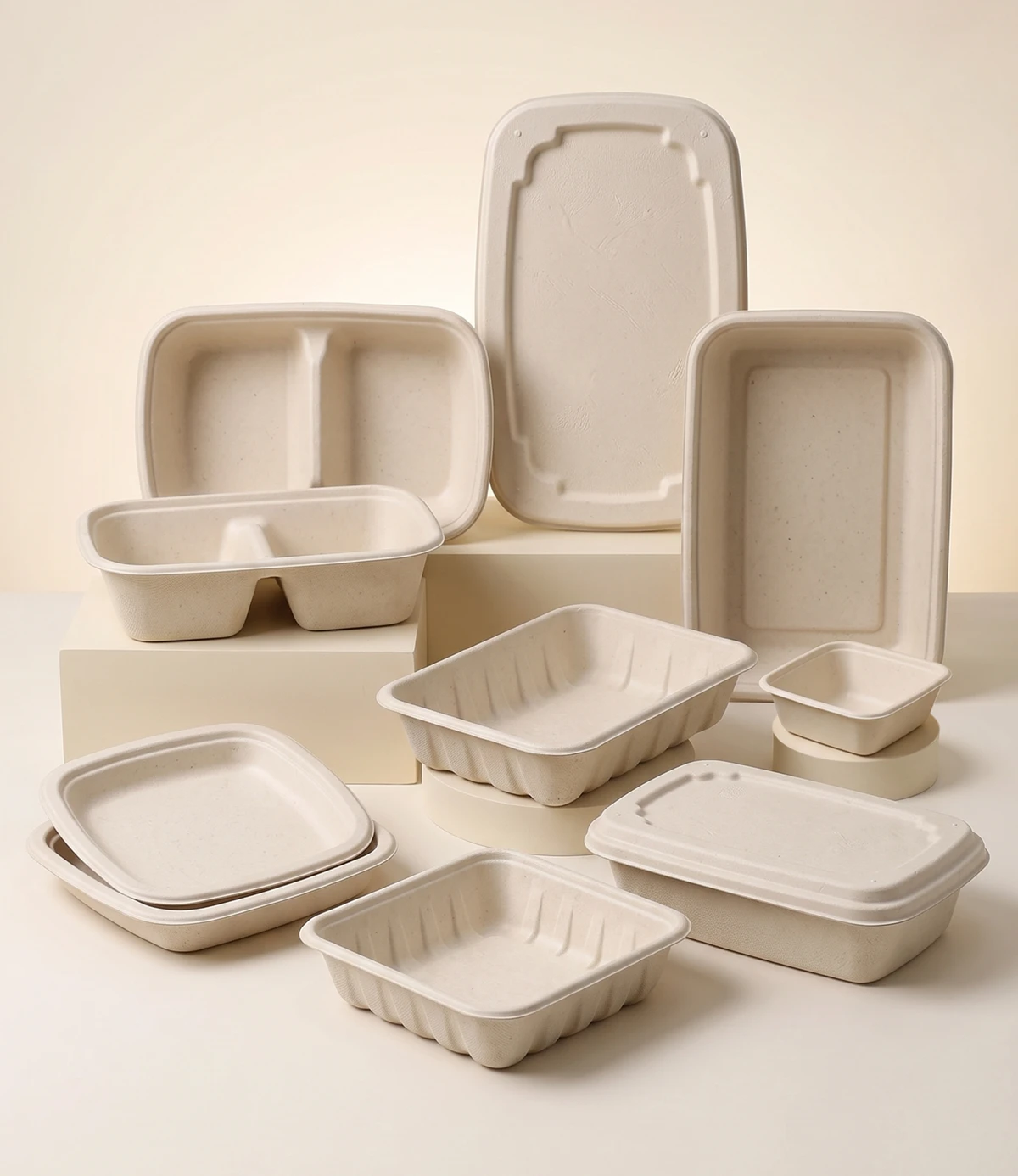
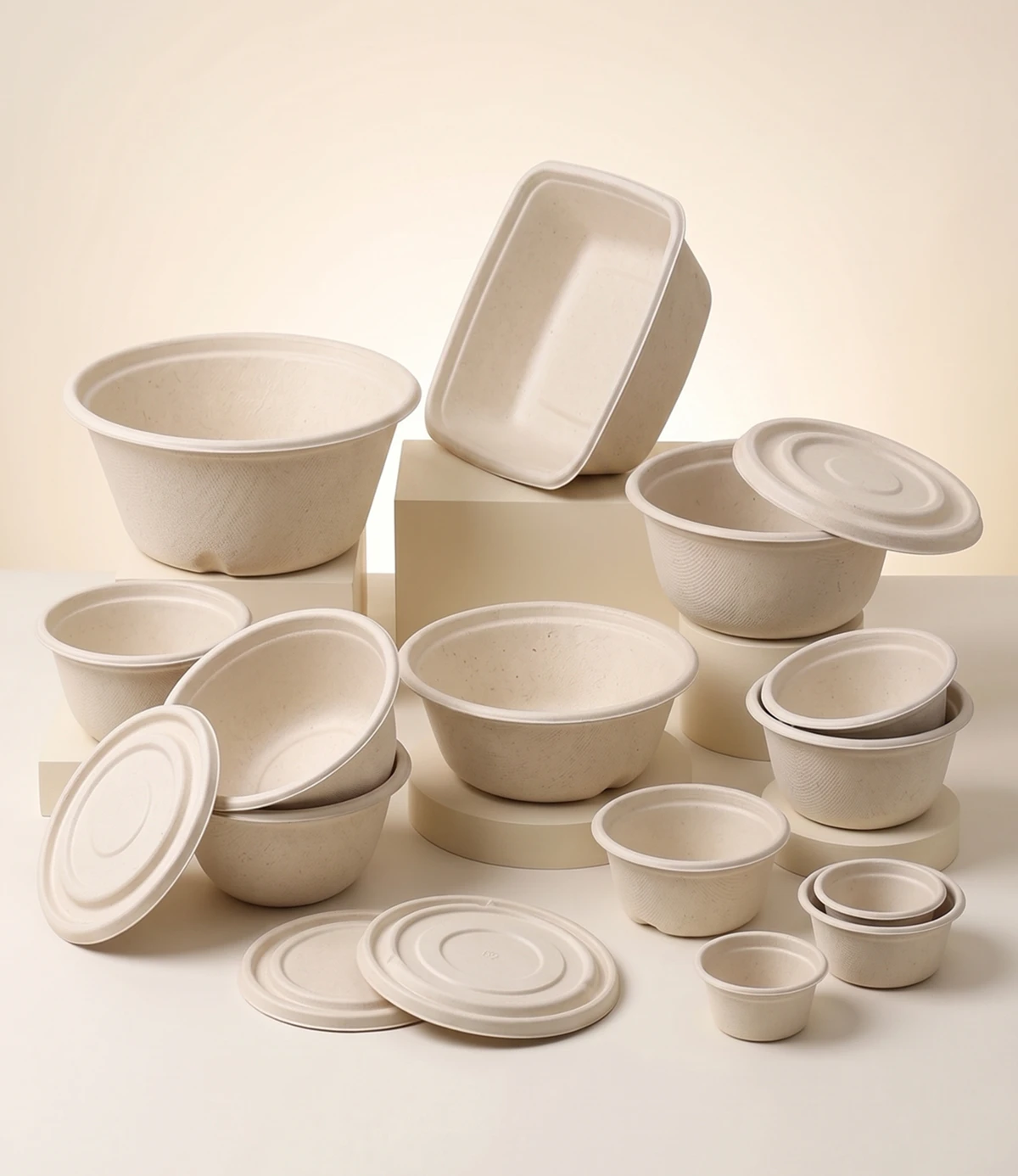
Ekoroll’s Anti-Leak Series — round bowls, rectangular containers and compartment meal trays with matched lids — was developed for soups, curries and sauces in delivery. For other dishes we supply rectangular containers, bowls and lids, cups and soup cups and compartment trays. Like all Ekoroll bagasse, they are home compostable and 100% bagasse (TÜV AUSTRIA OK compost HOME), PFAS-free, water- and oil-resistant, microwave- and freezer-safe, and suitable for hot and cold food. See the whole range in our bagasse packaging guide and the material in what is bagasse?
Send us your menu and delivery times, and we will propose formats, send samples and quote in writing. Request a quote or browse the catalog.
Products in this article
Sources
- Directive (EU) 2019/904 on the reduction of the impact of certain plastic products on the environment (SUP Directive) — EUR-Lex
- Regulation (EU) 2025/40 on packaging and packaging waste (PPWR) — EUR-Lex
- Regulation (EC) No 1935/2004 on materials and articles intended to come into contact with food — EUR-Lex